Hyperscaler Spending Can Slow While Still Outpacing Economic Growth
Goldman Sachs Wealth Management’s Matt Weir argues that the market’s reliance on a handful of large technology stocks does not, on its own, signal that the bull market is ending. He expects hyperscalers’ capital-spending growth to slow sharply from its extraordinary pace, but remain far faster than economic growth. For Weir, earnings—not short-term market concentration or macroeconomic distractions—will ultimately determine where stocks go next.
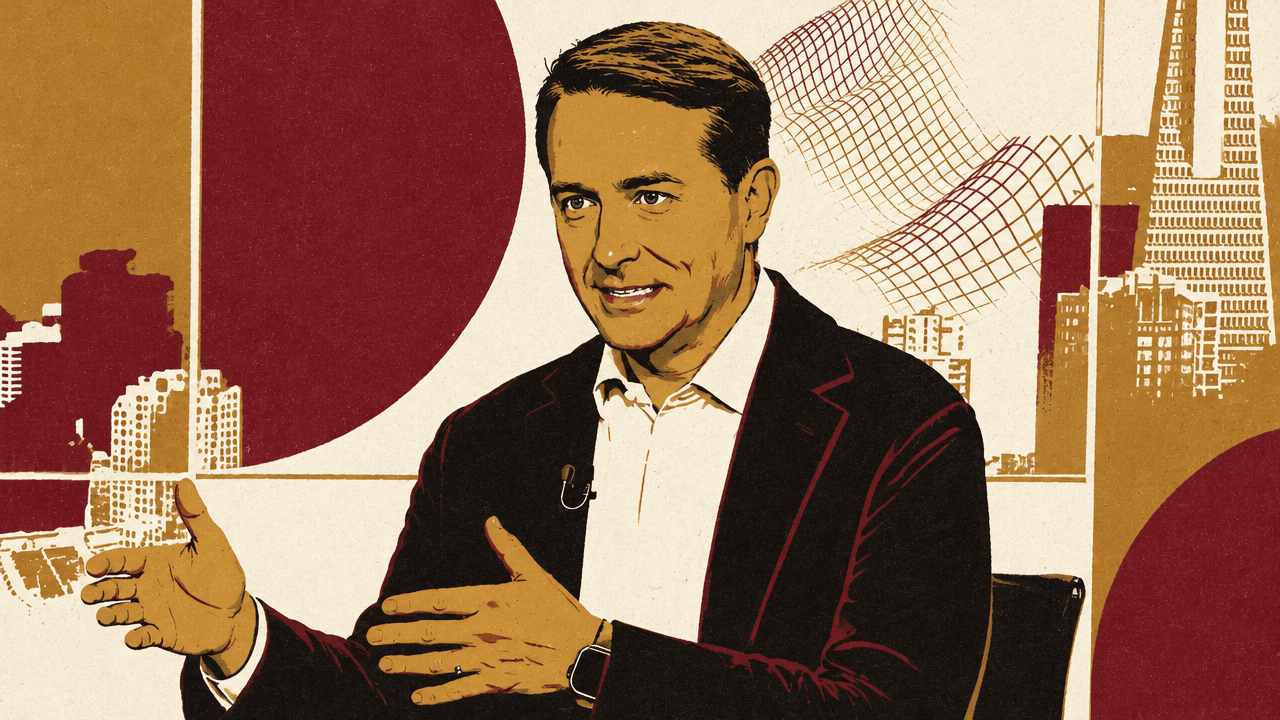
Narrow leadership does not, by itself, mark a market top
A small group of large technology stocks has recently driven the market to a new all-time high. Matt Weir says that concentration is not an ideal setup, but does not by itself mean the bull market is over.
Weir points to the time horizon. The gap between the Magnificent Seven and the other 493 stocks in the S&P 500 has widened over a short period, he says, and similar divergences appeared in 2023 and 2024 without derailing the market’s advance. Looking year to date, the two groups have performed comparably: each is up about 15%.
That longer view complicates the impression of a market carried only by a handful of technology names. Weir argues that recent narrow leadership deserves attention, but is not enough to conclude that the cycle has peaked.
Capex growth can slow and still outpace the economy
The more consequential change, in Weir’s view, is the expected pace of hyperscaler investment. He says the third quarter likely marked the peak in the year-over-year growth rate of hyperscaler capital spending, which is driving technology earnings.
Weir’s forecast is for a sharp deceleration from an exceptionally high rate—not an end to growth. He expects capex growth to fall from 116% year over year to 22% in the fourth quarter of 2027. He compares that projected rate with nominal U.S. GDP growth of 4% to 5%.
Even at 22%, Weir says, hyperscaler capex would be growing four to five times faster than nominal GDP. He calls the 116% rate unsustainable; his point is that a lower growth rate can still mean substantial expansion.
Earnings remain the measure Weir expects investors to return to
Ed Ludlow asked whether higher interest rates, earnings season and the U.S. midterm election would compete to shape investor sentiment. Matt Weir said macroeconomic events can distract investors from quarterly results, but that earnings ultimately determine the market’s path.
Weir expects investors to return to company results once the immediate noise passes. With third-quarter reporting approaching and the calendar already in October, he says investors are increasingly looking toward 2027. His view is that the earnings-growth outlook for next year still looks good.
Ludlow raised higher rates in his question, but Weir did not directly address their effect. His answer focused on the risk that political or other macro events could draw attention away from earnings, and on his expectation that investors would eventually refocus on results.
Potential IPOs are prompting concentrated-stock planning
In the Bay Area, Weir says, many Goldman clients have built wealth in technology and AI. The firm is receiving calls from people who could see a large wealth-creation event if anticipated IPOs occur.
The first question clients often ask, he says, is how much house they can afford. Weir says Goldman helps with that, but its main focus is what clients might do with concentrated holdings in a private or public company. Some have the risk appetite and conviction to keep a large position; others, surprised by how much wealth they have accumulated, begin diversifying.
Ed Ludlow raised the prospect of an Anthropic IPO and asked what clients might take from SpaceX’s IPO. Weir said SpaceX’s offering was well telegraphed and the company had been around longer than Anthropic, OpenAI and other AI firms. By contrast, he described the timeline for employees, engineers, founders and executives at newer AI companies as compressed. Goldman is helping clients think through what they might do if those IPOs occur, he said.