Nvidia’s Interim CEO Must Add Operations to Her CFO Remit


Bloomberg’s Nina Trentmann argues that Colette Kress’s appointment as Nvidia’s interim CEO expands the remit of a finance chief who has spent 13 years at the company, including its transformation from a gaming-chip business into an AI powerhouse. Kress will remain CFO while taking responsibility for operations and investment decisions, and becoming Nvidia’s public face to investors and Washington. Trentmann questions how Kress’s background in finance will translate to the operating demands of the role.
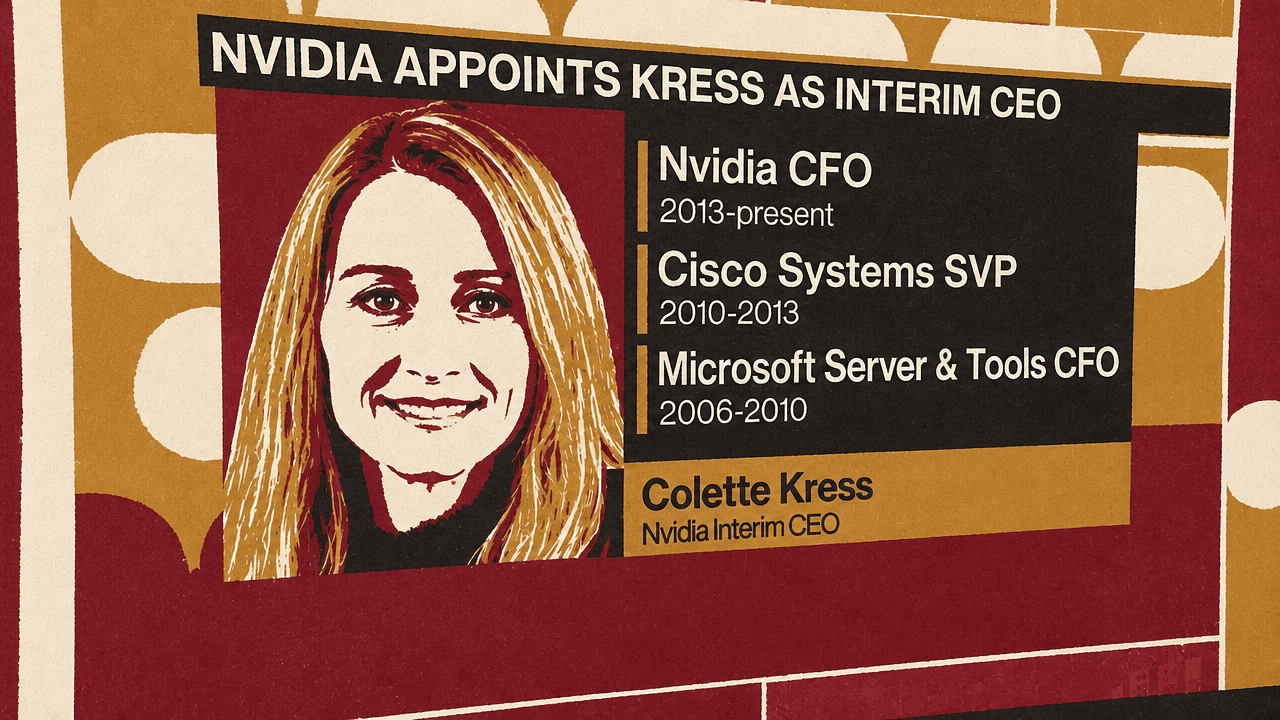
Kress’s remit now reaches beyond the finance function
Colette Kress is taking on Nvidia’s interim CEO role while continuing as CFO, the position she has held since joining the company in 2013. The change puts someone who has largely stayed out of the spotlight into a much more public role, while retaining the finance responsibilities that have defined her tenure.
Before Nvidia, Kress held finance positions at Cisco, Microsoft and Texas Instruments. A Bloomberg Tech profile graphic identified her as a Cisco senior vice president from 2010 to 2013 and as CFO of Microsoft’s Server & Tools business from 2006 to 2010. Bloomberg’s Nina Trentmann noted that Kress has remained Nvidia’s CFO throughout her 13 years at the company.


That period has also brought a major change in Nvidia’s business. Trentmann described the company Kress joined in 2013 as very different from today’s Nvidia: it evolved from a business focused largely on chips used for computer gaming into what Trentmann called a “huge machine of the AI trade.” Kress’s finance role grew alongside that transformation. But, as CFO to Jensen Huang, she had not been as public-facing as other CFOs at companies of Nvidia’s size might be.
Now she will be the company’s main face to investors and in Washington, Trentmann said. Huang had played a highly visible role in those settings, including in relations with the Trump administration and other figures. The interim CEO appointment therefore changes not only who leads the company internally, but who represents it externally.
Ed Ludlow recalled a conversation with Kress in August 2025 about Nvidia sharing revenue with the U.S. government. As Ludlow recounted it, Kress said she was the CFO and would follow Sarbanes-Oxley and the laws of the nation. He used the exchange to underline that the CEO job extends beyond the finance remit:


It’s not just the CFO numbers game.
Operations and investment are the harder questions
Kress will continue the “numbers game” as CFO, Trentmann said, but the CEO role also makes her responsible for managing operations and thinking about how Nvidia should invest going forward. Those are distinct demands from overseeing finance and representing the company to investors and government.
Trentmann raised a specific question about Kress’s preparation for the operating side of the job. Looking at her résumé and what she has done at Nvidia so far, Trentmann said, Kress does not necessarily have operating experience. That was not a claim that she cannot take on the work; it was a concern about the fit between her experience to date and the wider responsibilities she now faces.
The combination of responsibilities makes the transition unusually broad. Kress remains in the CFO role even as she becomes the person expected to manage operations, make investment decisions and serve as Nvidia’s public representative. Her long tenure gives her experience of the company through its shift from gaming-focused chips to an AI business, but Trentmann’s assessment leaves open how that background will translate to the operational demands of the interim CEO job.
The analyst call puts the transition in public view
Ludlow said he understood that Tuesday’s earnings process would be normal: analysts would have a call, ask questions and Kress would be there. He presented this as his understanding of the upcoming process. The detail gives the leadership change an immediate public-facing dimension: Kress is not only taking on a broader remit, but is expected to appear before analysts while continuing as CFO.
That near-term responsibility fits the central tension in Trentmann’s account. Kress’s career at Nvidia has been built in finance, during a period when the company changed substantially. As interim CEO, she will still carry that finance role, but the job now also asks her to take charge of operations and investment and to fill a highly visible position in the company’s dealings with investors and Washington. The question Trentmann identified is how her experience will serve those additional demands.