Ferrari Needs Only a Few Hundred Buyers for Its $640,000 EV



Bloomberg’s Craig Trudell argues that Ferrari’s first fully electric car, the $640,000 Luce, is facing a backlash less because of its technology than because critics do not think it looks like a Ferrari. But he says the commercial bar is much lower than broad approval: Ferrari may need only a few hundred wealthy buyers, especially if owning the EV helps them secure access to more coveted future models.
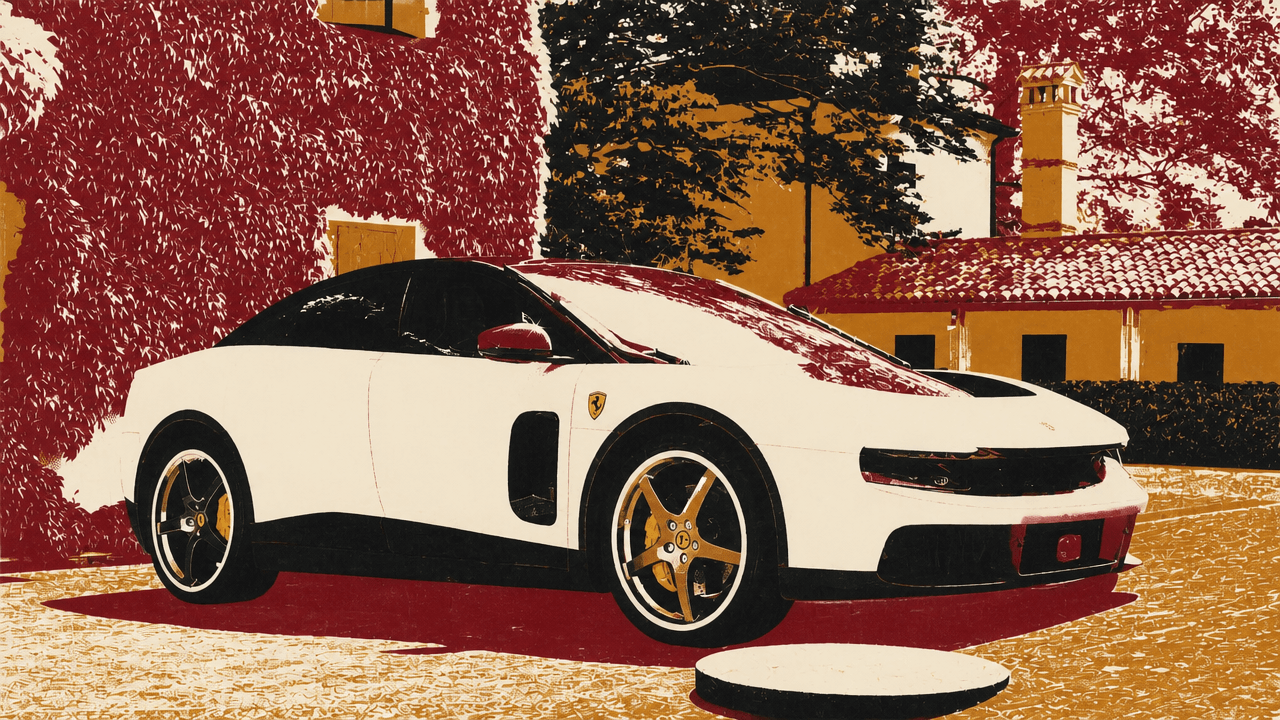
Ferrari’s first EV is being judged as a Ferrari before it is judged as an EV
Ferrari’s first fully electric car is not being received as a technical milestone so much as a test of brand identity. The market panel shown during the segment had Ferrari NV down in premarket trading, with Bloomberg’s chyron reading: “Ferrari falls as first full EV fails to impress.” Asked by Ed Ludlow how the market was responding to the $640,000 EV, Craig Trudell gave the short version: “Not great.”




The critique Trudell described was not centered on whether Ferrari can build an electric drivetrain. It was about whether the vehicle looks like something Ferrari customers and Ferrari watchers recognize as a Ferrari. He said the car carries “a lot of superlatives”: biggest, heaviest, and Ferrari’s first five-seater. Those facts may make the vehicle historically notable inside the company, but they also frame the problem. The model arrives with attributes that pull it away from the low, theatrical, two-seat image many people associate with the brand.
Trudell separated the interior from the exterior. He said there is “a lot to like” inside the vehicle, but the exterior is drawing polarizing responses. The comparisons he cited are the kind a supercar maker does not want attached to a $640,000 launch: a “higher-end Nissan Leaf” or a Honda. Caroline Hyde sharpened the reaction further, adding that some were calling it “a bar of soap.”


The visuals shown alongside the discussion underlined the tension. Bloomberg displayed Ferrari-sourced images of a sleek, dark-blue front end and a light-blue, four-door, five-seat exterior against a black background. The vehicle was identified on screen as the Luce. The frame did not present a traditional two-seat Ferrari silhouette; it presented a larger, smoother, more practical-looking electric car, which is exactly the point of friction in the reaction Trudell described.
The business case does not require broad approval
Hyde’s central question was whether Ferrari needs mass enthusiasm for this vehicle at all. Luxury automakers have taken varied and sometimes retreating approaches to EVs, she noted, especially at the high end. But Ferrari’s economics are different if the goal is not volume. A small group of buyers who want a unique Ferrari EV on the road may be enough to justify the car.
Trudell agreed that this is the right way to set expectations. Other manufacturers, he said, have “swung and missed” with higher-end electric vehicles. Ferrari, by contrast, does not necessarily need to sell many of these to be able to “declare victory.”
At roughly 500 units, Trudell said, Ferrari would likely be “quite happy” given the price it is seeking. That figure reframes the launch. The Luce does not have to persuade the full population of Ferrari fans, nor even the full population of wealthy car buyers. It has to find enough buyers for whom owning the first Ferrari EV has value despite, or even because of, the controversy around its form.
That is a different standard from the one implied by the early aesthetic backlash. If the test is whether the Luce instantly satisfies purists, the launch appears troubled. If the test is whether Ferrari can place a small run of expensive, historically significant cars with collectors and loyal customers, the bar is much lower.
Allocation may matter more than affection
The most important business lever in Trudell’s account is not design reception. It is access. Ferrari can use the Luce inside the same scarcity system that governs demand for its most desirable models.
Trudell suggested that Ferrari could make ownership of the EV part of the path toward getting allotments for other vehicles — the cars “Ferrari purists are more interested in.” In that case, buyers would not need to love the Luce in isolation. They would need to see it as part of the cost of staying in position for future Ferraris.
Ludlow explained the mechanism for viewers who do not follow Ferrari buying culture closely: if someone wants “the V12, the latest top-of-the-line Apex Predator Ferrari,” they may first have to buy an entry-level model. Hyde compared it to the “Hermes model”: to get the best Birkin, a customer may have to buy a less desirable canvas bag first.
That comparison matters because it shifts the Luce from product-market fit to relationship management. The car can function as an object of status, a historical first, and a ticket in the allocation system. A buyer may be paying for all three at once. Ludlow added that the economics are still striking: an Amalfi may be around $300,000, he said, so a customer does not necessarily need to spend roughly $650,000 to enter the “$650,000 car club.”
That tension is unresolved in the discussion. The Luce may be useful to Ferrari as an allocation tool, but its price makes it a much more expensive gatekeeping purchase than some other ways into the brand. The question is not whether such a strategy can work in luxury goods; the speakers treated that as familiar. The question is whether this particular EV, with this design response and this price, becomes a desirable enough credential for the buyers Ferrari needs.
The backlash and the historical appeal can coexist
Trudell did not dismiss the intensity of the reaction. He said many people are responding to the car as “an abomination.” That language captures the purist objection: a large, heavy, five-seat electric Ferrari challenges what some customers think the marque should be.
But he also argued that the negative first impression does not settle the car’s commercial fate. There will be interest, he said, in owning the first Ferrari EV. Whatever people think of the Luce’s looks, it will “make history for this company.”
That historical status is the car’s strongest defense in the discussion. It allows Ferrari to sell more than transportation, more than performance, and perhaps more than beauty. It can sell a place in the company’s transition: the first full EV from a brand whose identity has long been tied to combustion engines, sound, scarcity, and hierarchy.
The early reviews described by Bloomberg are brutal because they strike at Ferrari’s visual mythology. But Trudell’s argument is that Ferrari’s margin for success is narrow in a favorable way. The company does not need the Luce to become a broadly loved electric car. It needs a limited number of wealthy buyers to value uniqueness, access, and historical firstness more than the insults being thrown at the exterior.