FCC Seeks Assembly-Line Satellite Licensing and Tougher Broadcast Renewals

FCC Chairman Brendan Carr argues that the agency should replace individualized satellite licensing with standardized, high-volume processing as low-Earth-orbit and direct-to-cell networks expand. At the same time, he says the FCC should apply greater scrutiny to broadcasters’ public-interest obligations, including in Disney’s license-renewal proceedings. Carr characterizes the FCC’s role in Paramount Skydance’s proposed Warner Bros. Discovery acquisition as limited to foreign-investment review, while questioning the basis for a reported antitrust challenge.
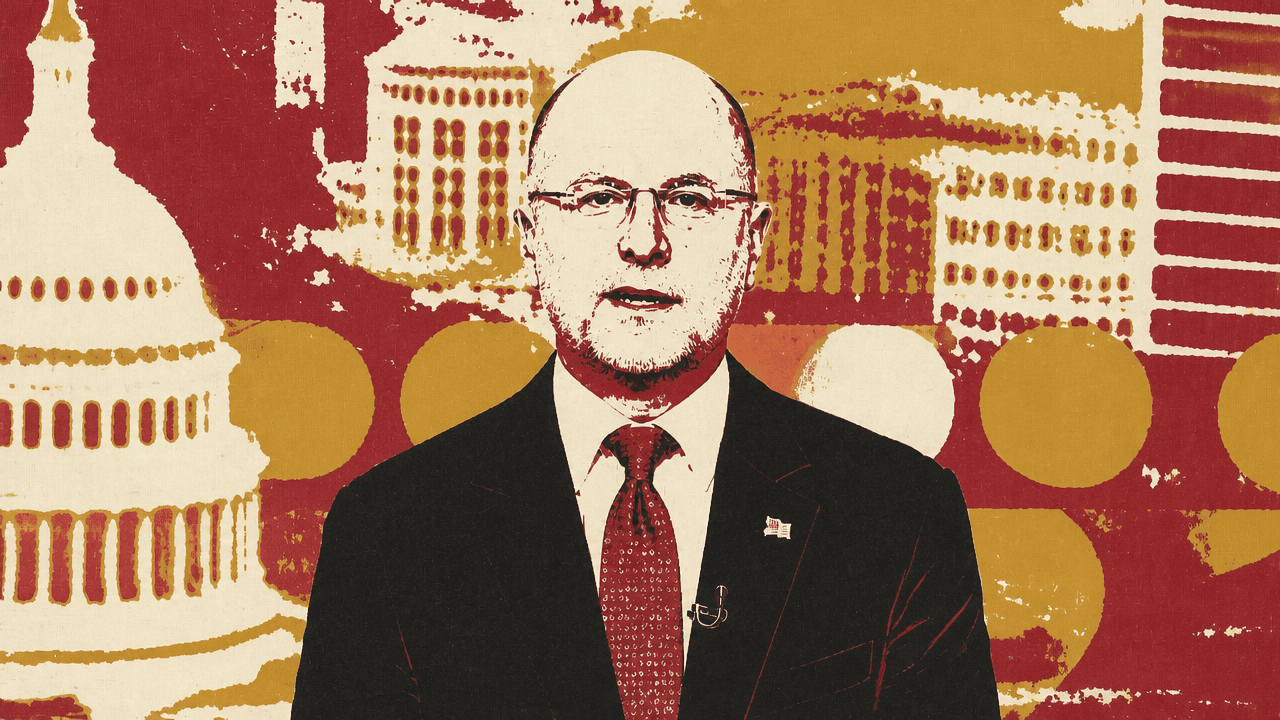
Carr wants mass processing for space applications and tougher renewal scrutiny for broadcasters
Brendan Carr described an FCC that should process communications infrastructure far more quickly while demanding more from broadcast licensees seeking to keep their stations on air.
For satellite operators and wireless providers, Carr’s focus is standardized criteria, reduced backlogs, spectrum availability, and lower deployment costs. For broadcasters, the operative test is different: whether a licensee has met its public-interest obligations. Carr presented those as distinct statutory and regulatory responsibilities, not a single approach applied across communications markets.
He said consumers are already seeing faster connectivity speeds, lower prices, and intensifying competition. The longer-term project, in his account, is to remove regulatory friction as more communications infrastructure moves into low Earth orbit and as satellite networks begin connecting directly to handsets.
Satellite licensing is moving from bespoke review to volume processing
For emerging space systems, Brendan Carr said the FCC is trying to replace an approval process built for a much smaller market. Historically, he said, the agency received one to three satellite applications a year and handled them through individualized, “bespoke” reviews. That model cannot readily accommodate the scale implied by low-Earth-orbit constellations, direct-to-cell networks, and proposed orbital data centers.
The FCC’s role includes granting spectrum access for satellite operations. Its authorizations can also carry conditions tied to orbital debris, Carr said, in coordination with other regulators. But the main operational change he emphasized was procedural: the commission was scheduled to vote that month on changes to Space Bureau operations that would establish objective criteria. Applicants meeting those criteria should expect faster approvals, he said; the framework was proposed for adoption, not described as already in force.
What we're fundamentally changing is to an assembly line mindset.
Carr separately said the FCC had already cut its approval backlog by about half. If the proposed operational changes proceed, he said, the agency should be able to handle thousands—or potentially hundreds of thousands—of applications rather than taking months or years to process a small handful.
The same posture informs Carr’s response to accusations that the FCC has favored SpaceX in satellite-to-phone service. He said he did not recall having substantive conversations with SpaceX about its wireless ambitions, while acknowledging that the commission had facilitated Starlink’s access to spectrum for direct-to-cell service.
Carr named Amazon, AST SpaceMobile, Reflect Orbital, Logos, and SpaceX as participants in the space economy that stand to benefit from the FCC’s approach. His stated aim is to support two or three facilities-based direct-to-cell providers in the United States: companies whose low-Earth-orbit satellites connect directly to handsets.
Spectrum-owning satellite providers are Carr’s alternative to the four-carrier premise
Carr rejects the earlier premise that consumer wireless competition requires four standalone national mobile providers. Asked about EchoStar and the later allocation of some licenses to SpaceX for Starlink, Brendan Carr said the predicted consequences of losing a fourth provider—higher prices and slower speeds—had not materialized.
The FCC has facilitated Dish/EchoStar’s effective exit from the mobile-wireless market, he said, while price competition has continued. Carr also pointed to permitting reform and allowing providers to retire older copper networks they had been subsidizing alongside newer infrastructure as ways to lower costs.
His alternative model turns on spectrum access and facilities-based competition, rather than preserving a fixed number of conventional mobile carriers. A direct-to-cell provider can operate efficiently with its own spectrum, Carr said, and satellite companies holding those rights can offer service alongside existing connectivity networks. He estimated that SpaceX has access to about 65 megahertz for direct-to-cell use. Amazon, he said, had announced plans to purchase Globalstar, whose spectrum could support similar services, while AST is also seeking spectrum rights.
The FCC is pursuing additional terrestrial capacity as well. Carr said it would vote that month to create 160 megahertz of new mid-band C-band spectrum, part of what he described as a 440-megahertz-wide “super band” for 5G and 6G. In operational terms, the proposal would create a broader contiguous channel for those services rather than adding a narrower, isolated block of spectrum.
The Paramount-Warner review is limited, even as Carr doubts an antitrust case
Carr’s account of the proposed Paramount Skydance acquisition of Warner Bros. Discovery drew a narrower boundary around FCC authority. Brendan Carr said the commission’s role concerns foreign investment in the transaction and that it is running its standard process. No final FCC decision has been made, he said.
He nevertheless expressed skepticism about the reported prospect of a multistate antitrust challenge. Carr said it was hard to see a “real legitimate antitrust action,” while adding that antitrust experts—not the FCC—should assess that question.
In particular, he questioned a statement attributed to the California attorney general that California would not sue if Paramount agreed to spin off CNN. Carr said he found it difficult to conceive of a competition or antitrust theory in which ownership of CNN within the combined company would establish a meaningful legal line.
Disney’s renewal process puts Carr’s broadcast theory into practice
Disney faces three FCC matters, according to Brendan Carr: an inquiry into its diversity, equity, and inclusion practices; the early renewal of its broadcast licenses; and a separate issue concerning The View and its claimed status as a bona fide news program.
Carr said he wrote to Disney leadership in March 2025 raising concerns about what he called potentially “invidious forms of DEI discrimination,” including possible discrimination in pay, compensation, and workplace opportunities based on race, gender, or other protected characteristics. The FCC has rules concerning equal-employment-opportunity policies and discrimination, he said, giving it a basis to investigate.
The agency sent letters of inquiry—what Carr called its version of subpoenas—and Carr said Disney had been disingenuous in responding. The FCC then called all of Disney’s broadcast licenses in for early renewal. Disney has applied for renewal and must demonstrate that it has operated in the public interest; petitions seeking to deny renewal have also been filed.
Carr stressed that the commission has not reached a final decision. Disney is attempting to show that its licenses should be renewed, he said, and the FCC will assess the record.
We want to make sure that all broadcasters are in fact living up to their public interest obligations.
Carr said the FCC has taken similar actions involving other broadcasters. For years, he argued, broadcast television had been treated as though it were equivalent to cable, podcasts, or newspapers. But Congress and the Communications Act impose distinct public-interest obligations on broadcast licensees, he said, and the commission should enforce them.