SpaceX’s $75 Billion IPO Would Leave Musk With 84% Voting Control

Bloomberg’s Michael Hytha says SpaceX’s planned $75bn IPO would be unprecedented in size and unusual in structure, with Elon Musk seeking to sell a fixed number of shares at a fixed price rather than follow a standard Wall Street bookbuilding process. Hytha argues the filing makes the investor bargain explicit: public buyers would help fund SpaceX’s AI and launch ambitions while accepting a dual-class structure that leaves Musk with 84.4 per cent of the voting power after the listing.
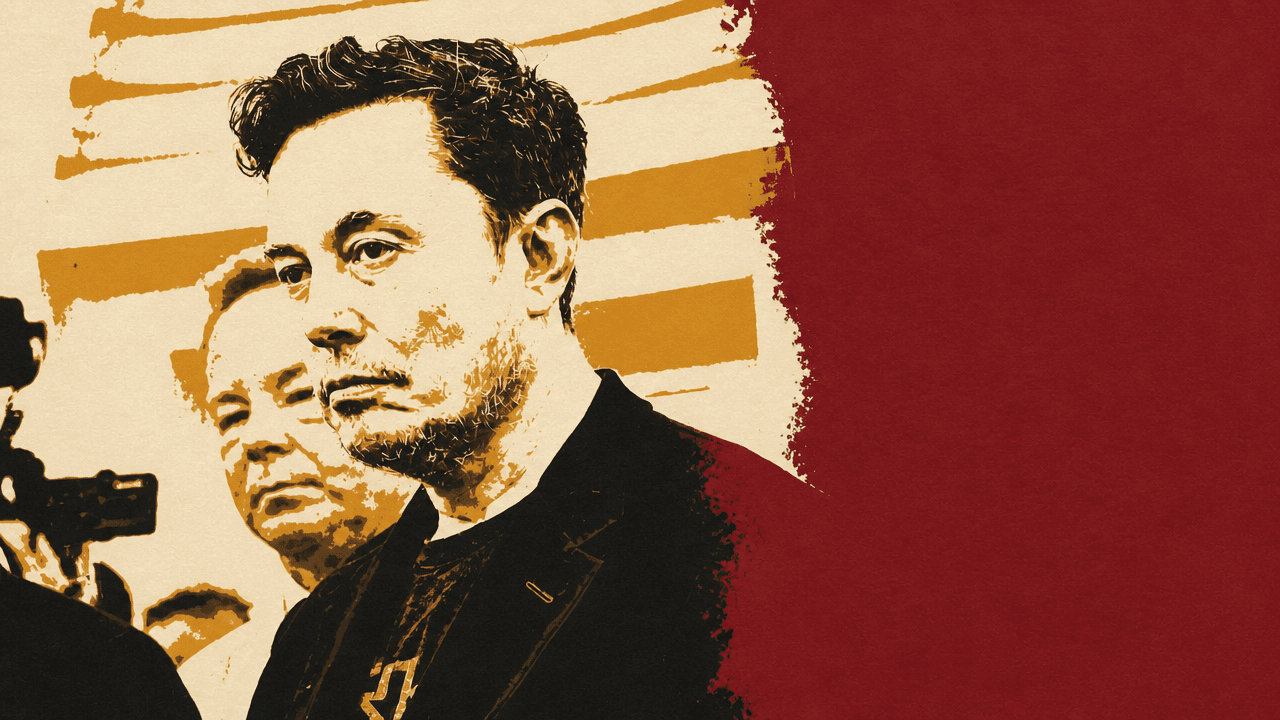
SpaceX is seeking an IPO on a scale no public market has seen before
SpaceX’s filing confirmed a proposed $75 billion initial public offering, a figure Michael Hytha described as “enormous” even before considering the governance structure attached to it. His comparison points were the largest previous IPOs: Saudi Aramco at $29 billion and Alibaba at $25 billion.
Bloomberg’s on-screen graphic said SpaceX planned to market about 555.6 million shares at $135 each, implying a market value of almost $1.77 trillion. The same graphic said the offering was set to price June 11 and begin trading June 12.
| Company | IPO size cited | Context in the segment |
|---|---|---|
| SpaceX | $75B | Planned raise in the filing discussed by Bloomberg |
| Saudi Aramco | $29B | Largest previous IPO cited by Hytha |
| Alibaba | $25B | Next-largest IPO cited by Hytha |
The filing, in Hytha’s account, largely confirmed Bloomberg’s previous reporting rather than overturning expectations. The $75 billion target was the central confirmation. So was the structure of the sale: Elon Musk is not using the standard Wall Street approach in which banks set a price range and test investor demand through negotiation. Hytha said Musk is selling at a fixed price of $135 a share.
That structure matters because it shifts the offering away from the usual “horse-trading” between banks and investors. Hytha said Musk had “convinced” the process around a precise target: 555,555,555 shares at $135 each, producing the $75 billion raise. The unusually exact share count was presented not as incidental detail but as part of Musk’s decision to do the offering on his own terms rather than by convention.
The financing context was also broader than rockets. Hytha linked investor demand to the wider appetite for companies funding “everything AI,” and said SpaceX should now be understood partly through xAI. In his phrasing, SpaceX is “largely an AI company now as well with xAI.” The lower-third headline on Bloomberg’s broadcast framed the raise similarly: “SPACEX SEEKS $75B IN RECORD IPO TO FUND AI, LAUNCH.”
The IPO does not dilute Musk’s control; it formalizes it
The most important governance point in the filing, as Hytha explained it, is that public investors would not be buying into a conventional one-share, one-vote public company. They would be buying into a company where Musk remains in effective command.
Yvonne Man asked whether the IPO would change the scrutiny around SpaceX’s governance and Musk’s control. Hytha’s answer was direct: no. The offering would “confirm” that control rather than weaken it.
Anyone buying SpaceX stock, Hytha said, “has to be pretty comfortable with the idea that the company is going to be run by Elon Musk and Elon Musk only.” After the IPO, Musk will hold 84.4% of the company’s voting power, meaning major decisions will effectively require his approval.
The mechanism is a dual-class share structure. Hytha said Musk owns almost all of the Class B shares — about 94% — and that those shares carry 10 votes each. That gives him a level of voting control far above what his economic ownership alone might imply. Bloomberg’s accompanying lower third reduced the point to its practical consequence: “MUSK TO RETAIN 84% VOTING CONTROL AFTER IPO.”
There is resistance to that arrangement, Hytha said, but he did not describe it as likely to change the terms. His point was that the governance bargain is explicit. SpaceX may be seeking an unprecedented amount of public-market capital, but it is not offering public-market investors corresponding influence over who runs the company or how final authority is exercised.
Record capital is being sought on Musk’s terms
The central tension is that SpaceX is seeking record public-market capital while leaving control concentrated with Musk. Bloomberg’s framing joined those two ideas repeatedly: a $75 billion raise to fund “AI, launch,” a valuation of almost $1.77 trillion, and a lower-third headline stating that Musk would retain 84% voting control after the IPO.
Hytha did not present the governance structure as a side issue. He said buyers of SpaceX stock would need to be comfortable with a company “run by Elon Musk and Elon Musk only.” That is narrower than a general bet on demand for launches, AI infrastructure, or SpaceX’s valuation. It is also a bet made under a fixed-price offering structure that Hytha described as outside normal Wall Street convention.
The broadcast also noted the personal and wealth-management dimensions around demand for the offering. One lower third read: “MUSK NEARS $1T NET WORTH ON SPACEX IPO.” Another said JPMorgan’s Jamie Dimon would pitch SpaceX to the bank’s ultra-rich clients. Hytha’s account supported the broader point that a raise of this size would require substantial investor demand, especially from investors willing to put large sums behind AI-related ambitions.
What the filing appears to make explicit, in Bloomberg’s telling, is the bargain public investors would be accepting: a record IPO, fixed-price shares, a market value near $1.77 trillion, and a voting structure that keeps Musk’s approval central to company decisions.