Huge Pre-IPO Rounds Are Making Seed Investing More Important


Kindred Ventures founder Steve Jang argues that enormous pre-IPO rounds have not made seed investing less relevant; they have made company formation more important. In a Bloomberg Technology interview with Caroline Hyde after Kindred raised $355 million for deep-tech and robotics funds, Jang said early investors still do the work that late-stage capital cannot: helping founders turn technical vision into products, teams, customers and revenue before the IPO or acquisition options appear.
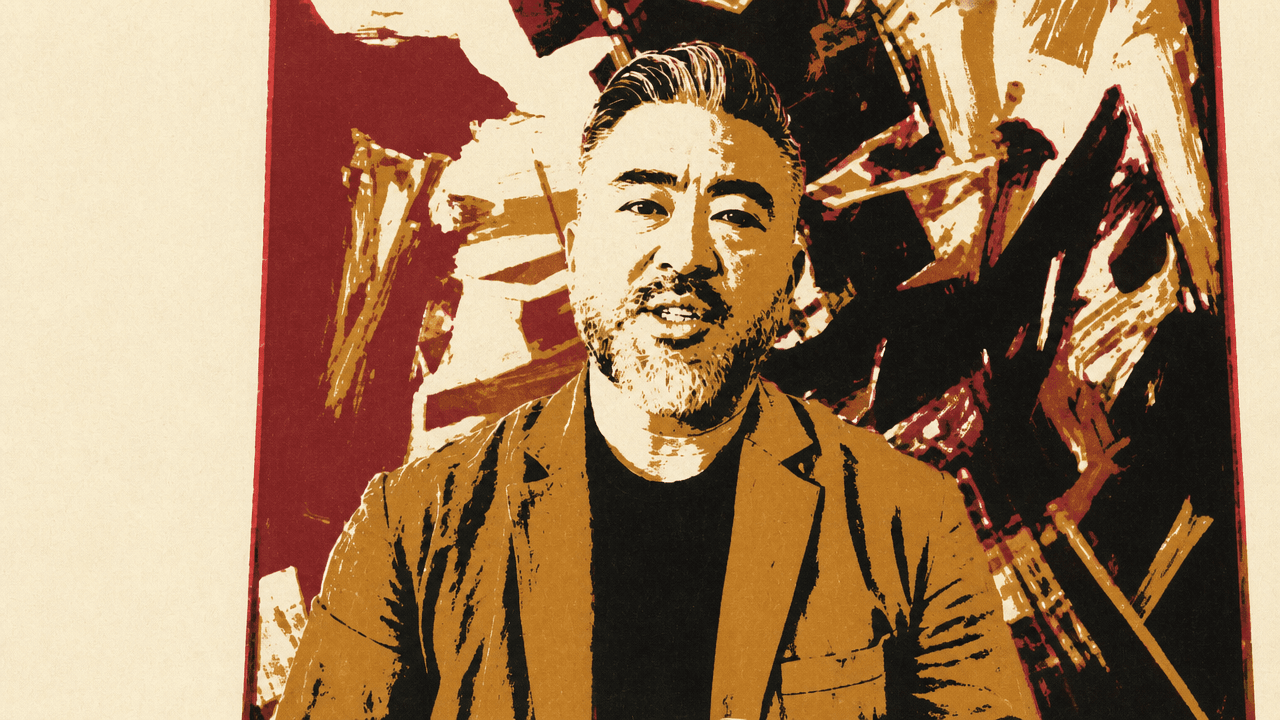
Early-stage capital still has a job when late-stage rounds get enormous
Steve Jang describes early-stage investing as “a dwindling breed” in a market increasingly defined by huge late-stage, pre-IPO rounds. But his argument is not that seed investing is being displaced. It is that the need for it becomes sharper when companies can grow faster and valuation ceilings move higher. For venture allocation, the implication is straightforward: late-stage capital may be abundant, but Jang is arguing that company formation remains the bottleneck.

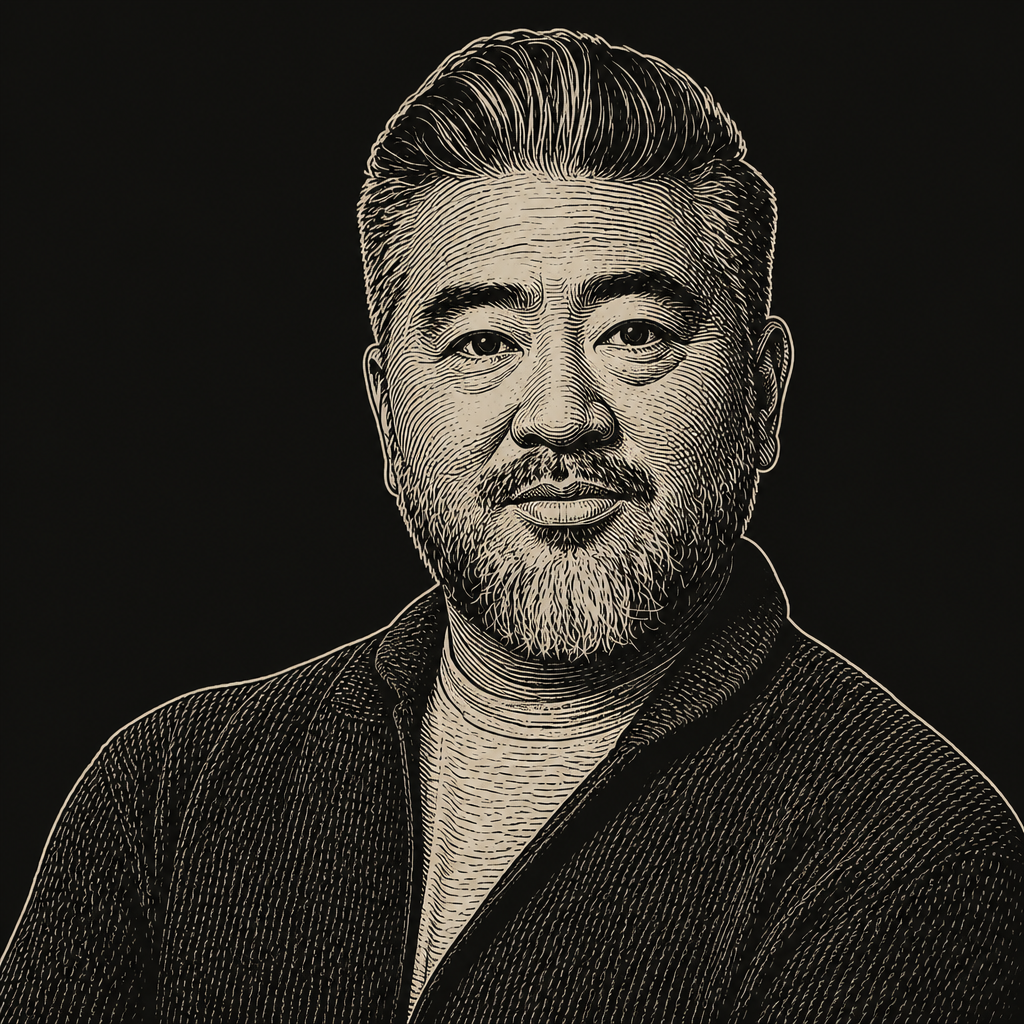
Kindred Ventures has raised $355 million for new deep-tech and robotics-focused funds. Caroline Hyde set that raise against the firm’s recent performance: Kindred’s 2022 fund, sized at $200 million, has reached $1 billion in gross fair market value as of June 2026, and the firm’s previous vintage has reached the top 1% of its class.


Jang’s case for being early rests on the work he says early investors do before a company has obvious financial momentum. At the zero-to-one stage, Kindred is helping founders move through new technology frontiers before the product, customer base, or revenue base has fully formed. Later-stage funds, in his view, are not built for that operating cadence.
Kindred’s displayed portfolio included FAL, Coinbase, Nuro, Perplexity, Uber, and Aalo. Hyde also pointed to Jang’s history as an angel investor in Uber and asked about exits, citing Uber and Coinbase in the context of IPO success and Play AI in the context of M&A.
The AI stack is becoming a competition among models, harnesses, and agents
Steve Jang used Perplexity as an example of how AI companies are finding their layer as frontier labs move toward applications while still facing compute constraints. He grouped Perplexity with companies such as Cursor as part of a broader shift: model companies are pushing into the application layer, while application companies are building around model access, orchestration, and user-facing agent behavior.
The pressure underneath that shift, according to Jang, is demand for AI compute. He said demand is “far outstripping supply” in data centers and GPU compute. That is showing up, in his telling, both in public markets and in the growth of inference platforms such as FAL, Base10, and Modal.
Jang emphasized agents as a driver of that demand: embodied agents such as robots, and virtual agents such as what he described as Perplexity Computer. These applications consume tokens and therefore pull more capacity from AI infrastructure.
Perplexity’s strategic position, as Jang described it, is to build a “harness” that is multi-model and agnostic to models. He contrasted that with Anthropic’s Claude Code, which he characterized as a single-model harness. The result is not one competition but several overlapping ones: who provides the state-of-the-art models; who provides the state-of-the-art harnesses; and who provides the most performant and productive agents, including robots, autonomous vehicles, and virtual agents for knowledge workers.
What you'll see is a battle and a competition between who is providing the state of the art models, who is providing the state of the art harnesses, and then who is providing the most performant and productive agents.
Jang’s view leaves room for companies that are not trying to own every layer of the AI stack. He said companies are “finding their layer, their focus” as the market separates model providers, orchestration layers, and agent products.
IPO ambitions now sit beside a likely acquisition wave
Steve Jang said he expects the IPO market to open over roughly the next year with companies such as SpaceX, Anthropic, OpenAI, and Databricks. At the same time, he expects public companies to become “very acquisitive” as they try to catch up and transform for the AI cycle.
Bloomberg showed a comparison of potential IPO market caps against major public-company market caps. The chart listed Nvidia at $5 trillion, Apple and Alphabet at $4.5 trillion, Microsoft at $3.1 trillion, Amazon at $2.6 trillion, TSMC at $2.2 trillion, SpaceX at $1.77 trillion, Tesla at $1.5 trillion, Anthropic at $0.96 trillion, and OpenAI at $0.85 trillion. It was labeled “Upcoming IPOs: How they stack up” and noted that IPO market caps were approximate, as of the June 5 market close.
| Company | Displayed market cap or potential market cap |
|---|---|
| Nvidia | $5T |
| Apple | $4.5T |
| Alphabet | $4.5T |
| Microsoft | $3.1T |
| Amazon | $2.6T |
| TSMC | $2.2T |
| SpaceX | $1.77T |
| Tesla | $1.5T |
| Anthropic | $0.96T |
| OpenAI | $0.85T |
The distinction matters for Kindred’s portfolio companies. Jang said the firm wants its companies to “go all the way,” stay independent, remain founder-led, and eventually become public global platforms. But he also described a market in which public companies from the last cycle may buy younger companies to accelerate their own AI transitions.
Bloomberg also showed a “2026 IPO Boom” graphic, sourced on-screen to Bloomberg, TechCrunch, and The Information, with reported estimates for value, raise amounts, and timing. Its visible text paired SpaceX with “$75B” and “June,” Anthropic with “$65B” and “4Q 2026,” and OpenAI with “TBA” and “4Q 2026.” The two graphics framed the same broad point from different angles: the prospective IPO pipeline is large, and the financing environment around those companies is already being discussed in very large numbers.
Jang’s answer therefore held two positions together. The preferred path is independence and a public listing. The practical guidance has to account for acquisition offers from large public companies that need to move faster into AI.
Seed investing is a different daily exercise from late-stage finance
The competitive pressure Caroline Hyde identified is that mega-funds raising billions are also trying to move down into seed rounds. Steve Jang responded by drawing a line between capital access and early-stage capability.
At seed, he said, Kindred is investing first in founders and product vision. In some cases, there may not yet be a product when the firm invests. The work is product development, technology roadmap, team-building, and getting to the first customer, first traction, and first revenue.
That is why he treats early-stage venture as different from “all other stages as a group” inside venture capital. The work happens daily and weekly through advice, coaching, and acceleration. Later-stage investors, in his description, tend to receive the company after that formation work and help accelerate growth from there.
Jang described “a nice symbiosis” between early-stage firms and the later-stage capital that follows. His claim is that large pools of late-stage money do not erase the need for a seed investor who can help turn a founder’s technical or product vision into a company with customers, revenue, and a path into the much larger financing markets now forming around AI, robotics, and deep tech.