SpaceX IPO Could Set Up a Tesla Tie-Up to Consolidate Musk’s Control



Peter Diamandis, an early SpaceX investor and XPrize Foundation founder, told Bloomberg Technology that he expects Elon Musk to combine SpaceX with Tesla after a SpaceX IPO. Diamandis argued the deal would consolidate Musk’s control and align what he described as a single infrastructure system spanning launch, satellites, communications, compute, power and vehicles.

Diamandis says a SpaceX-Tesla tie-up is a question of when, not if
Peter Diamandis’s clearest corporate claim was that a post-IPO SpaceX combination with Tesla would make strategic and governance sense for Elon Musk. Asked by Ed Ludlow about speculation that SpaceX could merge with Tesla after going public — and about Ludlow’s January 30 reporting that talks had been held before the xAI transaction — Diamandis answered directly: the logic is control.

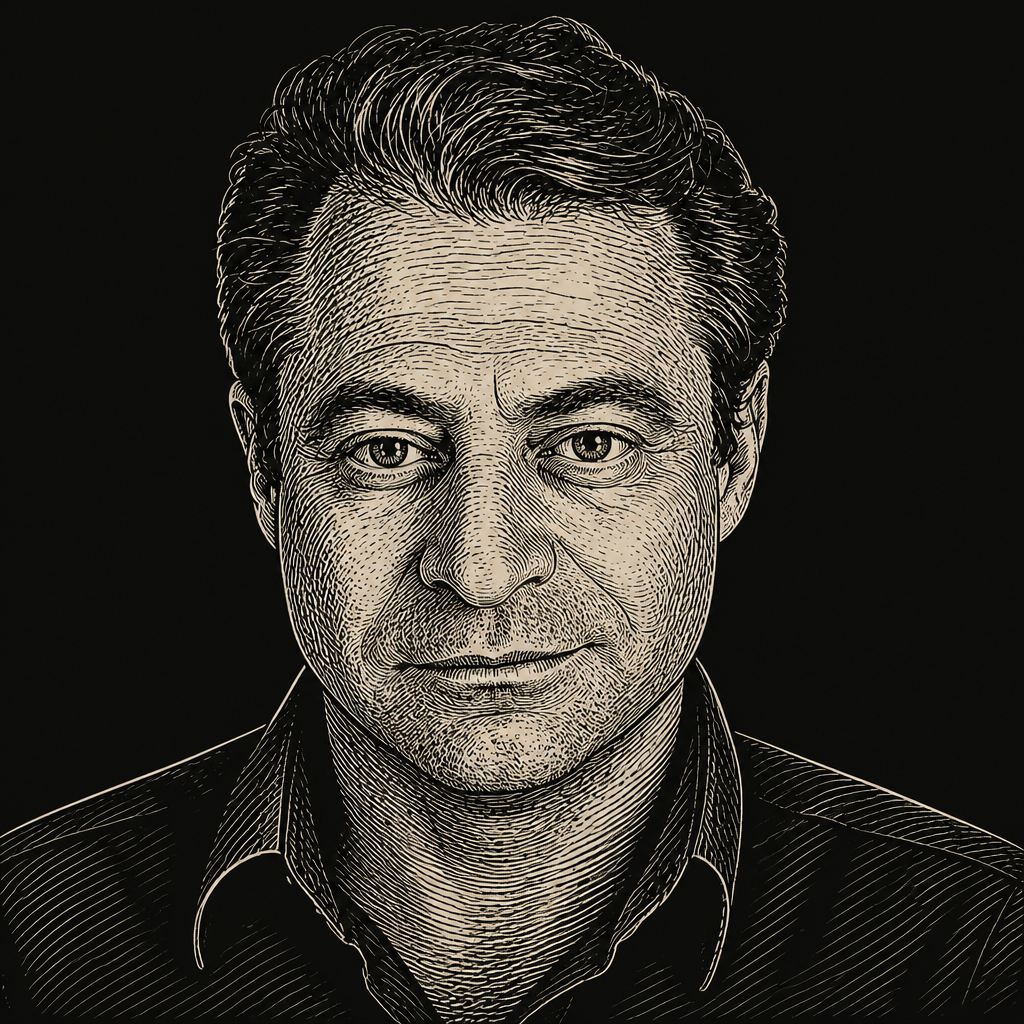


“It makes sense because it consolidates Elon’s control,” Diamandis said. He referred to the S-1 and IPO materials discussed on air, saying they described super-voting rights and insider voting control above 80%. Musk does not have that degree of control at Tesla, Diamandis said. Combining the companies, in his view, would give Musk more ability to operate across the infrastructure he is building.
The case was not only about voting power. Diamandis described Tesla’s future fleet — including Cybercabs and existing Tesla vehicles — as assets with compute capability and power. He framed those vehicles as part of a broader system that also includes SpaceX launch, satellites, communications, and orbital compute. A merged company, he said, would make Musk’s ability to implement his vision “a lot more efficient.”
I put it as not a matter of if and only a matter of when those two companies come together.
Diamandis also argued that a SpaceX public listing would make the mechanics of a transaction easier. If both companies are public and valued by the market, he said, a merger can happen more easily than a combination of private companies that would have to argue over valuation. An IPO, in his account, could become a step toward consolidating Musk-controlled infrastructure across launch, satellites, AI compute, terrestrial vehicles, and distributed power.
A Bloomberg graphic on IPO expectations said SpaceX was poised to choose Nasdaq as its listing venue, that a filing could include revenue and net income details, and that the company was targeting as much as $75 billion in its listing at a valuation above $2 trillion.
| Item | Bloomberg graphic |
|---|---|
| Listing venue | Poised to choose Nasdaq |
| Potential filing details | Revenue and net income |
| Listing target | As much as $75B |
| Valuation | $2T+ |
SpaceX is being framed as infrastructure, not a rocket company
Diamandis’s merger thesis depends on a broader claim: SpaceX should not be understood narrowly as a launch company. He described it as a vertically integrated satellite network, global broadband provider, sovereign communications layer, AI compute platform, and eventually off-planet infrastructure company. In his words, Musk is “building a hyperscaler,” not merely an AI product.
That distinction came in response to Ludlow’s question about Starship’s payload capability and its relevance first to Starlink and then to orbital data centers. A Bloomberg graphic cited a SpaceX filing and described “orbital AI data centers” as a “characteristically Muskian sci-fi ambition,” while also noting a basic bottleneck: the terrestrial AI industry already struggles to secure enough graphics processing units.
Diamandis said SpaceX’s value is not just in Grok or any one AI system, but in providing infrastructure for frontier labs. He argued that the company is not merely ahead of the launch industry; it is “orders of magnitude ahead” of anything else on Earth. He then tied that lead to a larger investment thesis: the things treated as scarce or valuable on Earth — metals, minerals, energy, real estate — exist in “near infinite quantities in space.” Buying into SpaceX, in his account, is buying exposure to what he called “the global economy 2.0 and 3.0.”
The Starship test gave Diamandis a way to describe how he evaluates the company’s progress. He called the latest flight test a success because, in his view, the relevant test was not whether every element performed perfectly but whether SpaceX could put an entirely new integrated system through flight. He emphasized that Starship was a “brand new vehicle” with “brand new engines,” and argued that a rocket system at that scale cannot be tested meaningfully “a little bit at a time.” The whole vehicle has to fly.
The on-screen footage from SpaceX showed Starship lifting from the pad, with Bloomberg labeling it as Friday’s Starship flight test. Diamandis called the vehicle “the largest most powerful engineering system ever launched by humans” and said the expected path is incremental: Starship flights improving until the vehicle is fully reusable, refuelable in orbit, and usable as a platform for the moon, Mars, and beyond.
The space race is becoming an economic race over compute and resources
Caroline Hyde pressed the geopolitical dimension: whether the United States repeatedly invokes China to justify less regulation and faster deployment, and whether SpaceX’s position should be understood in a new U.S.-China space race.

Diamandis accepted the competition frame but shifted the emphasis. Humans, he said, “love competition,” and it pushes development forward. He compared the current moment to the earlier U.S.-Soviet rivalry, but argued that this version is not just political. It is economic. The race is about “huge revenue engines,” including mining the moon, mining asteroids, and building orbital compute infrastructure.
The Starship footage included a test-flight view labeled “views by Starlink,” followed by a fiery impact on the water. The same hardware Diamandis cast as future infrastructure is still moving through visible flight testing.
Diamandis said orbital compute was not part of mainstream industry discussion a year ago, but that “today every major hyperscaler is” talking about it. He also said, in his phrasing, that “we see Anthropic buying into xAI’s or SpaceX xAI’s data centers on Earth,” while arguing that AI companies will also need compute “given from orbit.”
The abundance argument sits behind the infrastructure argument
Hyde also asked how a highly valued SpaceX listing helps solve problems for everyone rather than only early investors and insiders. Diamandis answered by moving from access to shares to access to capability.
He said “the single most powerful thing we humans have is our intelligence,” and argued that AI will increase effective human intelligence not by 10 or 100 times, but by “a million fold” or “a billion fold.” That increase, in his view, would accelerate breakthroughs across physics, chemistry, biology, and materials science.
His examples were expansive: solving aging, adding 30 healthy years of life, using those extra decades to reach further health extension, room-temperature superconducting, and new ways of growing food twice or five times faster and more healthily.
We’re heading towards a world of abundance across everything. Food, water, energy, health, education.
Diamandis attributed part of this view to conversations with Musk on his Moonshots podcast earlier in the year. According to Diamandis, Musk argued that AI and humanoid robotics could produce so much output that human desire itself becomes the limiting factor — “we could not want enough.” Diamandis acknowledged that this sounds “techno utopian,” but defended it by saying modern lives are already “godlike” compared with those of parents and grandparents.
He also said he believes the economy could move into “double and then triple digit GDP growth,” not because people work harder or become innately smarter, but because AI and humanoid robots expand productive capacity. The argument connects back to SpaceX and Tesla through infrastructure: if AI growth requires massive compute, and if compute expands into orbit and into vehicle fleets, Diamandis sees Musk’s companies as pieces of one stack spanning launch, satellites, AI systems, power, and vehicles.