Developers Want Siri APIs That Turn Apple Intelligence Into Infrastructure


Paul Hudson, creator of Hacking with Swift, argues that Apple’s AI opportunity for developers depends less on a smarter prompt box than on APIs that let Siri serve as an integration layer across apps. Speaking to Bloomberg’s Ed Ludlow, Hudson said developers want to expose app data and functions while Apple Intelligence handles user intent, privacy and cross-device execution—ideally through Apple-controlled infrastructure even if Google’s Gemini is part of the stack.
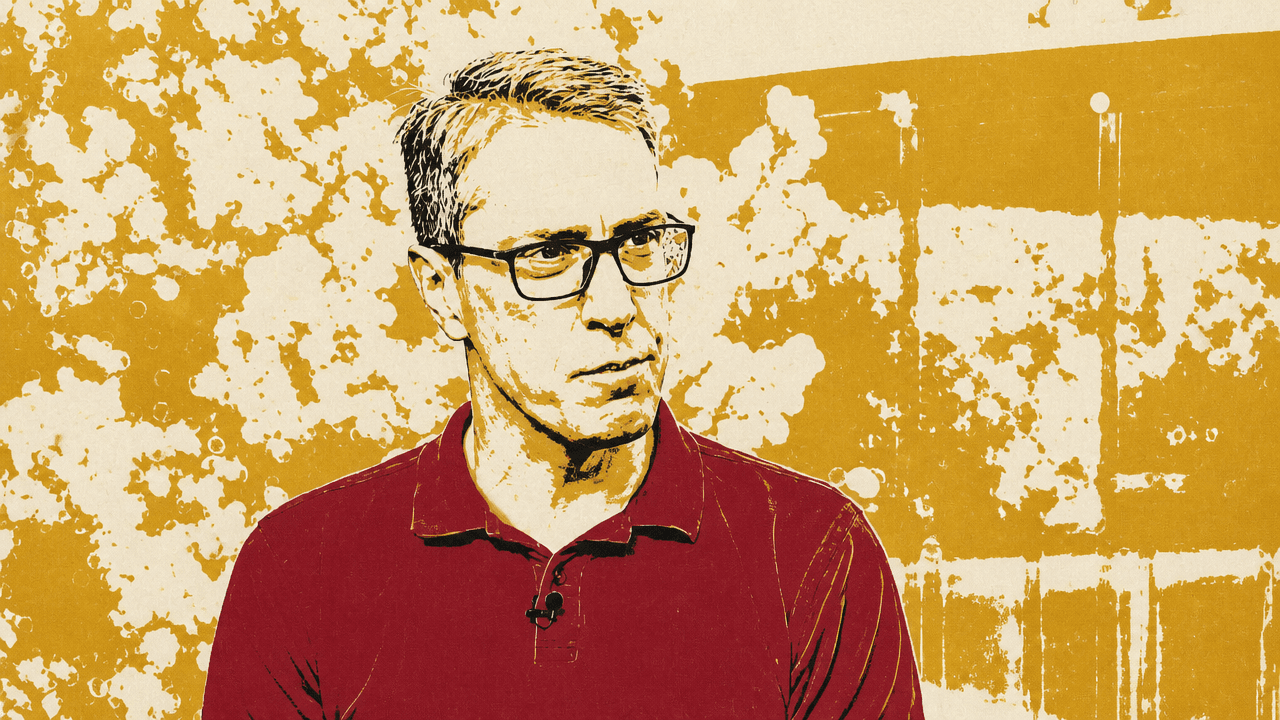
Developers want Siri to become an integration layer, not another prompt box
Paul Hudson, identified on screen as the creator of Hacking with Swift, framed the main developer hope for Apple’s AI as a platform question: whether Siri can become the place where apps expose data and capabilities, while Apple handles the natural-language interaction on top.


The version Hudson wants is not one in which each developer must anticipate every phrasing a user might choose. Today, he said, Siri too often replies with “I didn’t understand that,” asks the user to repeat something, or gets stuck on ambiguities such as “which bedroom lights do you mean.” For app developers, the problem is that “there are fifty different ways users can ask for the same thing.” Hudson’s view is that parsing those variations should be Apple’s responsibility, not every individual developer’s.
The desired model is straightforward: developers provide app data and code paths to Siri through APIs; Apple Intelligence interprets the user’s intent; Siri talks to the user, resolves the interaction, and invokes the right app functionality behind the scenes. Hudson described that as “the kind of dream” for developers. Bloomberg’s on-screen lower third captured the same point more tersely: “HUDSON: HOPE FOR SOME GREAT APIS TODAY.”
We provide data to Siri, and it intelligently, Apple intelligence, takes care of for us, and talks to users, and handles that integration together for us.
Ed Ludlow put the point more bluntly: from Apple’s perspective, Siri has to become “genuinely useful.” He described the hoped-for shift as a move away from a single voice prompt — a feature that can call someone or perform a narrow command — toward multi-step tasks. Hudson accepted that framing, but his emphasis stayed on whether Apple gives developers a reliable way to expose what their apps can do.


The privacy question turns on where Gemini, if used, actually runs
The privacy issue enters because, as Ed Ludlow said, Bloomberg reporting was that Google’s Gemini was, in part, the model underpinning the new iteration of Siri. Paul Hudson did not treat the use of Gemini as automatically disqualifying. His concern was where and under whose control the AI work would happen.
For Hudson, Apple’s privacy posture is not an incidental brand message. He called it a long-standing Apple identity that developers in the ecosystem also “buy into.” Last year’s Apple AI announcement, as he characterized it, was built around on-device, fully private AI; developers, he said, “went wild for that.” The question now is whether a more capable Siri can preserve that posture when larger models are involved.
Hudson’s preferred architecture would use Apple’s private cloud compute. He called it “genuinely research-level breakthrough stuff for handling private AI.” The contrast he drew was not simply Apple model versus Google model, but Apple-controlled private infrastructure versus processing that happens “somewhere in Google’s headquarters at the Googleplex.”
Pressed by Ludlow on whether he preferred the former, Hudson answered, “Oh, a hundred percent.” His reasoning was explicit: “It’s not that I don’t trust Google, but I definitely trust Apple.” He said he trusts Apple to put user privacy first because it has done so for years, and because developers in the ecosystem have aligned themselves with that principle.
Maybe Google's hardware perhaps, Google's Gemini, but hosted by Apple would be the dream.
Hudson left room for Google technology to be part of the stack: perhaps Google hardware, perhaps Gemini. But the preferred version is Apple-controlled hosting and privacy-sensitive processing, with Apple owning the layer that developers and users are being asked to trust.
Cross-platform Siri could help Apple blur lines that developers still treat as economic boundaries
Ed Ludlow raised another implication of a more capable Siri: if Siri works across Apple operating systems, a task or project begun on an iPhone could carry over to a MacBook. Paul Hudson answered from the economics of Apple development rather than from product-demo logic.
“Nearly all the money is still making iPhone apps,” he said. That matters because Apple’s platform strategy is broader than the iPhone. Hudson said Apple would likely prefer a wider spread across macOS, watchOS, tvOS, and visionOS. A more integrated Siri could help blur those lines, making developers think less in terms of isolated device targets and more in terms of Apple’s full suite.
Hudson pointed to Universal Control as an existing example of Apple’s integration style: one mouse cursor can control both an iPad and a Mac. In his view, that “has done something,” but developers want tighter integration. The underlying claim was that only Apple is positioned to do this kind of cross-device coordination.
That idea also shaped Hudson’s brief comments on John Ternus, whom Ludlow described as historically a hardware executive. Hudson said Ternus was already a major figure among Apple developers and Swift Student Challenge winners at the event, with people seeking selfies and signatures. More importantly for Hudson’s argument, a hardware background was not a mismatch: Apple is a hardware company, he said, but it also “firmly” believes in the full stack.
Naming consistency helps, but APIs are the larger ask
Ed Ludlow asked about moving to year-based OS names such as iOS 27 and iPadOS 27. Paul Hudson said that would help because it makes platform versions easier to reference consistently across Apple’s operating systems.
Hudson still hoped Apple would keep the macOS place names. He mentioned Tahoe and Big Sur as examples of names people enjoy, and joked that Apple’s marketing team could come up with something like “macOS Weed.” But the naming point was secondary.
The larger developer ask was for Siri to become programmable in a way that abstracts natural-language complexity, preserves Apple’s privacy promises, and works across the devices where Apple wants developers to build. Hudson’s hope for “great APIs” was not a request for novelty; it was a request for Apple to turn AI from a feature into infrastructure that developers can actually rely on.