Anduril and Qualcomm Aim to Build a US Laptop Supply Chain

Anduril Industries and Qualcomm are developing BlueChip, a laptop designed and assembled in the United States, as an effort to build a domestic computer supply chain. Bloomberg’s Ed Ludlow reported that the companies see dependence on overseas production, particularly China, as a national-security vulnerability; the project has so far produced a prototype, not a supply chain operating at scale. The laptop is expected to be expensive initially, with public-sector buyers as its first market and cost competitiveness with overseas-made products a longer-term goal.
BlueChip starts from a supply-chain security concern
Anduril and Qualcomm are developing a laptop designed and assembled in the United States under a broader initiative called BlueChip. Ed Ludlow described the effort as a response to what the companies see as a national-security vulnerability: the United States has limited computer supply-chain capacity and, in particular, substantial exposure to China.
That framing makes the project more than a hardware announcement. The stated objective is to establish a US supply chain for a computer, not simply to assemble a laptop domestically from components sourced elsewhere. Ludlow said the companies have produced a prototype, but emphasized that the effort remains small-scale. The prototype is an early step toward the supply-chain goal, not evidence that the partners have already established one at scale.
The partners’ roles reflect different capabilities. Anduril is a defense technology company known for autonomous drones and weapons; Qualcomm contributes the laptop’s GPU, CPU and other onboard AI compute. Ludlow said Anduril would argue that manufacturing autonomous systems has similarities to building a laptop. That is the manufacturing premise behind its role in BlueChip, rather than a claim that the two products are identical or that the laptop’s supply chain is already in place.
The distinction matters because the project’s ambition is broad while its present scale is limited. BlueChip is meant to develop a domestic supply chain for a computer, but the source describes a prototype and a plan. Ludlow presented the partners’ view of manufacturing as the basis for pursuing that plan; he did not describe a completed production system.
The prototype’s cost and the eventual cost goal pull in opposite directions
Ludlow said the laptop will be very expensive in the short term and that the initial target users are in the public sector: the military, emergency services and other public-sector customers. Those are two features of the near-term effort, not a stated cause-and-effect relationship. The product is both expected to be expensive at first and aimed at those buyers; Ludlow did not say that the intended audience explains the price.
The longer-term goal is to scale the effort until a fully US-manufactured laptop, supported by a US supply chain, becomes economically competitive with products made overseas. That aim sits in tension with the prototype’s small scale and expected short-term expense. The partners are describing a path from an early, costly product toward a more competitive one, but the report gives no production scale or date for that transition.
This leaves the central question in the announcement unresolved: whether the partners can move from a prototype to a US-based supply chain at a scale and cost that support competition with overseas manufacturing. Ludlow described that as what they believe they can achieve over time, not as a result already demonstrated. BlueChip’s importance, on the terms presented, rests on that intended progression: domestic production first, with economic competitiveness as the later objective.
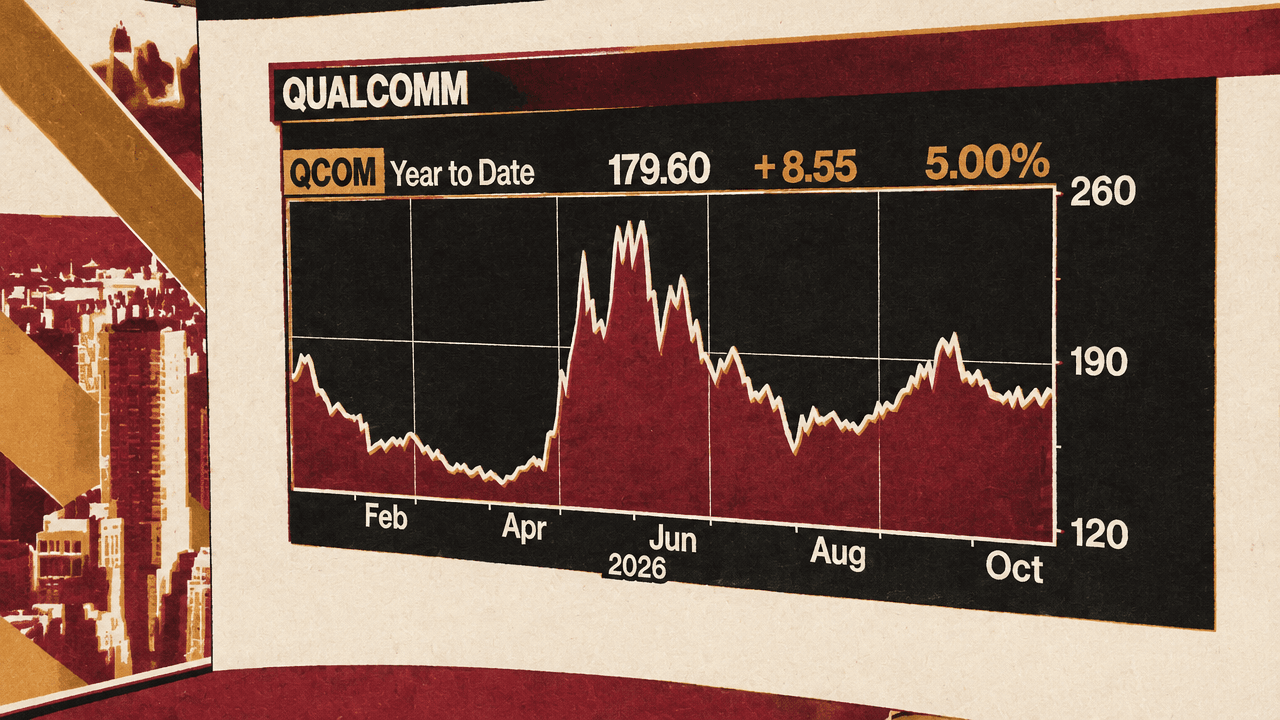
Ed Ludlow also situated the announcement against Qualcomm’s market movement that morning. The stock had risen 0.78% in premarket trading, to $181.90, which he described as a “little shot in the arm.” That move was immediate market context for the news, distinct from the longer-term question of whether the manufacturing ambition can be realized.