Broadcom Says Six Customers Are Building Custom AI Chips to Rival Nvidia


Broadcom chief executive Hock Tan told Bloomberg’s Tom Giles that the company is treating the AI infrastructure boom as an engineering contest rather than a market story. He argued Broadcom’s position rests on multi-generation custom-silicon and networking work with a small set of strategic customers, with Google furthest along and OpenAI on track for production late this year. Anthropic, in Tan’s account, sits in a separate bet: TPU compute capacity provided through Broadcom’s partnership with Google, based on confidence that enterprise generative AI demand would materialize.
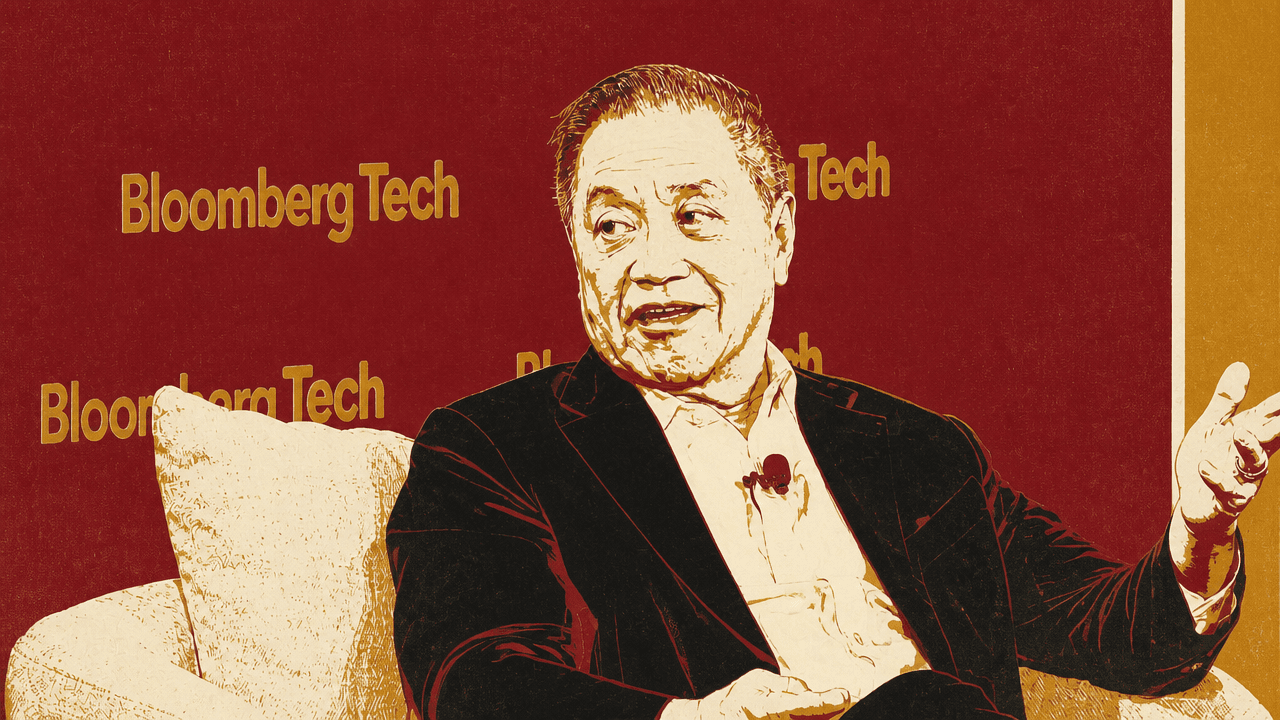
Broadcom is treating the AI buildout as an engineering race, not a stock-market narrative
Hock Tan described Broadcom’s position in AI as “surreal,” but said the company’s operating response is deliberately unsentimental: focus on fundamentals, create value, and try not to manage for the stock price. Tom Giles had framed the issue as a mismatch between investor expectations and business results: companies can reaffirm very large AI revenue forecasts, beat estimates in several areas, and still face disappointment because expectations around AI have moved so far ahead.




Tan did not try to explain that market psychology in detail. His answer was that Broadcom is operating inside a hype environment, but cannot make that the center of management. “It’s hard not to” think about the stock price, he acknowledged, but said the company tries to avoid doing so.
That discipline shaped how he talked about Google, Anthropic, OpenAI, networking demand, and M&A. Broadcom’s AI strategy, as Tan presented it, is not a single bet on one model company or one chip program. It is a set of engineering partnerships around custom AI accelerators, networking, and related semiconductor products, all under pressure from Nvidia’s GPU roadmap and from customers’ desire to own more of their own silicon stack.
Google’s customer-owned tooling is competition Broadcom expects to face
A significant tension in Broadcom’s Google relationship is that Google is not merely a customer for AI chips. It is also trying to take more of the development and design process into its own hands. The question put to Tan was whether “customer-owned tooling” at Google keeps Broadcom awake at night, and whether Broadcom has contractual protections that would prevent Google from moving more of the process in-house.
Tan’s answer was that this is normal semiconductor competition. Broadcom has been in semiconductors for more than 20 years, he said, and the job is to keep investing and “out-engineer” competitors. In this case, the competitor can partly be the customer.
Google’s customer-owned tooling effort, as Tan described it, means Google trying to design more itself, possibly with help from smaller partners such as Marvell or MediaTek. Tan called those partners “ankle biters,” but did not dismiss the competitive dynamic. Broadcom’s response, in his telling, is to compete against its own customer in that part of the stack by building differentiated technology that is better than what Google can assemble elsewhere.
We just compete against my own customer in a different part of it and the whole idea is to be able to create differentiated product and technology that beats what they have.
The dynamic is made more intense by Nvidia. Tan called Nvidia’s GPU the “real competitor” facing Google’s TPU effort. As long as Nvidia keeps producing “superb technology” generation after generation, Google has to create equivalent technology to match it. That is where Tan placed Broadcom’s role: helping Google build technology strong enough to compete with Nvidia’s successive GPU generations.
That view also limits how much Broadcom claims for itself in the broader TPU ecosystem. Making TPUs more accessible to mainstream developers rather than elite AI labs depends heavily on software: the operating system, compilers, and surrounding development environment. Tan said Google is already trying to make TPU access available through Google Cloud, but placed the software program mostly in Google’s domain. Broadcom would like to help, he said, but Google “pretty much” controls that effort.
The Anthropic bet was explicitly a leap of faith
Hock Tan characterized Broadcom’s work with Google to provide TPU compute capacity to Anthropic as a bet made with limited certainty. Broadcom and Google co-designed the TPUs, and together provided compute capacity to Anthropic. When the arrangement began roughly a year earlier, Tan said, there was “no shortcut” around the fact that it was a leap of faith.
The bet had two parts. First, Broadcom and Google were betting on Anthropic’s business model, especially its focus on enterprise use cases and coding tools. Second, they were betting that generative AI itself would take off in a substantial way inside enterprises. Tan said that, to date, it had been “a great bet.”
Tom Giles pressed the financial risk: foundation model companies require large amounts of capital to fund chips and compute, and investors might worry that Broadcom could be left exposed if end-user demand does not materialize. Tan did not describe specific financing structures, downside protections, or contract provisions. Instead, he returned to the premise of the original bet and to the operating evidence Broadcom sees from AI tools, both in the market and internally.
Tan said he knows more now than he did a year ago, and expects what he knows today to be only a fraction of what he will know six months from now. The tools from Anthropic, OpenAI, and Google’s Gemini are changing quickly, and he described them as “phenomenal” in their ability to improve productivity.
The most concrete evidence he offered was Broadcom’s own use. The company uses generative AI tools for engineering design and code assistance. Tan said the tools can enhance productivity and, in some cases, may help produce designs better than Broadcom’s engineers would produce unaided — even though he described those engineers as very good.
Broadcom has not throttled AI tool use because Tan sees the ROI case as compelling
Hock Tan said Broadcom has not imposed limits on internal AI tool use and suggested the company may not yet be at the stage where throttling becomes necessary. The question came in the context of “token maxing” — employees using AI tools without much restraint — and of broader enterprise concern about the cost of AI usage.
Tan’s reason was not that usage is free or that spending cannot matter. It was that employees are still learning how to use the tools well, and productivity improves with practice. He used Anthropic’s Opus as an example of a tool engineers learn to use over time. At first, he said, a tool may not be highly productive. But with enough use, engineers become better at applying it, and the tool becomes much more valuable.
Tan framed token spending as an ROI question rather than a budget category to suppress. His example was stark: if one very senior engineer can use an AI tool to produce an application or design in one week that would otherwise take 10 engineers three months, the economics remain compelling. He put the cost of those engineers at $300,000 per year each.
That example does not mean Tan argued for unlimited use under all circumstances. He said throttling is probably a question of return on investment and application. But his emphasis was that premature limits could block learning and value creation. For Broadcom, the important question is whether token spending produces output that could not otherwise be achieved at comparable cost.
When the discussion returned to enterprise price sensitivity around token usage, Tan said he hears the same concerns from CIOs and company leaders trying to reduce token costs. But from his own vantage point, enterprise AI use remains in the “early innings.” Companies are still learning what they can get from tools that keep improving generation by generation.
Tan drew a distinction between waste and productive use. He does not want Broadcom employees to “go nuts” on tokens, but if token spending creates value and produces a return that would not otherwise exist, his question was: why stop?
He used an arcade analogy to make the point. Token usage can feel like feeding coins into a game when a monster is about to eat the player and the gun runs out of ammunition. “It’s almost this,” he said, “but it’s not quite.” The difference, in his telling, is that enterprise AI usage is not entertainment spending if it produces measurable productivity or better designs.
OpenAI is one of six custom-silicon customers, and Tan says production is on track
OpenAI sits inside a broader custom-silicon business that Hock Tan described as limited and highly concentrated. Broadcom has “a few” customers building AI accelerated silicon, he said — specifically six. Each is at a different stage of a journey toward custom chips optimized for its own workload. Tan described the objective as creating custom AI accelerated silicon to replace what is now the de facto approach: Nvidia GPUs.
Tom Giles asked about Broadcom’s AI chip work with OpenAI, including a report that there may have been snags and that Broadcom wanted Microsoft to agree to buy a certain percentage of the chips. That Microsoft-purchase issue came from Giles’s question, not from Tan’s account. Tan rejected the idea that anything material is holding the partnership back.
Google is the furthest along because it started earlier. OpenAI, Tan said, has been engaged with Broadcom for more than two years. He described the progress as “pretty remarkable,” saying the AI accelerated silicon is already working well in OpenAI’s labs and data centers. Broadcom is on track to go into production late this year.
Asked directly whether anything is holding back the partnership, including any need for Microsoft to make agreements, Tan answered: “No, not at all.”
| Company | Relationship as Tan described it | Stage or role |
|---|---|---|
| Longstanding partner on co-designed TPUs | Furthest ahead; trying to match Nvidia generation by generation while also pursuing more customer-owned tooling | |
| Anthropic | Recipient of TPU compute capacity provided through the Broadcom-Google partnership | Part of a bet on enterprise generative AI and coding tools that Tan says has worked to date |
| OpenAI | One of Broadcom’s six custom AI silicon customers | AI accelerated silicon working in labs and data centers; production expected late this year |
Tan described custom AI silicon as a multi-generation process rather than a one-time chip program. First-generation chips tend to be replaced by second-generation chips, then better versions after that. This is similar to how he described the Google relationship: even when the customer wants more control, Broadcom’s opportunity is to keep engineering better technology.
AI growth has made M&A look like a distraction rather than an accelerant
Broadcom has historically used acquisitions as a major part of its growth model, but Hock Tan said the AI cycle has changed the tradeoff. The question of M&A still crosses his mind and the board’s mind, but the comparison has become difficult. Between 2024 and 2026, he said, Broadcom will be doubling revenue and creating more than $50 billion per year of annualized revenue. Against that, he asks what the company could buy that would come close.
His objection was not only valuation or fit. It was organizational focus. M&A requires acquisition work, regulatory review, and then integration, which can take another year. Tan called all of that a distraction. Meanwhile, generative AI demand for compute capacity is “almost insatiable,” and Broadcom has an opportunity to shape the “picks and shovels” of that market.
I’m looking around, what can I buy? That even come close to that. And that’s the tricky part.
Tom Giles asked whether Broadcom might make an exception in areas such as photonics or optics. Tan’s answer was a statement of management style: he has run the business for 20 years by trying to avoid “bright shiny objects.”
That does not amount to a permanent renunciation of deals. Tan did not say Broadcom will never do M&A. He said that, in the current environment, choosing M&A over focusing on generative AI compute is hard to justify because the organic opportunity is so large and the distractions from acquisitions are so substantial.
Networking demand is massive, but Broadcom wants strategic customers rather than every order
Broadcom’s AI exposure is not limited to custom accelerators. Hock Tan said the company has built a semiconductor portfolio over two decades consisting of about 17 product divisions in specific core areas. The operating principle, as he described it, is to be number one in a category or not participate.
About five or six of those divisions have become important in creating AI chips and AI clusters. Networking, especially switching, is one of them. Tan said switching gear is “taking off like a rocket” because AI clusters require massive networking capacity.
Tom Giles raised Cisco as a potential competitor in areas Broadcom has dominated. Tan’s answer was that Broadcom is selective about where it sells its products. Demand for AI networking is “massive,” but the company prioritizes customers it considers strategic: customers using the products for a sustainable purpose and likely to need not just one generation, but the next and the next.
That selectivity changes how he views competition. If Broadcom is focused on strategic, durable customers and demand exceeds what it chooses to serve, Tan said he is happy for the overflow to go to Cisco.
The point clarified Broadcom’s preference in the AI surge. Tan’s model is not to chase every unit of demand. It is to focus on customers that can support repeated generations of AI infrastructure. In custom silicon, that means a small number of large partners moving through multi-generation chip roadmaps. In networking, it means prioritizing AI cluster customers whose demand appears sustainable.