SpaceX’s IPO Shows Public Markets Can Absorb Megadeals

Bank of America’s JD Moriarty argues that public markets can absorb large technology IPOs from companies such as OpenAI and Anthropic, pointing to investor demand for SpaceX as evidence. He says abundant private capital and investors’ familiarity with these companies have changed the traditional IPO playbook, but cautions that their scale makes them poor proxies for the wider market, where activity remains concentrated in a few large deals.
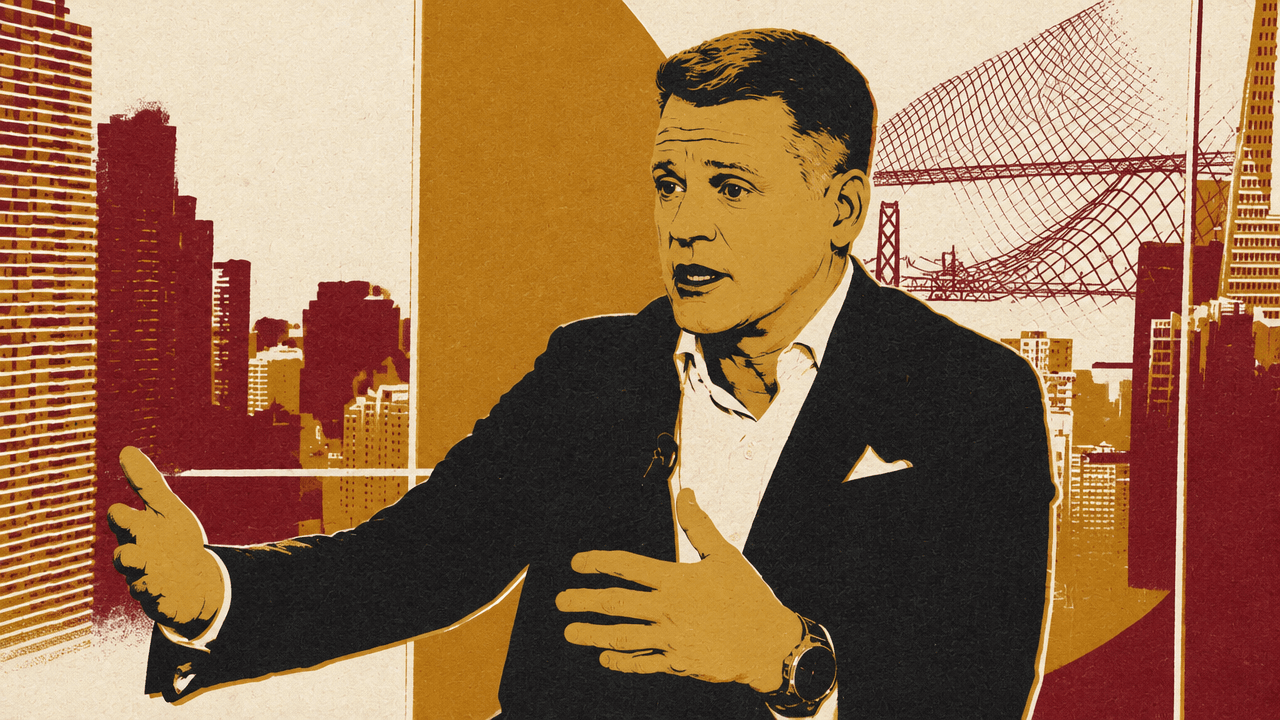
SpaceX eased one concern about megadeal capacity
JD Moriarty said public markets have the capacity to absorb large technology listings, including potential IPOs from OpenAI and Anthropic. Before SpaceX went public, he said, market participants questioned how much cash investors would need to redirect to buy the offering. As SpaceX went on the road, Alphabet raised a large amount of capital in public markets; Moriarty described the impact as “a blip.” He said the market absorbed and rewarded SpaceX.
That experience has changed the conversation about capacity, in Moriarty’s account, but he cautioned against treating SpaceX, OpenAI and Anthropic as representative of the broader IPO market. They are unusual in their sheer scale. He also said that abundant private capital and crossover investors mean institutions already know these companies well before they list.
Moriarty’s account of the SpaceX offering points to three sources of demand and financing: public equity, other markets, and retail investors who want to participate.
The lesson is that there is, the capacity is absolutely there in the equity market. The lesson is that they're able to tap other markets as well. Right. Uh, the lesson is that retail investors very much want to participate.
A market graphic shown during the exchange displayed an intraday SpaceX quote of 168.94, up 2.98, or 1.73%. Moriarty said demand for potential AI deals was present among both institutional and retail investors.
A six-month pause no longer fits these companies’ funding needs
Ed Ludlow asked whether investors accept rapid returns to market as part of the operating environment, citing Bloomberg reporting that SpaceX was in talks to borrow $40 billion and the speed with which it returned to markets after its IPO. Moriarty said the traditional expectation that a company goes public and then does nothing for six months is irrelevant for these companies and would not serve them well.


He connected the changing pattern to the amount of capital needed for hyperscaler investment and to the availability of different funding pools. Moriarty said colleagues in Bank of America’s investment-grade area had been discussing hyperscalers’ projected capital expenditure. He said projections rose by 20% in 2025, while final 2026 numbers were still uncertain. Extending the projections to 2030, he said, implied a “staggering” amount of capex. Historically, he added, the investment-grade market has funded about half of it.
Moriarty said that spending would have significant implications for the high-grade index, and that additional pools of capital could benefit both the companies and market functioning. In his view, the markets are more connected than ever: financing hyperscaler investment has consequences across markets, not only for the companies raising money directly.
The largest prospective IPOs raise unusual questions
Ludlow cited Bloomberg’s reporting that Anthropic was aiming to go public before Thanksgiving and asked how an Anthropic or OpenAI IPO might differ from earlier offerings. He raised the companies’ future capital needs and the difficulty of documenting risks he characterized as novel, including an existential threat to human life.
Moriarty said it was rare for media discussions to focus on risk factors. He then cautioned against treating the two prospective offerings as indicative of the broader IPO market, emphasizing their scale and the fact that investors already know them through private-market exposure. The exchange leaves the IPO questions tied to features that distinguish these companies: large financing needs and substantial investor familiarity before a public listing.
A productive IPO market has not yet broadened beyond the largest deals
Moriarty described the IPO market as strong on proceeds, but not broadly active. Proceeds had exceeded 2021 levels, he said, despite far fewer deals; the offerings were much larger. Software, meanwhile, had been absent because of the potential for AI to disrupt the sector.
Whether that changes next year remains open. Moriarty said it would be interesting to see whether a viable market emerges for more traditional technology IPOs. He also said hiring for the work ahead would be less specialized. People would need to be nimble across business models because AI is changing how companies and subsectors are defined.
The business case for banks’ AI use is still developing
Asked whether banks see a clear economic case for spending on AI tools, Moriarty said the proposition is evolving, as is the definition of the use cases. He argued that companies cannot wait until the economics are fully clear, given the pace of change and what competitors are doing. Bank of America had already seen internal efficiency benefits this year, he said, while the use cases and degree of vertical orientation would continue to develop.