ASML’s Capacity Is Strained as Chipmakers Plan Through 2030

ASML’s capacity, rather than a lack of demand, is the constraint as chipmakers plan investments years ahead. Intesa Sanpaolo analyst Antonella Frongillo says equipment makers are discussing demand into 2029 and 2030, though those discussions are not confirmed orders; she sees further upside for ASML despite uncertainty over China sales and the potential impact of the MATCH Act.
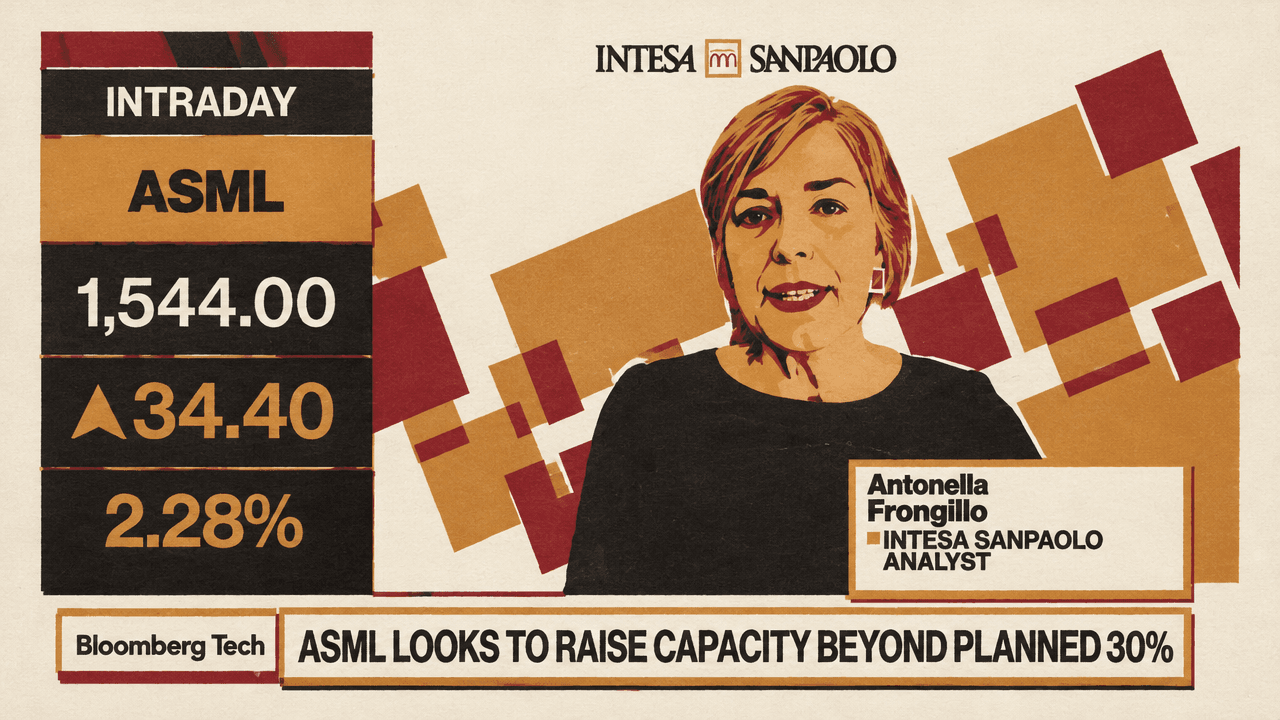
Capacity is the constraint, while planning reaches beyond current orders
ASML’s customers are asking for more equipment, but meeting that demand depends on how quickly the company and its suppliers can expand output. Intesa Sanpaolo analyst Antonella Frongillo said ASML is trying to increase capacity by optimizing production and releasing product upgrades. Customers are also seeking greater productivity from equipment already installed. Frongillo said that demand helped make installed-base management revenue higher than expected in the third quarter.
That distinction matters: expanding capacity is not only a question of building and delivering more machines. Product upgrades and productivity improvements can help customers get more from equipment already in use. Frongillo described capacity as the key constraint for ASML and the wider semiconductor-equipment value chain, even as demand remains strong.
The forward dates being discussed are not all at the same stage. Frongillo said equipment makers had reported full order capacity for 2027, while capacity for 2028 remained “very stretched.” Those comments describe the order picture in those years; they do not mean ASML has already taken orders for 2029 or 2030. Ed Ludlow explicitly noted that later-year orders had not been taken. Frongillo’s point was that customers and suppliers are already discussing those years because the expected investment horizon is longer than the current order book.


She characterized AI deployment as an unprecedented, multi-year technology upcycle. In that context, she said, planning for 2029 and 2030—and potentially beyond—is appropriate. She also pointed to possible technological upgrades and new initiatives ASML has launched with TSMC and Samsung as reasons to consider a longer time horizon. The discussions signal planning against expected demand, not confirmed sales.
A concentrated customer base, with demand across memory and logic
A Bloomberg graphic showed that ASML’s six largest customers account for roughly 60% of revenue. It grouped TSMC, Samsung and Intel at about 40% of revenue, and SK hynix, Micron and SMIC at about 19%.
| Customer group shown | Share of ASML revenue |
|---|---|
| TSMC, Samsung and Intel | ~40% |
| SK hynix, Micron and SMIC | ~19% |
| Six customers combined | ~60% |
ASML does not disclose which customers are pushing hardest for lithography machines, Frongillo said. She inferred that memory makers were currently running ahead of the others, based on what they had confirmed on their calls. But she did not describe demand as exclusive to memory: advanced logic is also needed for advanced chips. In her account, equipment demand relates to all the main advanced-chip manufacturers.
The concentration makes customer investment plans important to ASML’s outlook. Frongillo’s distinction is between relative pace—memory makers running ahead—and the broader need for equipment across memory and advanced logic.
Frongillo sees valuation upside, with the MATCH Act as a constraint
Ludlow said ASML’s shares were up 67% year to date, had reached a record in June and had since traded broadly sideways without setting a fresh high. Frongillo said the decline from the May peak had also affected other semiconductor companies. Against that backdrop, she considered ASML’s valuation appealing after the earnings upgrades she said she had made.
In Frongillo’s view, the stock’s multiples were in line with its five-year average, which did not adequately reflect the current upcycle. She also said ASML had nearly closed its historical valuation premium to US peers, a change she considered unjustified. The share-price correction, earnings upgrades and potential further upside could prompt a rerating, she argued.
China is a separate source of uncertainty. Ludlow noted that China accounted for 23% of ASML’s third-quarter systems sales. Frongillo said the company expected China to represent around 20% of sales for the year; she added that the quarter had been somewhat better than the second quarter, after the company had been more cautious in earlier quarters.
For Frongillo, the larger China question is not the short-term sales contribution but the possible impact of the MATCH Act. She said investors fear the new regulatory constraint could have a double-digit impact on ASML, and saw that concern as one reason the stock was not expressing its full potential. She said there might be more clarity after the US midterm elections.