Arm Says Agentic AI Will Drive a Surge in CPU Demand

Arm chief executive Rene Haas used a Bloomberg Technology appearance to argue that Arm’s AI position depends on Taiwan’s manufacturing and partner ecosystem as much as on chip architecture. Haas said Arm’s edge devices, robotics systems and cloud AI infrastructure are built through Taiwan-linked partners, and argued that the rise of agentic AI will sharply increase demand for CPUs because autonomous agents require constant orchestration around accelerator-generated tokens.
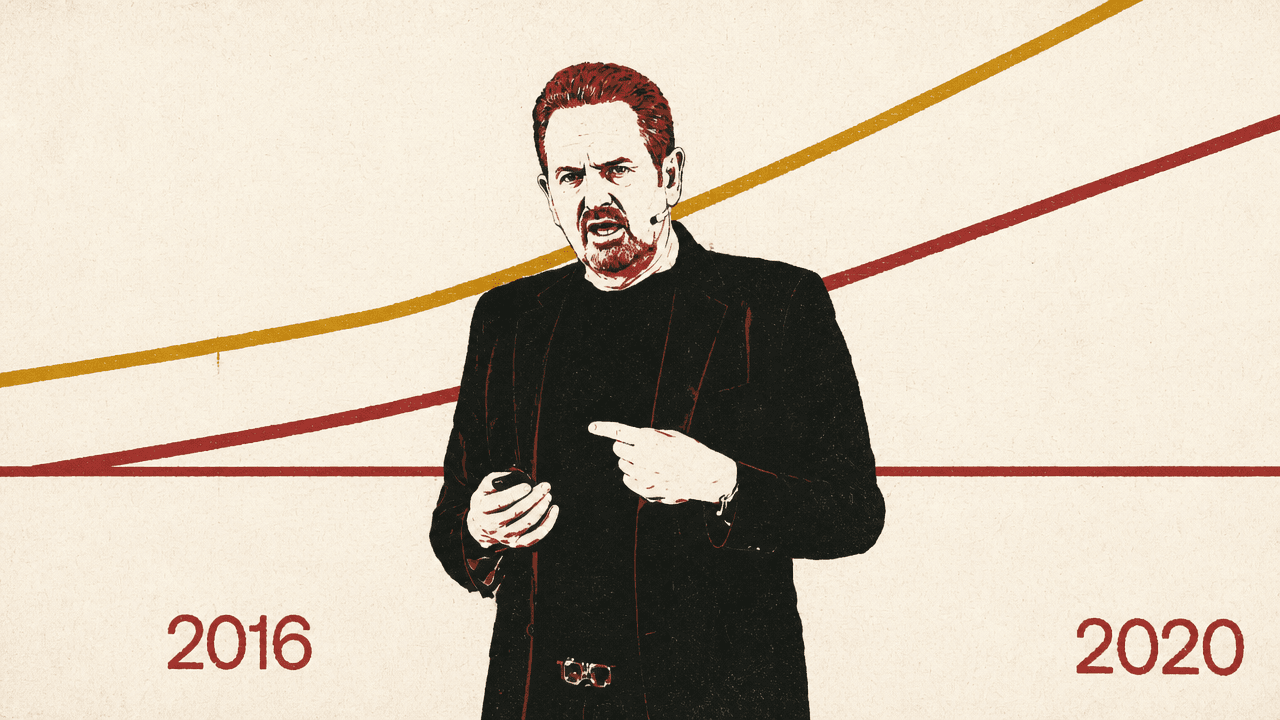
Haas framed Arm’s AI position around Taiwan and CPU orchestration
Rene Haas framed Arm’s position in AI around two dependencies. The first is physical: Arm presented edge devices, physical AI systems, and cloud AI infrastructure as categories built on the Taiwan ecosystem. The second is architectural: Haas argued that agentic AI shifts more work toward CPUs because autonomous software agents generate persistent orchestration demands around accelerator-produced tokens.

Arm’s slide titled “Platform leader across verticals built on the Taiwan ecosystem” grouped examples into three markets.
| AI category | Examples Arm showed |
|---|---|
| Edge AI | Amazon Echo; Chromebook; OPPO/Vivo phones; Meta Ray-Ban Display and Neural Band; Apple MacBook; Google Nest Hub; ASUS AI PCs; NVIDIA DGX Spark; Lenovo AI PC |
| Physical AI | Figure AI humanoid; DJI drones; Advantech AI Robotics; Techman AI Cobot Series; Tesla Model 3; Unitree humanoid |
| Cloud AI | Supermicro/Lenovo ARM AI Grace server; GIGABYTE NVIDIA GB200 NVL72; Google Cloud TPU Rack; NVIDIA Grace CPU; AWS Graviton |
Haas emphasized the robotics category first, calling physical AI and humanoids “the most advanced in the world,” and naming Tesla, Figure, and Techman. His production claim was blunt: “All the chips here built in the Taiwan ecosystem.”
He then extended the same point to datacenter AI. For cloud systems, he cited “the TPU racks, the racks by NVIDIA, Graviton,” and said, “100% of our ecosystem is built in Taiwan.” The sentence that followed compressed the strategic claim into its starkest form: “Without Taiwan, there really is no Arm.”
The consequence is that Haas presented Taiwan not as a supplier footnote, but as a foundation for Arm’s AI footprint across device classes. Edge devices, humanoids and robotics, and cloud AI servers were all used to support the same broader claim: Arm’s ecosystem is deeply tied to Taiwan.
Agentic AI shifts the workload from token generation to orchestration
Rene Haas connected the Taiwan ecosystem argument to a separate compute-demand claim: as agentic AI grows, CPUs become more important because agents create continuous management, distribution, and orchestration work.
The reference point was Arm’s March 24 “Arm Everywhere” event. Haas said Arm had been looking at the growth of agents and agentic AI, using GitHub stars as an adoption signal. A slide titled “Agentic explosion — March 24th: Arm Everywhere” compared OpenCLaw with Linux and Kubernetes from 2012 to 2026. OpenCLaw’s line rose sharply beginning around 2024, on a chart whose y-axis ran to 200,000 GitHub stars.
Haas defined GitHub stars as a measure of “the popularity or the stickiness of a certain application.” His interpretation was that OpenCLaw had reached “levels almost beyond parabolic” in its takeoff. To Arm, that was evidence that agentic platforms were beginning to drive demand for CPUs “in a way we had not seen before.”
The distinction in Haas’s explanation is between creating tokens and operating agentic systems at scale. GPUs and other accelerators, which he grouped as “XPUs,” are “amazing at generating tokens,” whether in training or inference. He called the accelerator “the token machine” and “the token factory.”
Agents, unlike humans, don’t sleep. And agents beget agents that beget agents.
Agents create a different load. Haas argued that all the tokens created by those agents need to be “distributed, managed, orchestrated, delivered to the destination.” In his view, that work belongs to CPUs, while still depending on “a full system design.”
That is the center of Arm’s compute claim. Accelerators remain central to producing tokens. But agentic systems, as Haas described them, create persistent surrounding work: routing, coordination, delivery, and management. The more agents proliferate, the more CPU capacity Arm expects the system to need.
Arm’s March estimate was four times more CPU cores in the same power envelope
Arm’s March 24 estimate was specific: “4x CPU cores needed in the same power envelope.” Rene Haas said Arm believed future systems would need four times the number of CPU cores without increasing the power budget.
Haas said that multiplier drew immediate scrutiny. He received “so many questions” asking for the math behind the figure. He also said that, not long after Arm made the claim, other numbers began circulating — “4x, 8x, 10x.”
He treated the exact number as difficult to predict because it depends on the growth rate of agents. The more stable part of the argument was the direction: agentic growth increases CPU-intensive work. The “same power envelope” condition matters because Arm was not merely arguing for more CPU cores in the abstract. It was arguing that orchestration, management, and delivery workloads will require materially more CPU capacity under existing power constraints.
The claim also reframes the role of CPUs in AI infrastructure. In Haas’s account, the AI system is not only a collection of accelerators generating tokens. It is also a system that must move and coordinate those outputs continuously, especially when software agents are running without the human rhythms of stopping and sleeping.
Arm said the agentic adoption curve had accelerated again
Rene Haas compared the March view with what Arm said it was seeing “today.” A later slide, titled “Agentic explosion — Today,” expanded the GitHub-stars scale from 200,000 to 1.1 million. It kept the earlier comparison lines for OpenCLaw, Linux, and Kubernetes, then added an “Agentic ecosystem (examples)” line that rises nearly vertically between March 2026 and May 2026. The slide described the view as “based on GitHub adoption trends.”
Haas’s summary was direct: “If we look at today what we’re seeing in terms of agentic growth, even fast forwarding from the 24th of March, this is just exploding.”
That comparison is the support Haas offered for Arm’s CPU-capacity claim. The March slide showed one agentic platform rising sharply; the later slide presented the broader agentic ecosystem as accelerating much faster. In Haas’s framing, that acceleration means more agents producing more work around token distribution, management, orchestration, and delivery — the work he assigned to CPUs.