Anthropic’s Existing Backers Seek More Shares in Its IPO


Bloomberg’s Natasha Mascarenhas reports that several of Anthropic’s largest venture backers, including Iconiq, Sequoia and Lightspeed, have submitted orders for shares in the company’s upcoming IPO. She describes the move as a “mega-fund strategy”: investors that built stakes privately are putting in more capital as Anthropic goes public, backed by funds they have raised or are raising. The orders raise a broader question, she says: whether concentrating so much venture capital in one company is a sound strategy.
Existing backers are seeking more shares as concentration remains an open question
Several of Anthropic’s largest existing venture investors have submitted orders to participate in the company’s upcoming IPO. Natasha Mascarenhas named Iconiq, Altimeter, Sequoia, Lightspeed Venture Partners and Accel. She called the move notable because venture capitalists do not usually buy into a company’s IPO after backing it privately.


Mascarenhas described the orders as a “mega-fund strategy”: invest early, build ownership, then put in more capital when a company goes public. She said most of the firms she named had either raised billions of dollars that year or were in the process of doing so. That fundraising capacity, in her account, is where the cash for the IPO orders is coming from.
The move adds to investments some of these firms had already made at an unusually large scale. Mascarenhas said that over the past year, firms had made their biggest investments in Anthropic in their respective histories. Now several existing backers are seeking to add shares through the IPO.
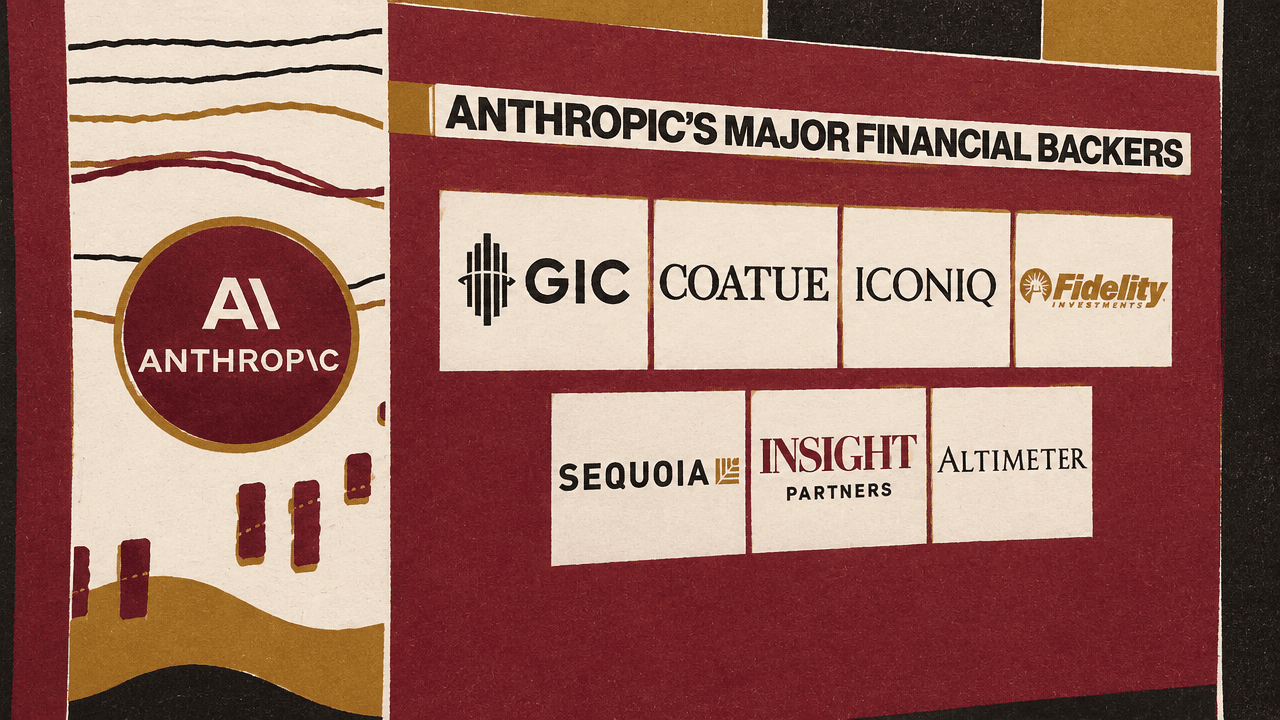
A Bloomberg graphic also displayed a broader set of Anthropic financial backers, including GIC, Coatue, Fidelity and Insight Partners. That group is distinct from the five firms Mascarenhas named as having submitted IPO orders.
Anthropic’s early financing history makes the new orders a striking turn
Ed Ludlow noted that Anthropic had taken institutional money only about three years earlier, and asked about the company’s valuation growth and the ride its venture firms—and later strategic investors—had been on.


Mascarenhas pointed to Spark Capital, which came in and priced a round. She said Spark was likely the only investor identified as having secured the coveted position of a stockholder with more than 5%. Her phrasing was qualified; the discussion did not provide valuation figures or a detailed account of how individual ownership stakes changed.
Against that short financing history, the new orders represent another step by existing backers to increase their exposure. The funds’ ability to raise billions helps explain how they can put more capital to work, while the scale of their investments makes concentration the central question.
Mascarenhas said concentration had become a widely discussed issue in Silicon Valley and beyond. Her question was whether it is the right strategy for venture capitalists to commit heavily to one company—and whether the approach is specific to Anthropic or might also make sense for other AI bets, including OpenAI.
The orders make Anthropic a case to watch, but Mascarenhas posed the broader comparison as an open question, not as evidence that investors in other AI companies are following the same pattern.