Anthropic Seeks $30 Billion at More Than $900 Billion Valuation
 Ed Ludlow
 Caroline Hyde
 Brian Schimpf
 Seth Fiegerman
 Will Bruey
 Max Levchin
 Michael Shepard
 Henry Ren
 Tyler Kendall
 Natasha Mascarenhas
 Fiona CincottaBloomberg TechnologyWednesday, May 13, 202617 min read
Bloomberg’s technology program framed the day’s AI trade around access to scarce capacity: Nvidia chips for China, private capital for Anthropic, and manufacturing scale for Anduril. Its central report was that Anthropic is in early talks to raise at least $30 billion at a valuation above $900 billion, a deal Bloomberg’s Natasha Mascarenhas said would mark a major shift in the private AI hierarchy if completed. The program also treated Jensen Huang’s last-minute role in Trump’s China trip as a test of whether chip access can become a diplomatic deliverable without undermining Beijing’s domestic semiconductor strategy.

Huang’s China trip made chip access the market’s proxy for diplomacy
President Trump’s meeting with Xi Jinping was framed by the White House around trade, but the late addition of Nvidia CEO Jensen Huang made AI-chip access the market’s most visible question. Bloomberg’s Tyler Kendall reported from Beijing that Huang caught Air Force One during a refueling stop in Anchorage, after what the White House described as a scheduling change. Kendall also noted that Trump had appeared unhappy in a Truth Social post with media coverage that Huang was not originally listed on the traveler manifest.


The market read Huang’s presence as a possible opening for Nvidia’s H200 chips. Kendall said the “big ticket item” was whether Trump would push the Chinese government to allow Chinese buyers for the H200s, which Washington had already greenlit for sale into China. He also reported that Washington and Beijing were discussing potential cooperation to keep dialogue open around artificial intelligence, which could become one of the deliverables from the Trump-Xi meeting.
That AI track sat alongside a more traditional trade agenda. Kendall said the administration maintained that trade was the top priority, and that other CEOs on the ground in Beijing represented sectors where Chinese purchase commitments could emerge, including agriculture and aviation. The CEO delegation included Tim Cook of Apple, Elon Musk of Tesla, Sanjay Mehrotra of Micron, Cristiano Amon of Qualcomm, Jacob Thaysen of Illumina, Dina Powell McCormick of Meta, Chuck Robbins of Cisco, and Huang.
But Kendall also warned that Iran would “loom very large” over the talks. A senior administration official had told reporters that, behind closed doors, Trump would push Xi on China’s stance during the Iran conflict, including Beijing’s role as the largest buyer of Iranian crude.
For equity markets, the near-term trade was simpler. Caroline Hyde pointed to a volatile session in which the Nasdaq 100 moved back into positive territory, while the Nasdaq Golden Dragon China Index, representing U.S.-traded Chinese companies, rose more than 3%. She tied the move to excitement about what Huang’s presence could mean for Chinese technology companies. Nvidia itself was up almost 3%, trading at a record high, and on track for a sixth straight day of gains.

The biggest moves were in Chinese AI model names. Minimax and Zhipu rose sharply on the idea that Chinese AI developers could gain access to more powerful Nvidia chips. Later, Bloomberg’s Henry Ren said Huang’s last-minute trip had boosted the morale of mainland traders, with double-digit gains in Chinese model makers and spillover into U.S. trading for Chinese technology shares.
| Asset or company | Displayed move | Context |
|---|---|---|
| Golden Dragon China | +3.44% to +3.98% | U.S.-listed Chinese names rallied ahead of the summit |
| Nvidia | +2.33% to +2.78% | Shares rose on hopes of progress selling AI chips into China |
| Minimax Group | +18.46% | Chinese AI model developer rallied on Huang visit |
| Zhipu | +36.90% | Chinese AI model developer rallied on chip-access hopes |
| Alibaba | +8.20% | Chinese technology shares gained during the same trade |
| Tencent | +5.66% | Chinese technology shares gained despite slower revenue-growth commentary |
Fiona Cincotta of City Index said the possibility of Chinese firms gaining access to more powerful chips would be “the absolute icing on the cake” for those stocks. Huang’s addition to the delegation, in her view, intensified hopes that chip access could be on the table. She also put the rally in a broader frame: optimism around Trump’s China trip was lifting the Nasdaq even as inflation concerns and an imperfect macro backdrop would normally weigh on technology shares.

Cincotta’s explanation of the market’s logic centered on mutual dependence. The U.S., she said, dominates “AI computing power at the top of the technology stack,” while China controls much of the lower-level supply chain, including critical minerals needed for semiconductors and advanced electronics. In her view, more agreements and “synergies” between the two economies would be positive because the systems remain deeply interdependent.
That did not make her unqualifiedly bullish. Client demand for AI and semiconductor exposure, she said, had ramped sharply and caught markets by surprise, especially after a more depressed view of the sector late last year and early this year. But positioning looked “a little bit overdone,” leaving room for consolidation or a pullback. Her technical read, however, was that nothing on the charts indicated an imminent reversal: “the side of least resistance does appear to be upwards.”
The same global AI trade showed up outside the U.S. and China. Hyde raised ASML in Europe and volatility in South Korea’s KOSPI after discussion of a possible citizen dividend or “people’s dividend” on AI wealth. Cincotta treated that as a future risk point: if a tax or redistribution mechanism around AI gains became more global, it could matter. For now, she said, AI demand for technology was “definitely back on.”
China wants compute, but not at the expense of its own chip strategy
The strongest tension in the Beijing story was not whether Chinese AI developers want more compute. It was whether Chinese authorities will let them buy it from Nvidia at scale.
Bloomberg Senior Tech Editor Michael Shepard said Huang’s dramatic late addition put artificial intelligence at the center of the discussions, but cautioned that it remained unclear how much progress Nvidia would see on market access. Washington had permitted Nvidia to sell H200 chips to customers in China, he said, but Chinese authorities had been reluctant to allow domestic buyers to purchase those chips “en masse.”

Shepard gave the reason as industrial policy. Beijing wants to promote and protect its own domestic chipmaking industry, including Huawei, Cambricon, and SMIC. That goal sits in tension with the needs of Chinese AI model developers, which want access to more compute to improve their competitive position. The stock reaction in Minimax, Knowledge Atlas, Alibaba, and Baidu reflected the market’s view that any loosening could matter.
A Bloomberg graphic identified four “critical tech issues between US and China”: the H20/H200 chip crisis, the Manus acquisition, critical minerals, and a remote access ban. Shepard added that the presence of White House Science and Technology Policy adviser Michael Kratsios could signal that AI policy would be “front and center.” He said the U.S. might raise concerns about distillation, which he described as unfair extraction of AI models, and that a working group on AI could be created.
The question for other members of the delegation was how their China exposure would map onto the demand side of the talks. Shepard said Micron has its own separate issues with China and remains important in the memory market, while Qualcomm’s business in mobile-phone chips could also feature. Those details kept the summit from becoming only an Nvidia story, even if Nvidia was the market’s shorthand.
Ren added a company-level check on the China AI optimism. Alibaba and Tencent had both reported results, and investors were focusing on whether AI investment was yet producing returns. Ren said Alibaba reassured investors with cloud revenue growth of about 40% in the first quarter, an acceleration from the previous quarter, and disclosed that AI-related revenue tied to models and application services would reach about 10 billion RMB for the June quarter. That showed “some AI momentum,” he said, but capital expenditures were also soaring. Tencent, Hyde noted, reported its slowest pace of revenue growth in more than a year.
The source presented the summit’s AI story as a set of competing incentives rather than a resolved policy shift: Chinese model makers want compute; Chinese policymakers want domestic chip champions; U.S. companies want market access; Washington wants leverage and safeguards; and investors were willing to price the possibility of progress before a formal outcome existed.
Anthropic’s possible $900 billion valuation would be a Bloomberg-reported shift in the private AI hierarchy
Bloomberg reported that Anthropic was in early talks with investors to raise at least $30 billion at a valuation of more than $900 billion. The financing had not been finalized, no term sheet had been signed, and the talks came as Anthropic pushed to raise funds for computing infrastructure. An on-screen Bloomberg News graphic also stated that Anthropic was expected to IPO as soon as October.
Bloomberg’s Natasha Mascarenhas described a shift from unsolicited investor interest to active engagement. A few weeks earlier, she said, conversations were coming “completely unsolicited” from Anthropic’s backers. By the time of the report, Anthropic was discussing a round that could raise at least $30 billion. Sources told Bloomberg the round could close as soon as the end of the month.


Investor interest far exceeded what Anthropic was likely to accept, Mascarenhas said. That gave the company room to be selective on valuation, lead investor, and terms, even though the term sheet had not been signed as of Bloomberg’s reporting the previous evening. Ed Ludlow described Anthropic as having become more comfortable with a valuation level it had recently rebuffed, citing continued momentum for Claude and enterprise adoption.

The “awkward elephant in the room,” as Ludlow put it, was that a round at the discussed level would give Anthropic a higher valuation than OpenAI. Mascarenhas called that a “massive narrative shift” around Anthropic.
| Funding detail | What Bloomberg reported or displayed |
|---|---|
| Target raise | At least $30B |
| Target valuation | More than $900B |
| Status | Early talks; no finalized deal and no signed term sheet |
| Use of funds | Computing infrastructure push |
| Potential timing | Round could close as soon as the end of the month, according to sources |
| IPO reference | Expected to IPO as soon as October, according to an on-screen Bloomberg News graphic |
The financing discussion reopened the IPO question. If Anthropic can raise that much private capital, the pressure to go public changes. Mascarenhas asked whether a completed round would alter the timing of an S-1 filing. Ludlow connected that question to the broader private-market environment: if the private markets provide the capital, what is the need to go public? He also raised the possibility that a SpaceX event in June or July could “suck oxygen out of the room.”
The Anthropic discussion tied directly to another risk in hot private markets: unofficial or fraudulent secondary-market access. Hyde cited Anthropic’s warning that some purported stock sales involved fraudulent share certificates or unapproved transfers. A quote from Anthropic shown on screen stated: “Any sale or transfer of Anthropic stock, or any interest in Anthropic stock, that has not been approved by our Board of Directors is void and will not be recognized on our books and records.”
That warning became part of the broader discussion with Anduril CEO Brian Schimpf about private companies, cap tables, and investor demand. The issue was not unique to Anthropic; Schimpf said it affects “every one of the companies who are interesting in the private markets.”
A few shorter AI items reinforced the same pressure around compute access, model access, and infrastructure. Hyde reported that SoftBank posted a jump in profit fueled by valuation gains on its OpenAI investment, while founder Masayoshi Son had spent the past year pivoting the company’s focus from venture startups to silicon and data centers. Nebius, she said, reported a 684% jump in first-quarter sales on demand for its own data centers and competes with neo-cloud startups such as CoreWeave, which rent computing resources to AI developers.
AI access for banks formed a related thread. Hyde reported that, following a visit from Scott Bessent, Japan’s three megabanks were set to gain access to Anthropic’s powerful Mythos model, according to a person familiar with the matter, despite alarm over Mythos and speculation about cybersecurity risks. Separately, Hyde said Mistral was developing a new AI model for banks that lack access to Mythos, aimed at uncovering cybersecurity vulnerabilities at “unprecedented speed and scale.” Mistral had already been working with local European banks on a model to stress-test cyber risks in banking systems, according to Bloomberg sources cited on air.
Anduril says the defense-tech constraint is production, not capital
Anduril’s new $61 billion valuation after a $5 billion funding round led by Thrive Capital and Andreessen Horowitz was treated as evidence of surging investor appetite for AI-driven defense technology. Ludlow said the valuation was almost twice where Anduril stood a year earlier. Bloomberg also reported that Anduril doubled revenue to $2.2 billion in 2025 and would invest “aggressively” in manufacturing and infrastructure.
| Anduril measure | Figure or description |
|---|---|
| Latest valuation | $61B |
| New funding round | $5B |
| Lead investors | Thrive Capital and Andreessen Horowitz |
| 2025 revenue | $2.2B, doubled according to Bloomberg’s displayed graphic |
| Production revenue growth | About 250% year over year, according to Schimpf |
| Capital priority | Factories, production workforce, inventory, manufacturing infrastructure |
For Brian Schimpf, the central point was operational. Anduril, he said, is entering a period where production is the name of the game. The vast majority of the new capital will go to scaling factories, building the production workforce, funding inventory, and getting the production ramp working.


As a business, you know, we're entering this period where production is the name of the game.
Schimpf described demand as strongest in counter-drone, air and missile defense, electronic warfare systems, surface-to-air missile systems, and low-cost munitions. He singled out Barracuda, Anduril’s low-cost cruise missile, saying the Department of Defense was buying “thousands a year” and that Anduril was ramping at an unprecedented pace to help address a critical munitions shortage and improve deterrence.
Ludlow pressed on whether the $5 billion was enough to finish Arsenal-1 and start production. Schimpf answered that Anduril was already ramping production with cash it had, and that the new money was about continuing to fuel growth. He resisted the idea that Arsenal-1 would be “done” soon, because demand and required scale would continue rising over several years. He described this as a “good problem” and credited the American capital system for allowing private markets to fund aggressive industrial ramps quickly.
The discussion of Anduril’s product roadmap stayed partly bounded by secrecy. Ludlow noted a “mystique” around the company and referenced Palmer Luckey’s statement that half of Anduril’s products are not publicly known. Schimpf said the company’s shareholder letter was meant to explain the “why”: Anduril looks at shifts in technology and warfare, asks what capabilities will be needed over the next five or ten years, and invests ahead of that need.
He pointed to Ukraine and Iran as evidence that modern conflict is defined by the sheer volume of munitions exchanged and by the need to defend against that volume. Anduril’s focus, he said, is on strike capabilities, intelligent targeting, and defenses against those systems.
Golden Dome, Trump’s proposed missile-defense project, became the place where cost and production capacity met. Hyde cited Congressional Budget Office forecasts suggesting the ultimate project could cost up to $1.2 trillion and noted that Anduril was among companies awarded initial contracts. Schimpf argued that many such estimates are based on historical approaches: expensive, exquisite systems costing $10 million, $20 million, or $30 million per shot. He said commercial technologies, smarter design, and adaptation of proven capabilities could make the system more efficient.
For Schimpf, though, price was not the only constraint. “Can you even produce it?” was the larger question. He said the U.S. had shot “something like a decade of Tomahawk production” in 72 hours, a rate of consumption that made replenishment a critical issue. His view was that national-scale missile defense could now be achieved on a more aggressive timeline and at a more efficient price than historical assumptions suggest.
The IPO question produced one of the clearest statements of how late-stage private markets have changed. Schimpf said Anduril wants to build “one of the most impactful businesses in the world,” moving the needle for U.S. and allied warfighters at immense scale. But the rationale for going public, he said, is weaker than it used to be. Private capital markets have grown large enough to fund companies like Anduril; liquidity for early investors and employees can be provided in other ways; and the historic reasons to rush into the public markets “don’t really exist anymore.”
Anduril’s threshold for an IPO is therefore not capital access. It is proof: that the business model works, that it can scale, and that its economics can support high growth at high margins. Until then, Schimpf said, the company is not in a rush.
On fraudulent secondary activity, Schimpf said Anduril tries to control its cap table tightly and ensure investors are known, long-term, and aligned. He declined to name secondary-market providers, arguing that most problems come from individual brokers or bad actors misrepresenting what they can access rather than from the platforms themselves.
The China summit brought the defense discussion back to Taiwan. Ludlow asked about the long-discussed 2027 window for a possible threat to Taiwan. Schimpf said diplomacy is good and that Anduril is “in the deterrence business” and does not want conflict. He said the 2027 “period of maximum danger” is not a literal invasion date, but a period when the PRC has a more established military capability and the U.S. and Taiwan may be at a relative disadvantage compared with other points in time. Iran, Ukraine, and other hotspots add stress to the U.S. military. His stated hope for the summit was a scenario that preserves the status quo.
Cerebras rejected an eleventh-hour Arm-SoftBank approach before its IPO
Arm and SoftBank tried to buy Cerebras in an evenly split cash-and-stock deal that would have valued the AI chip startup at $100 billion, according to Bloomberg sources. The approach came in early May, weeks before Cerebras was due to go public. Cerebras rejected it.
Ed Ludlow, who helped break the story, said Arm and SoftBank would have paid a premium, but Cerebras, its leadership, and its investors backed the company to proceed alone as a public company. The parties involved declined to comment or did not immediately respond to Bloomberg.
The industrial logic was presented as a shift in Arm’s ambitions and a reflection of where AI infrastructure demand is moving. Arm, Ludlow said, goes from being a chip designer toward wanting to be a chip maker, selling directly into the market. Cerebras makes supercomputers at scale for inference, which Ludlow described as “where the AI story is right now.”
The potential deal also sat inside a broader IPO-demand story. Caroline Hyde said Cerebras was expected to price at the top end of its marketed range, “up to $160 plus,” and could raise the largest amount for a semiconductor name since Arm went public, possibly more if the greenshoe allotment were used. That context made the rejected approach another data point in a market willing to pay aggressively for AI infrastructure exposure, whether through a public listing, a strategic acquisition attempt, or a private financing round.
The other AI-adjacent businesses were selling access, distribution, and new workflows
The program’s later company interviews moved away from the Beijing summit and the largest AI financing stories, but they stayed close to the same underlying questions: what new infrastructure unlocks, how companies package access to it, and whether investor demand is being matched by operating results.
Varda Space Industries’ deal with United Therapeutics was described as one of the first commercial research agreements to develop medicine molecules in space and return them to Earth. Will Bruey said the work was already underway: Varda and United were working on the drugs in the lab, and the commercial effort would put drugs into space in the next year.
Bruey tried to remove the novelty from the “space” part. The simplest way to understand Varda, he said, is to imagine an anti-gravity technology that could manipulate chemical systems on Earth to improve drug formulations in ways otherwise impossible. The aim is not space for its own sake, but formulation changes: moving from an IV bag to a shot, improving bioavailability, or improving shelf stability.
The process starts before launch. Varda works with customers to develop a microgravity-enabled formulation on the ground. Bruey defined that as the usual formulation parameters — temperature profile, concentration, and other inputs — plus the option of turning off gravity during the process. Once the formulation is ready, Varda loads it into a spacecraft.
SpaceX is the launch provider. Bruey said Varda uses rideshare launches on Falcon 9, taking advantage of lower cost and frequent availability. The spacecraft separates like a satellite; he said it looks like a satellite to SpaceX and that 20 could fit on a single rocket. In orbit, Varda performs the manufacturing process without gravity affecting crystal sedimentation. Once the relevant properties are locked in, the spacecraft flies itself back to Earth and lands in Australia.
Bruey said Varda had done returns “four or five” times, with one in Utah and the rest in Australia. Australia, he said, provides a commercial range that does not interfere with U.S. military test ranges. The patient example he offered was access: a drug that normally requires an IV clinic visit might be reformulated as a shot, allowing the drug to come to a patient in rural America instead of requiring the patient to travel to a clinic.
Affirm’s investor pitch was about distribution and trust rather than a new physical platform. Max Levchin said the company had told investors three years earlier that it would reach $50 billion in gross merchandise volume while maintaining profit margins between 3% and 4% and growing around 20% annually. Now, he said, Affirm was basically at that $50 billion mark, but instead of slowing, it expected to grow 25% compounded and raise the floor of profitability from 3% to 3.75%.
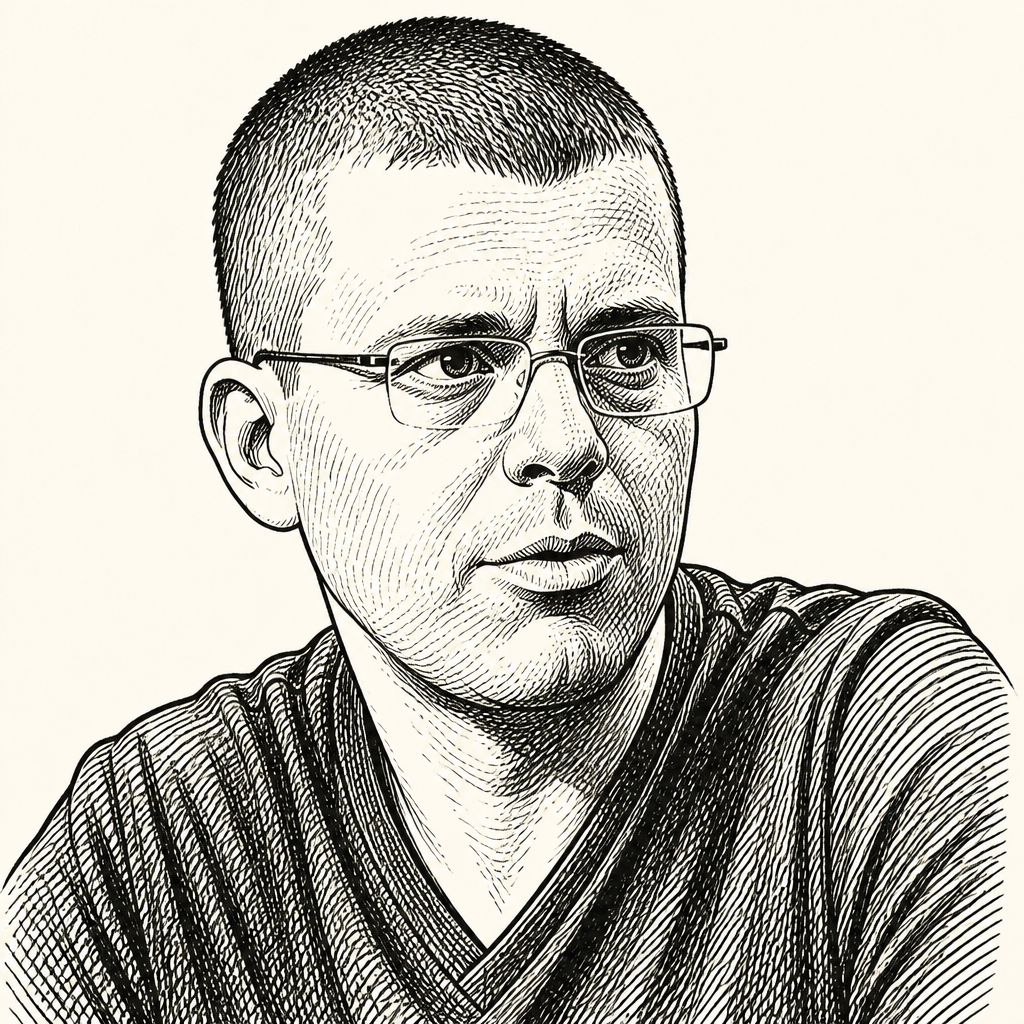
The $100 billion volume target, Levchin said, is “just a waypoint,” not an endpoint. The reason he believes it is achievable is market pull from both consumers and merchants. Consumers who previously discovered Affirm at checkout are now signing up directly and asking for a card they can use everywhere. Merchants, he said, come to Affirm after seeing its logo on competitors’ sites and believing it drives 10% to 20% more sales. They want Affirm to promote their sales events and surface them in its app.
Affirm’s fiscal third-quarter 2026 GMV grew 35% year over year to $11.6 billion, active consumers reached 26.8 million, and revenue increased 33% to $1.039 billion, according to a company slide cited in the segment. Levchin also said Affirm was reaching 15 million monthly consumers.
| Metric | Figure shown or stated |
|---|---|
| FY 3Q 2026 GMV | $11.6B, up 35% year over year |
| Active consumers | 26.8M |
| Revenue | $1.039B, up 33% |
| Monthly consumers reached | 15M |
| Previous GMV target | $50B |
| New volume milestone | $100B |
Levchin’s agentic-commerce pitch was that AI agents make Affirm easier to introduce at the moment when consumers are researching meaningful purchases. He described Affirm as most relevant when consumers buy things that matter — a bicycle, a couch, an espresso machine — and want financing that does not surprise them with unexpected fees and has clear payment start and end dates. Partnering with LLM providers, he said, lets Affirm be present while consumers research and search.
Asked about M&A, Levchin emphasized building. Affirm has looked for years, he said, but has not found anything in the last few. He did not rule out acquisitions, but said the company has enough to do with its existing team and remains focused on building.
The OpenAI-Musk trial framed the dispute as a fight over control
The closely watched trial between Elon Musk and OpenAI was expected to be near its final day of evidence. Hyde said Sam Altman had told jurors he was “extremely uncomfortable” with Musk’s insistence on having full control of OpenAI in its early days. Musk is suing OpenAI, its former co-founders, and Microsoft, alleging that they abandoned the ChatGPT maker’s altruistic mission.
Bloomberg AI editor Seth Fiegerman said OpenAI’s counterargument is that Musk’s frustration stems from not being able to control and run OpenAI as he does his other ventures. Fiegerman described Altman’s testimony about an alleged conversation in which Musk said that, if he died while controlling OpenAI, he would pass it to his children.
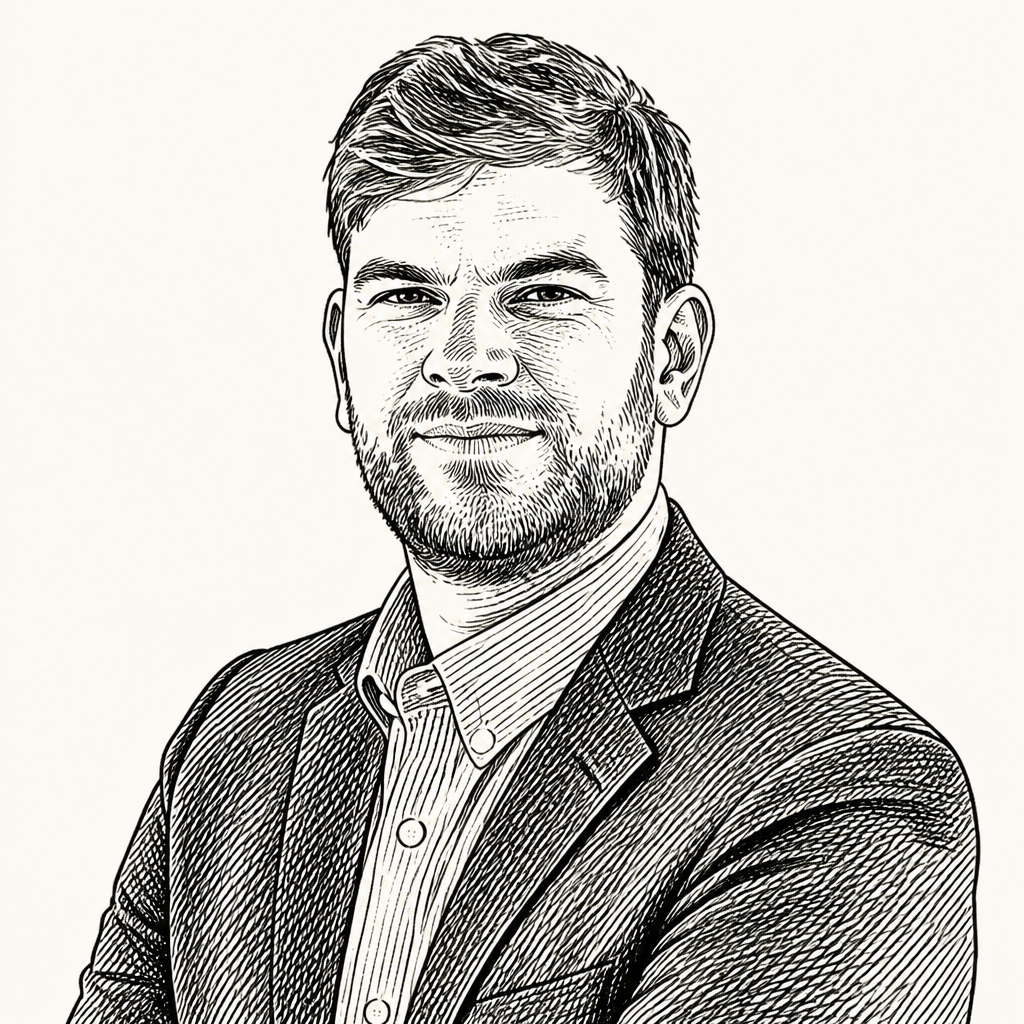
Fiegerman added that Altman said Musk wanted early control but was unwilling to sign documentation saying that control would lift later. Musk, in his own testimony, said he may have had control early on, but expected more investors to come in and reduce that control over time.