Anduril Would Consider Building Its Next Weapons Hub Outside the US

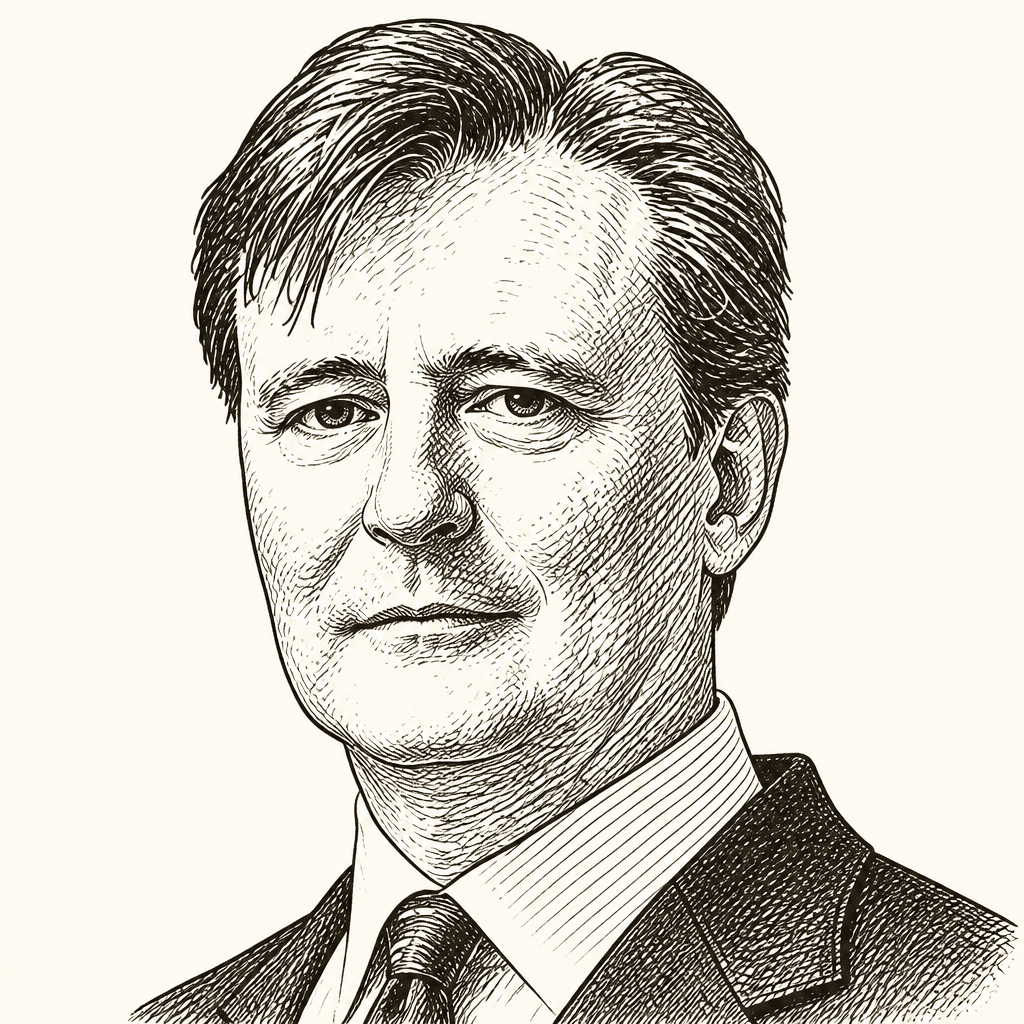
Anduril CEO Brian Schimpf told Bloomberg’s John Micklethwait that the defense company would “absolutely” consider building a future weapons manufacturing hub in an allied country outside the US. Schimpf argued that allies need a more predictable way to buy and receive weapons, and said Europe has manufacturing talent Anduril could draw on. His broader case is that defense production depends not just on factory space, but on designing weapons, supply chains and assembly processes that can scale and localize more easily.

Anduril is open to putting a future arsenal outside the United States
Speaking with Bloomberg’s John Micklethwait at Founders Forum Global, Brian Schimpf said Anduril would “absolutely” consider building a future manufacturing site in an allied country rather than only in the United States. Micklethwait framed the question as whether “Arsenal 2” could be outside the US; Schimpf did not identify a formal project or location, but answered the location question directly.


Schimpf framed the issue around a basic defense procurement problem. In his view, an allied country should be able to spend money and receive weapons on a predictable schedule. He said that is not the system many governments currently experience: they spend money, and at some uncertain point in the future they “may or may not” receive the weapons they ordered.
If you're an allied country, you would want to have, like as a goal, I would like to be able to spend money and get weapons in a predictable way.
Schimpf said Anduril had not “locked into any one country” for such a site. But he pointed to Europe as a region with “a lot of manufacturing talent,” and said Anduril has designed its systems so the company can use supply chains beyond the traditional aerospace-and-defense base.
A non-US arsenal, as Schimpf described it, would depend on more than selecting a host country and replicating a conventional defense factory. He said Anduril has focused on making production easier to localize: keeping assembly relatively inexpensive, reducing the amount of skilled labor needed, and avoiding dependence on overly precise parts where possible. He described those choices as important to building manufacturing capacity quickly in “a lot of different regions around the world.”
The Ohio buildout exposed how hard the manufacturing problem really is
Anduril’s willingness to consider an allied-country site sits alongside what the company has learned from building its large manufacturing campus in Ohio. Micklethwait described the site as a “huge place” and pressed Schimpf on what Anduril had learned from scaling production. Schimpf’s answer was blunt: manufacturing ramps are painful in a way that is easy to accept intellectually and harder to absorb operationally.
He compared the difference to “thinking you’re gonna get punched in the face and getting punched in the face.” Manufacturing, he said, is “legitimately hard” and “one of the most complex operational things you can pull off.”
Schimpf said the Ohio campus is about 5 million square feet, with the first building already filled and beginning production. The difficulty, as he described it, is not merely constructing factory space. It is coordinating the machinery of production: thousands of parts have to arrive on time, at the required quality, and in the right sequence.
His example was simple. If one part is missing, the company does not ship the finished product. That is the operational problem Anduril has had to build around as it moves from technology development into large-scale weapons production.
Schimpf sees a lost American manufacturing skill set being rebuilt
Brian Schimpf’s broader diagnosis was that the United States allowed a generation of manufacturing competence to weaken. When Anduril looked for a head of manufacturing, he said, he “could not find someone who had built a new manufacturing system that was American.” His explanation was cultural and economic: manufacturing had not been treated as a valued skill set in the US, and “the best and brightest” were not going into it.
By contrast, he said, in many other countries manufacturing remained a more aspirational field, attracting strong talent. The United States, in his view, effectively told a generation that manufacturing “does not matter” and outsourced the activity.
Schimpf called the rebuilding of US manufacturing competence a “generational problem.” But he also described a shift already underway. He pointed to Y Combinator classes with “a ton” of manufacturing startups and to senior people from OpenAI and other AI organizations starting manufacturing AI companies. He said Anduril would benefit from that broader push into manufacturing.
The result is a dual focus: rebuilding capacity in the United States while designing systems that can also be produced where allied countries have manufacturing talent and procurement demand. Anduril is building in Ohio, but Schimpf’s case for a possible overseas site rests on the same manufacturing logic: products and factories have to be designed so production can scale, localize, and draw on a wider industrial base than traditional defense manufacturing alone.