Starship Reusability Is the Bottleneck for Space-Based AI Compute
Andreessen Horowitz general partner David George argues that SpaceX’s path to AI computing in orbit depends less on proving new physics than on executing rapid Starship reusability. In a Bloomberg Technology interview with Ed Ludlow, George said lower-cost, repeatable transport to orbit could make space-based GPU capacity an incremental answer to tightening constraints on terrestrial AI data centers, while framing Elon Musk’s role as central to a16z’s long-term investment case.
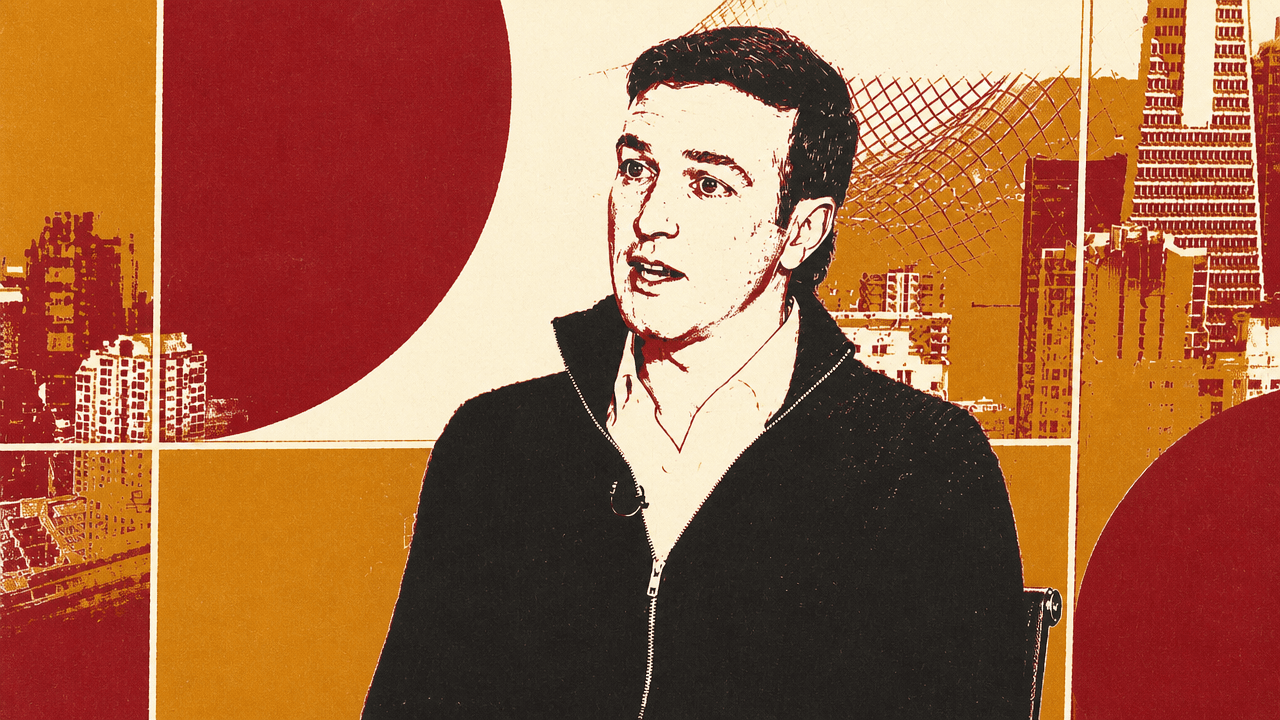
Space-based AI compute depends first on Starship reusability
Andreessen Horowitz’s David George framed SpaceX less around a single launch business than around a sequence of infrastructure bets that become possible if the company can keep reducing the cost and friction of getting mass to orbit. The launch business is the base layer: in George’s view, a space company first has to “reliably be able to get things to space,” and SpaceX has built infrastructure to support applications on top of that capability.
Starlink is the first major example. The next set of applications, George argued, depends on Starship and V3 further de-risking what SpaceX can bring into orbit. He described the central technical threshold as “rapid reusability” of Starship — eventually multiple launches per day, with the vehicle returning and being reused after being caught by the tower’s “chopsticks.” George called that “a feat of physics” and said the company’s ability to execute it would enable the applications SpaceX wants to build on top of launch.
The same logic underpins SpaceX’s prospective AI compute plan, which Ed Ludlow referred to as Star Mind. Ludlow said SpaceX’s prospectus had presented orbital data centers as possible “as early as 2028,” while some observers think the timeline could be pulled forward depending on Starship progress. George did not give a new date. He said the main hurdle is Starship’s rapid reusability, and he characterized the remaining problem as execution rather than physics: “The physics has been de-risked. And so now it becomes an execution question.”
George’s claim is not that orbital AI compute is already economically proven. It is that, if Starship can reliably move payloads to and from orbit, the pathway opens. He tied that argument directly to terrestrial constraints: Ludlow had referenced $850 billion of capital expenditure for AI data centers on Earth, and George said it is becoming harder to get ground-based data centers live. In that context, he expects space-based compute to become at least incremental capacity layered on top of Earth-based infrastructure.
He also pushed back on the phrase “orbital data centers,” preferring a more concrete image: airplane-sized GPU racks in space. His example was “something like 72 GPUs” in orbit, with large solar-array wings roughly the size of a 737. Many such units could operate in low Earth orbit, he argued. SpaceX, in his account, has already demonstrated an ability to operate there at scale through what he described as 10,000 LEO satellites.
George’s stronger version of the thesis goes beyond added capacity. He said there is “a case” that, over time, the economics of orbital compute could become better than ground-based data centers. But he presented that as a long-term possibility, not as the minimum case. The minimum case, in his telling, is that orbital compute becomes additional AI capacity when it is getting harder to bring new data centers online on the ground.
A studio graphic described a16z’s SpaceX position as representing the firm’s largest gain and said the firm has been involved with Musk’s companies for about six years, including SpaceX, X, and xAI. George said a16z remains “happy shareholders of SpaceX” and evaluates the company primarily through the long-term optionality created by its infrastructure.
The lockup is treated as a model for staged supply
Ed Ludlow raised the lockup as the most common question he gets for George: venture firms might distribute stock to limited partners, many of whom may hold, but the structure made retail holders important in what Ludlow called a complex and non-straightforward lockup.
David George treated the structure itself as an improvement in how IPO lockups are managed. He compared it to a similar approach used by Cerebras, where lockups expire gradually rather than at a single cliff. In George’s view, that gradual release is healthier because it lets public-market investors buy stock over time instead of facing abrupt supply events.
The point mattered to his broader SpaceX thesis because George was not describing a near-term exit trade. He emphasized long-term ownership and optionality: launch enables Starlink; Starship reusability could enable further applications; and space-based AI compute, if it arrives, would sit on top of the same transportation infrastructure.
Musk is central to the investment thesis, including how risk is modeled
Asked by Ed Ludlow whether the IPO was effectively a referendum on Elon Musk, David George was explicit: Musk is “the centerpiece” of Andreessen Horowitz’s investment theses across his companies. George said Musk has been strategic in how he has assembled his businesses and has “done very well by shareholders,” adding that Musk takes pride in taking care of shareholders.
George extended that argument to capital allocation. He credited Musk, Bret Johnsen, and the SpaceX team with being “very, very smart” about acquisitions and company combinations. He cited X being put together with xAI as “very logical,” and said the fit between xAI and SpaceX is “undeniable.”
Ludlow pressed on the transaction many investors continue to discuss: whether a future Tesla-SpaceX merger would be rational. George did not endorse a specific deal. Instead, he pointed to Musk’s past pattern, saying Musk has pursued acquisitions or mergers among his companies when there is strong strategic alignment and when it makes business sense. George said he would not expect the logic to be different going forward.
The broader investment question, as Ludlow put it, is whether late-stage private-company value can still be assigned heavily to a founder, even when the companies are worth tens or hundreds of billions of dollars. George said yes, and argued that the public markets show the same pattern. He cited “Elon companies,” Apple under Steve Jobs, and Meta under Mark Zuckerberg as examples where the person at the top remained central to the investment case.
George acknowledged Ludlow’s point that this is “a lot of key man risk to model for.” But he immediately reframed the modeling question toward upside: “the more important thing to model for is what can go right.” That phrase captures the venture logic he applied throughout: founder concentration is part of the analysis, but George’s emphasis was on whether a great founder aligned with a major technology trend can produce upside that conventional estimates fail to capture.
Late-stage venture is presented as a founder asset class
David George described Andreessen Horowitz’s late-stage strategy as backing the best companies as early as possible and then continuing to finance them as they need capital, often through late-stage private rounds. He said the relevant asset class is “late stage venture” or “late stage privates,” and argued that it is not primarily about capital markets mechanics. It is about late-stage founders making large, long-term decisions.
He said the asset class is now about $5 trillion in size, has grown 10-fold over the last decade, is larger than the Russell 2000, and is almost 20% as large as the Nasdaq. That scale, in George’s view, makes it a real asset class rather than a niche extension of early venture.
| Measure | George’s description |
|---|---|
| Asset-class name | Late stage venture / late stage privates |
| Size | About $5 trillion |
| Growth over 10 years | 10x |
| Relative scale | Larger than the Russell 2000; almost 20% as large as the Nasdaq |
| Investment center | Founders making big long-term decisions |
George used Apple after the iPhone launch as his example of how public-market expectations can miss upside even in heavily covered companies. He said that if one looked at 2009 consensus analyst estimates for Apple’s next four years, then compared them with actual results four years later, Apple beat those estimates by 3x. His point was not simply that forecasts can be wrong, but that major technology waves plus exceptional founders can produce upside that is difficult to model in advance.
He placed AI in that same framework, but larger. George said the previous pre-AI cycle — mobile phones, social, e-commerce, SaaS, and cloud together — added roughly $25 trillion to $30 trillion of new market capitalization. He expects the AI wave to be even bigger.
Andreessen Horowitz’s current deployment reflects that view. Ed Ludlow said George leads a growth team managing $22 billion across five funds and noted the firm’s exposure to top private companies by valuation, including SpaceX before it went public. A studio graphic listed a16z growth portfolio companies including SpaceX, Cursor, Databricks, Anduril, Stripe, ElevenLabs, and Waymo.
George said the firm is currently investing from its fifth late-stage venture fund, LSV 5, which he described as about $7 billion. He said the opportunities remain significant and that the firm’s latest-fund portfolio, dollar-weighted, is growing more than 100% year over year. Comparable public companies of similar size, he said, are growing about 20% year over year. That difference explains what the firm says it is paying for: very fast growth, strong founders, market leadership, and exposure to large technology trends.