AI Has Split Markets Into Capex Receivers and Spenders


Altimeter Capital partner Apoorv Agrawal argues that AI has become one of the largest capital formation cycles in markets, not just another technology product cycle. Speaking to Bloomberg Technology, he said investors should separate companies receiving AI capital expenditure — including compute, memory, networking and energy suppliers — from the labs and model companies spending it, while preparing for public markets to absorb a potential wave of AI IPOs.
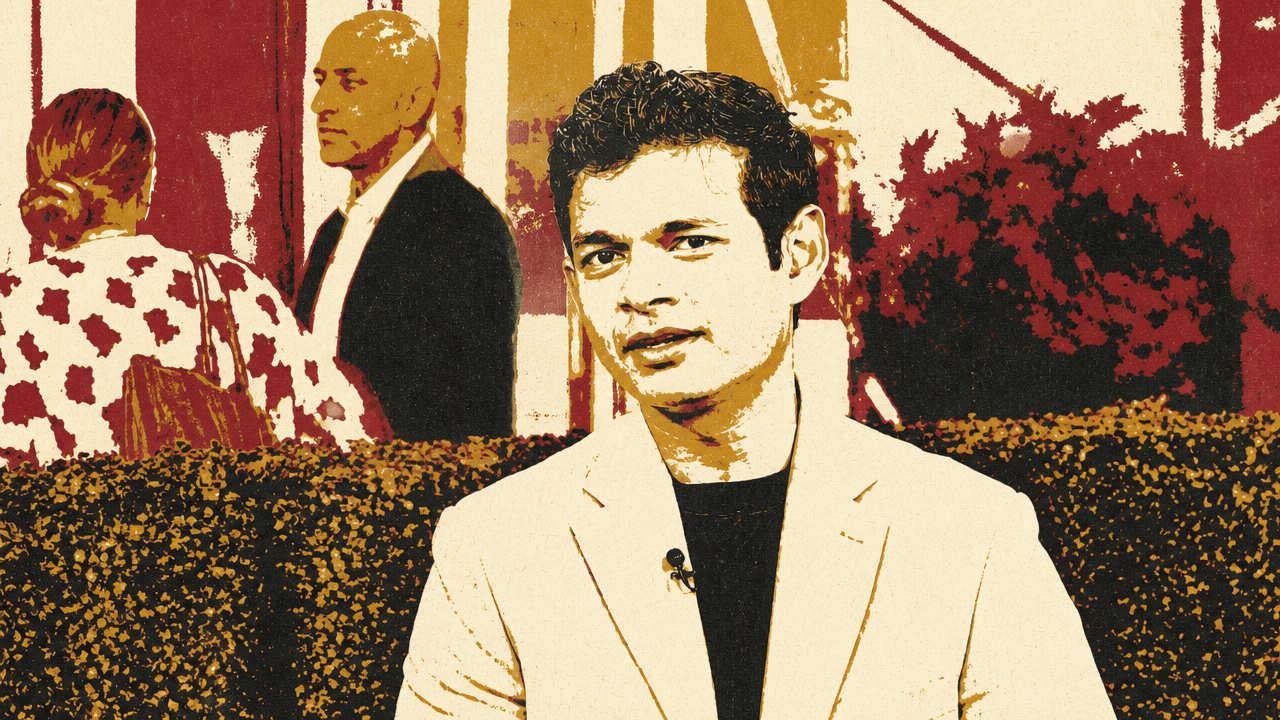
AI financing has split into capex receivers and capex spenders
Apoorv Agrawal’s central claim is that AI is no longer just a technology product cycle. It has become, in his words, “one of the largest capital formation cycles,” with the market dividing companies by their position in the AI capital stack.
On one side are the “picks and shovels”: compute, memory, optics, networking, energy, and other infrastructure suppliers. These businesses receive the capital expenditure required to scale AI. On the other side are the “miners,” the labs and model companies spending the capex in order to build and distribute AI systems.
Agrawal pointed to several large financing and capital-return events as evidence of that split. Ed Ludlow framed the setup by referring to Alphabet upsizing an $84 billion equity offering; Agrawal, in his answer, said “Google just raised $84 billion.” He also cited OpenAI’s “historic” $122 billion raise and Anthropic as part of the same capital-formation discussion. On the other side of the ledger, he noted that Nvidia had announced an $80 billion stock buyback program in the same week, and that SK Hynix had retired $8 billion of stock with more dividends coming.

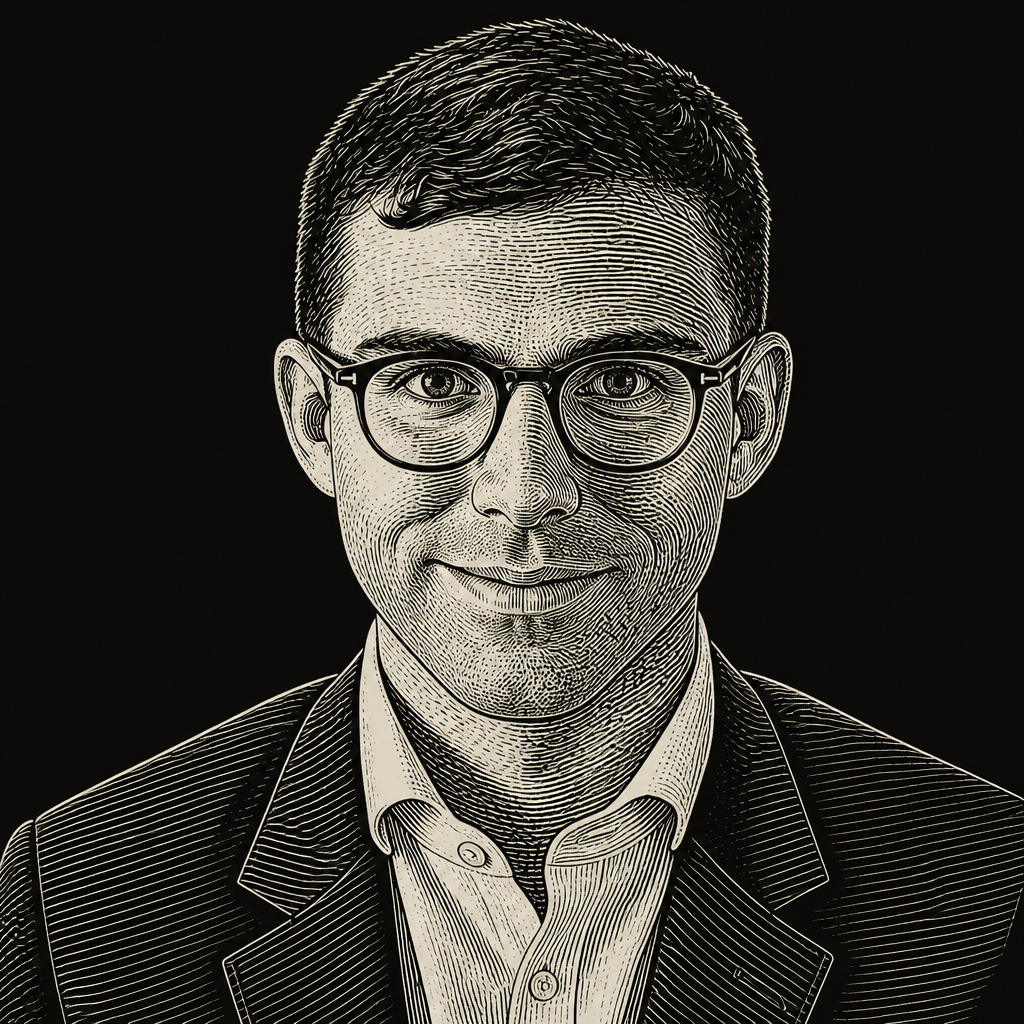
The tension, for Agrawal, is that those actions sit on opposite sides of the same market function. Some companies are selling into the AI buildout and receiving the capex. Others are spending enormous amounts of capital to keep scaling frontier systems.
As you look at these businesses, are you on the side of receiving the capex, which would be the compute layer, the energy layer, the memory layer, the networking layer? Or are you on the side of spending?
That is the mental model Agrawal said he wants investors to use. The compute layer, energy layer, memory layer, and networking layer sit on the receiving side. The AI labs sit on the spending side. He called that “the biggest divide in AI right now.”
Bloomberg’s on-screen chart supplied a related public-market backdrop. Sourced to Bloomberg consensus estimates and reported financials, it was titled “Hyperscalers’ AI capex surge, free cash flow fades” and showed total free cash flow for Amazon, Alphabet, Microsoft, Meta, and Oracle from 2022 through 2027 estimates. The chart did not by itself establish Agrawal’s market model, but it illustrated the same pressure he was describing: AI scaling is also a cash-flow and capital-allocation problem.
Bloomberg also displayed an Altimeter Capital portfolio graphic listing OpenAI, Revolut, Baseten, Glean, XBOW, and Parloa. The context matters because Altimeter is exposed to private AI companies that may seek broader market access, while Agrawal is describing a market-wide split between companies receiving AI capex and companies spending it.
The labs are not cleanly separated by market category
The recurring question around large language models is whether there is enough room for several major model companies if the models themselves become commoditized. Caroline Hyde made the question specific to Altimeter’s exposure across overlapping AI markets, referring to OpenAI, Anthropic, Grok AI, and SpaceX.


Apoorv Agrawal rejected a binary classification of AI companies as too simple. He said the market often talks as if a company must be “the consumer AI company,” “the enterprise AI company,” or “the space AI company,” but the reality is more multifaceted.
OpenAI, in his framing, is pursuing AI distribution across several fronts. He described the company’s mission as getting AI to market holistically: consumer distribution through ChatGPT, which he said has just under a billion users; enterprise traction, including 5 million Codex users; and a long tail of bets in hardware, robotics, and frontier enterprise offerings.
SpaceX entered the discussion as a company exposed to what Ludlow called the two large markets of launch and Starlink, with a $2 trillion total addressable market. Ludlow then pointed to a less obvious development: a move toward selling compute and building data-center capability, including through the Anthropic arrangement. His framing was that this looked like a stealth path toward becoming a hyperscaler.
Agrawal’s answer shifted the emphasis to xAI. He called it “the Switzerland approach” and then described the xAI business as a “Switzerland business”: able to sell compute, sell models, offer a coding product, and potentially add consumer and other products over time. He connected that to earlier questions around the Cursor deal, where a lot of Cursor revenue came from Anthropic models; Anthropic then came onto the platform, while xAI continued building its own models.
The central point was not that every AI company is the same kind of company. It was that the largest AI efforts are trying to occupy multiple layers at once: models, compute, consumer products, enterprise products, and infrastructure. That breadth is why Agrawal said the total addressable market is so large.
Public markets may be asked to absorb a new AI IPO wave
A Bloomberg on-screen graphic titled “2026 IPO BOOM,” sourced to Bloomberg News and The Information, showed reported estimates for potential 2026 IPO activity involving SpaceX, Anthropic, and OpenAI. It listed SpaceX at $75 billion in June, Anthropic at $60 billion in the fourth quarter of 2026, and OpenAI with the amount listed as “TBA” for the fourth quarter of 2026.
| Company | Reported amount | Reported timing |
|---|---|---|
| SpaceX | $75B | June |
| Anthropic | $60B | 4Q 2026 |
| OpenAI | TBA | 4Q 2026 |
The public-market question is whether there will be enough demand for a “wall of public offerings” that could also provide liquidity to private investors such as Altimeter. Apoorv Agrawal said a large part of the market has been waiting for ways to access what he called the AI “super cycle.” In his view, that moment has arrived.
He acknowledged that IPO markets are cyclical and said the last major cycle was four or five years earlier, in 2021. But based on what he said Altimeter can see, he believes there is “a lot of demand” for these offerings as they come to market.
He separated demand for financial products from demand for AI capabilities. On the capability side, he argued that coding models crossed an important threshold in December with Opus 4.5, pushing software development to “the next frontier.” Consumer AI adoption, he said, is already something people have experienced directly. Still unproven, in his view, are robotics, manufacturing, and the hardware device OpenAI is working on, along with other hardware efforts.
That leaves the IPO case tied to two claims: public investors want access to large private AI companies, and the underlying capability curve still has substantial room to expand. Agrawal’s conclusion was simple: “more participation is better for us.”
The classroom long-short exercise points back to compute and energy
At Stanford, Apoorv Agrawal asks guest speakers to name one idea they are long and one idea they are short. He said he likes the exercise because it forces specificity. He plans to ask the same speakers the question again next year and keep a scorecard of their long-short picks.
The pattern from the class reinforced his broader AI capital-formation thesis. More than half of the speakers were long the “picks and shovels” providers. Compute was the most common long idea. Energy was the second most common, which Agrawal described as the ultimate bottleneck at scale.
On the short side, the most common answer was not a particular technology category. It was incumbents that are not innovating.
That distinction matters. Agrawal was not making a generalized anti-incumbent argument. His bearish filter was whether a company is structurally exposed to improving AI capabilities without adapting to them. The long side, by contrast, was concentrated in the infrastructure required for those capabilities to keep improving.
The short thesis is any business hurt by rising intelligence
The clearest exclusion principle Apoorv Agrawal offered was to avoid businesses hurt by the scaling laws. He defined those scaling laws as the empirical observation that more compute, more resources, more data, and better algorithms push intelligence higher.
Agrawal stressed that he is “an optimist by trade” and by temperament. But if a business is damaged by the process of AI systems becoming more capable, he said, “that’s a tough place to be,” because Altimeter believes intelligence is going to rise significantly.
In that formulation, the short thesis is not “AI startups are overvalued” or “incumbents are doomed.” It is narrower and more operational: the risk sits with businesses whose economics worsen as models become more capable.