Korean AI Dividend Proposal Triggers Semiconductor Stock Selloff
 Ed Ludlow
 Caroline Hyde
 Maggie Eastland
 Jamie Dimon
 Katherine Doherty
 Ryan Vlastelica
 Bennett Siegel
 Christian Klein
 Michael Shepard
 Kim Forrest
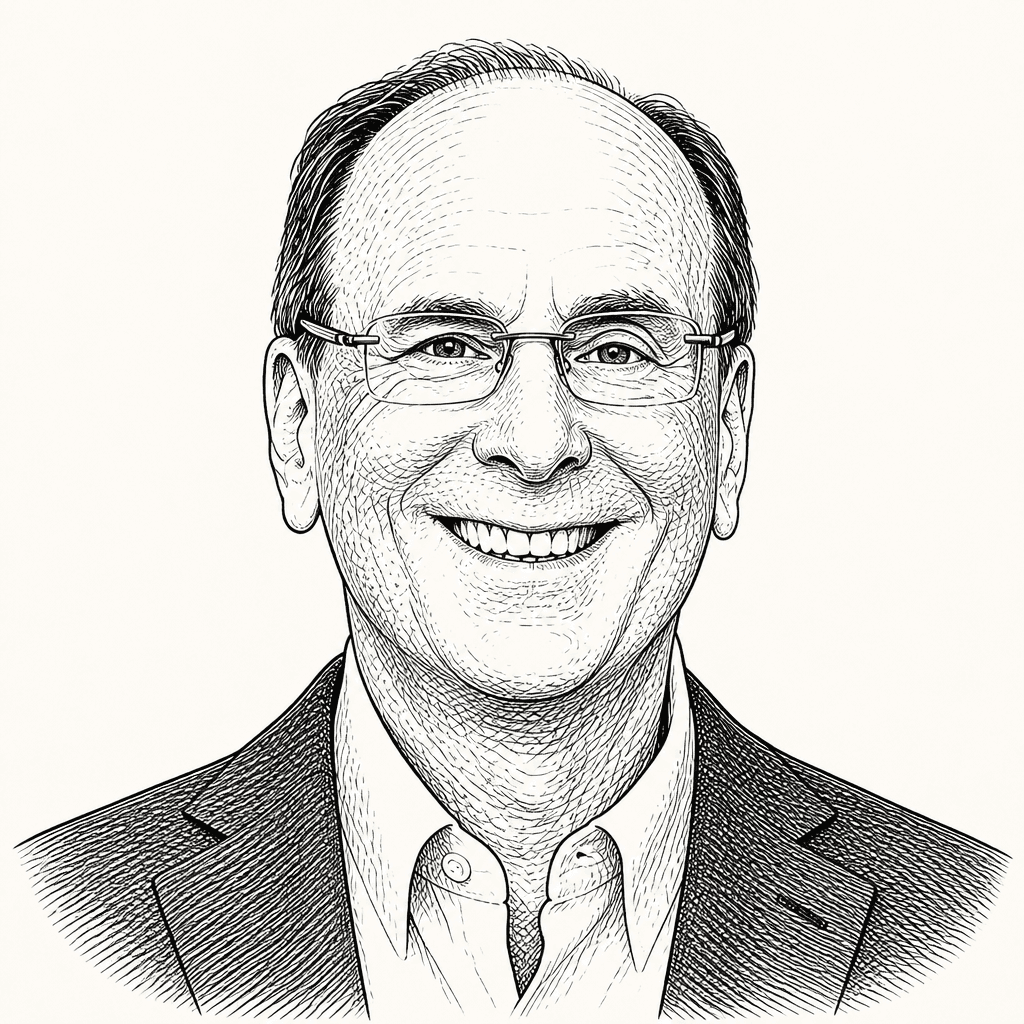 Larry Fink
 Peter Elstrom
 Keith Naughton
 Madlin MekelburgBloomberg TechnologyTuesday, May 12, 202614 min read
A South Korean policy chief’s proposal to return part of AI-related gains to citizens jolted the country’s chip market, with Samsung and SK Hynix closing down around 5% after Kim Yong-beom argued that profits from the AI infrastructure era should be shared more broadly. Bloomberg reported that the presidential office later described Kim’s post as personal opinion, while the same program pointed to related pressure points in the AI boom: CME’s plan with Silicon Data for compute futures and Nvidia CEO Jensen Huang’s absence from Trump’s China delegation as approval for Blackwell sales looked unlikely.

Korea’s AI windfall debate moved from philosophy to market risk in a single trading day
A South Korean policy chief’s Facebook post about returning part of the AI boom to citizens was enough to shake one of the world’s most important semiconductor markets. Ed Ludlow said Korean stocks fell sharply after Kim Yong-beom suggested that South Korea should pay citizens an AI-related “dividend.” Bloomberg’s on-screen framing described the idea as a “citizen dividend” tied to AI profits, and the KOSPI sank as much as 5% before paring losses after the presidential office said the post reflected Kim’s personal opinion rather than official policy. Samsung and SK Hynix recovered part of their losses but still closed down around 5%.

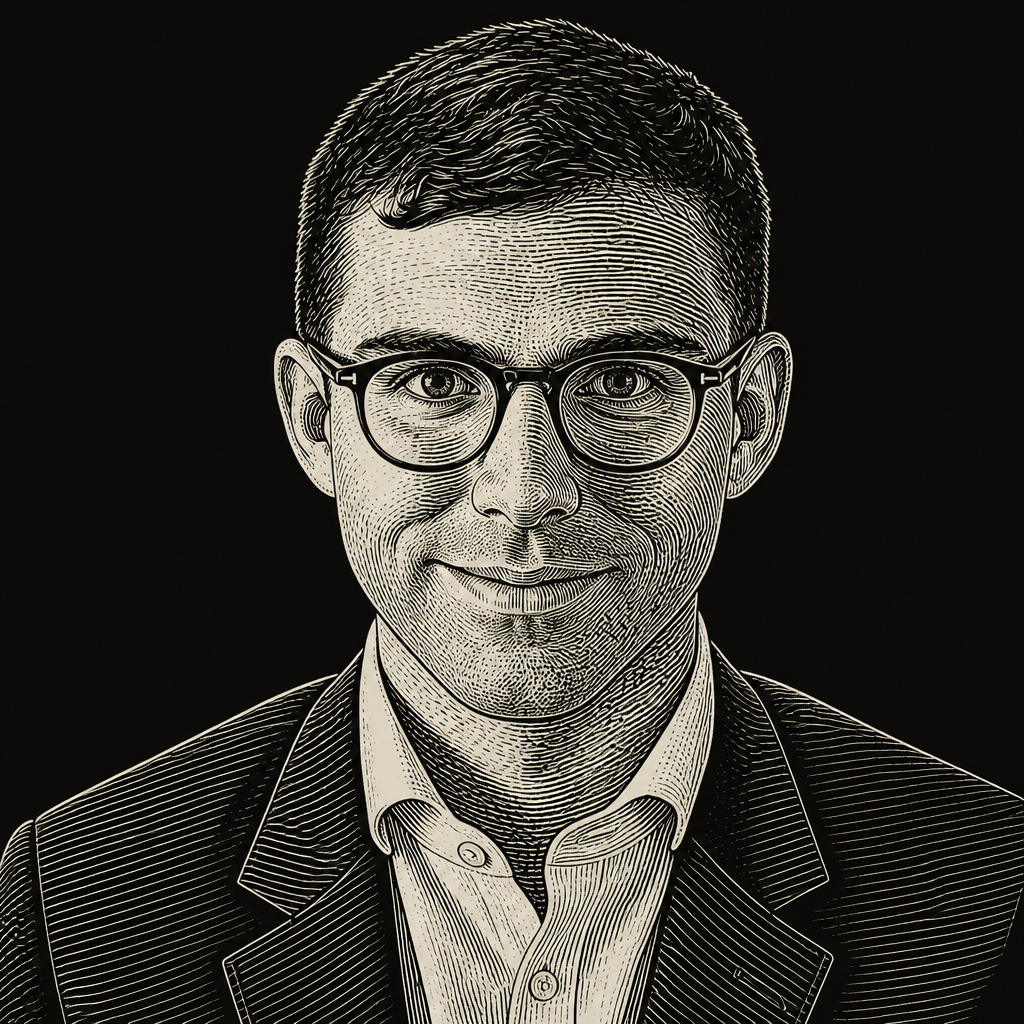
Bloomberg quoted Kim’s argument this way: “The gains of the AI infrastructure era are not the result of specific companies alone... Accordingly, a portion of those gains should be structurally returned to all citizens.” Bloomberg identified Kim as South Korea’s policy chief and dated the Facebook post May 11.
Peter Elstrom described the post as more than an offhand political remark. It was, he said, a roughly 2,500-word argument about the evolution of the Korean economy, the role of citizens in that economy, and how the country should prepare for the social consequences of the AI era. Elstrom also clarified a point that matters for how the market reaction should be read: Kim was not proposing a new tax aimed directly at Samsung or SK Hynix. His point, as Elstrom explained it, was that the government would benefit from the profits those companies are expected to generate and should decide how to use that fiscal windfall.

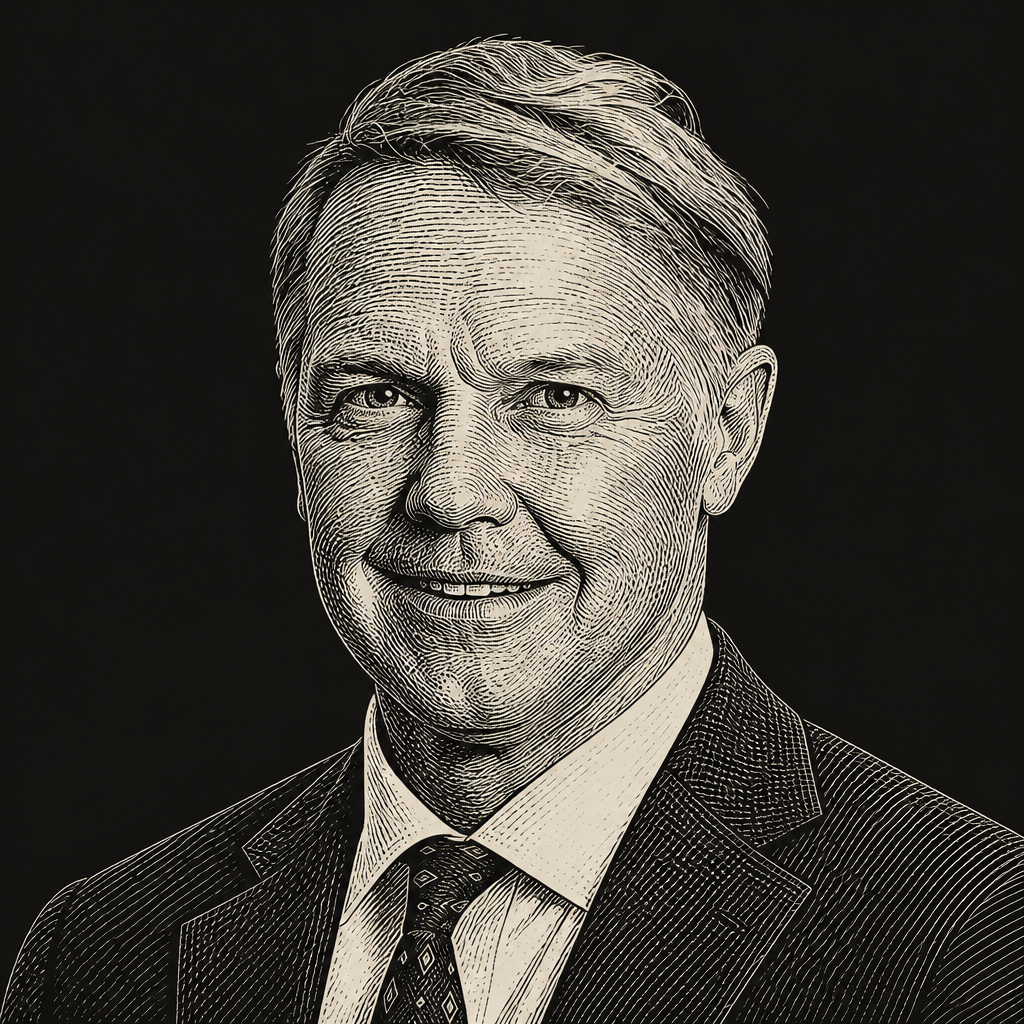
The numbers explain why the idea landed with force. Elstrom said Samsung is on track to make about $220 billion this year, with SK Hynix “not far behind,” putting combined profit from the two companies at roughly $400 billion. In the US, comparable AI gains may be larger in absolute terms, but Elstrom said Korea’s issue is concentration: a much larger share of the national budget can be affected by the fortunes of two memory and chip companies.
Caroline Hyde connected the Korean debate to a broader political question: if AI produces extraordinary wealth, who gets it? Hyde compared the Korean discussion with debates in the United States, saying OpenAI had been “suggesting ways” there could be some sort of wealth fund to distribute AI-created wealth more broadly. She also pointed to labor pressure inside Korea’s own AI supply chain, including Samsung’s negotiations with a union threatening to strike and SK Hynix’s promises around profit-sharing with engineers and workers.

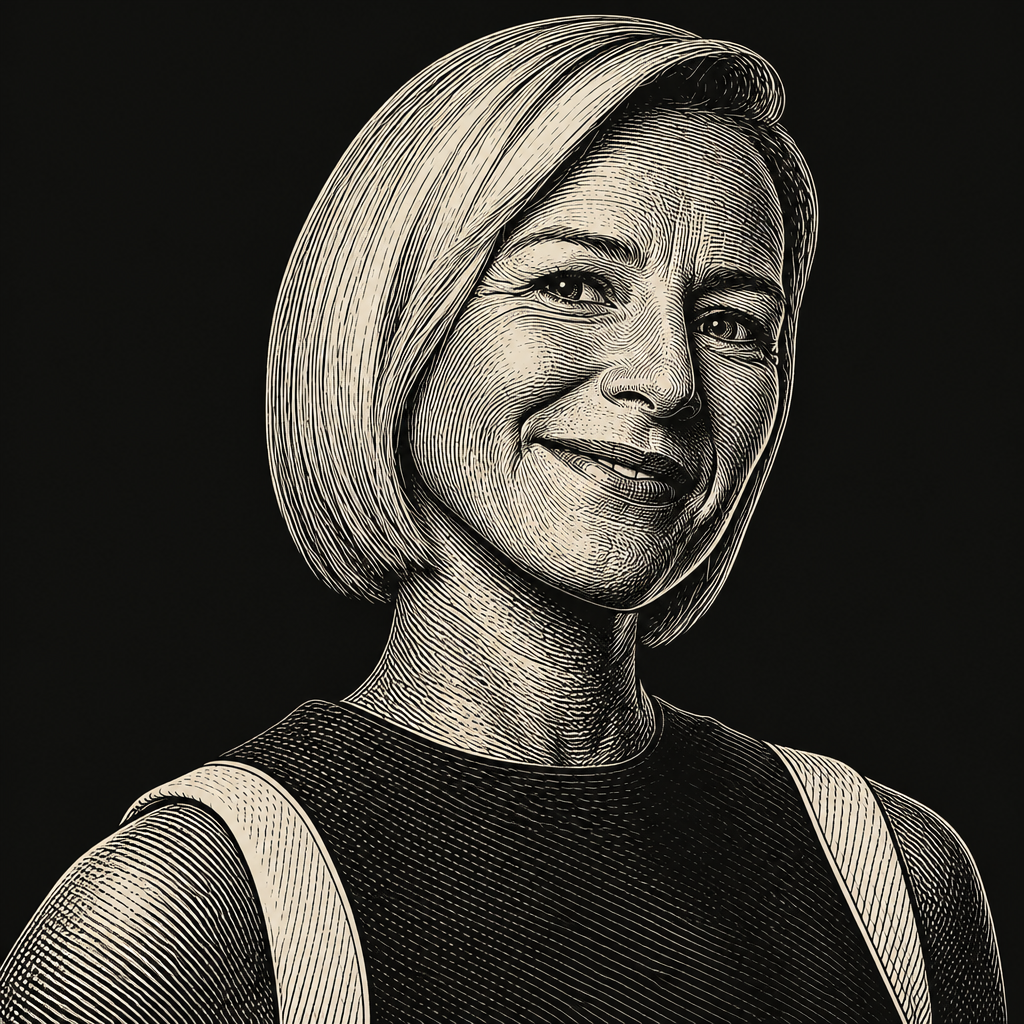
Elstrom’s answer was that the Korean episode should not be read as a local oddity. Governments are trying to work out what to do if the AI boom keeps producing large concentrations of wealth, and labor groups are asking parallel questions inside companies. His reading of Kim’s post was that governments need to be more proactive before AI reshapes the economy, the workplace, and employment.
Nvidia’s absence from Trump’s China trip signaled a colder moment for chip diplomacy
President Trump’s planned trip to China put another market-sensitive AI question on the table: which chips, if any, Nvidia can sell into China with US permission. Maggie Eastland reported that Nvidia CEO Jensen Huang was not invited to join the delegation, despite the company’s large China exposure and Huang’s continuing push for some AI chip sales there.


The delegation listed by Bloomberg included Apple’s Tim Cook, Tesla’s Elon Musk, Micron’s Sanjay Mehrotra, Qualcomm’s Cristiano Amon, Illumina’s Jacob Thaysen, Meta’s Dina Powell McCormick, and Cisco’s Chuck Robbins. Huang’s absence mattered, in Eastland’s reading, because it suggested that Blackwell sales into China were not likely to receive US permission soon.
Eastland contrasted the moment with Trump’s prior meeting with Xi Jinping in Korea the previous October. Then, she said, Blackwell chips were top of mind; Trump was telling reporters he would discuss them with Xi while Nvidia was lobbying for permission to sell high-powered processors into China. Since then, the US had deliberated and decided to allow Nvidia to sell the less powerful H200 processor. Eastland said the latest signal is that “that’s sort of where the line stands.”
The market implication, as Eastland framed it, is narrower than it was during the earlier optimism around Blackwell. She said last October’s idea that Blackwell could be on the table helped send Nvidia’s market capitalization above $5 trillion. This time, she said, there was no comparable enthusiasm. Even for H200s, Nvidia may not ultimately book China sales if China rejects the chips. The upcoming meeting could still touch on them, but Eastland said the focus would probably be larger geopolitical issues, especially the war in Iran.
For investors, Eastland’s reporting pointed to a trip where AI chips did not appear to be the central opportunity for Nvidia. She said Nvidia was “definitely not going to get a boost” from the meeting and could see declines as a result.
Chip investors were not trading the inflation print so much as the exhaustion of momentum
The selloff in AI infrastructure names came after an extreme rally. Ed Ludlow said the Philadelphia Semiconductor Index was up about 140% over the prior 12 months and about 70% year to date through the previous close, before falling sharply during the session. The Nasdaq 100 was also down, with chip stocks leading the decline. A hotter CPI reading — 3.8% year on year in April — was part of the broader market backdrop, but not everyone accepted it as the reason chips sold off.
Kim Forrest rejected the idea that the CPI print was driving the AI and chip move. “The chip nation and AI” did not care about inflation, she said. Her explanation was simpler: after large gains, momentum trades can run out of buyers. The Korea selloff in Samsung and SK Hynix may also have cooled enthusiasm for buying chip stocks more broadly.
| Market or stock | Move cited |
|---|---|
| Philadelphia Semiconductor Index | +141.52% over one year; down 5.76% intraday |
| Nasdaq 100 | down 1.92% intraday |
| Intel | -8.63% intraday earlier; later shown down 9.84% |
| Micron | -5.95% intraday |
| Advanced Micro Devices | -3.60% intraday |
| Qualcomm | -10.54% intraday |
Forrest’s view was that the pullback did not invalidate the AI buildout, but it should force more discrimination among beneficiaries. Jamie Dimon had made a related distinction earlier in the day. In a clip, he said AI is real and that “a lot of money is going to go into it,” but that not everyone who participates will win. He compared it to the internet: many people lost money, many made money. Data centers will probably be used, he said, but some could still be badly designed or badly executed.
The way I look at it is that AI is real. A lot of money is going to go into it. That doesn't mean everyone who does it is going to be a winner.
Forrest said she hopes the market becomes more discerning. She used Intel as an example of a stock that had gone from being treated as “dead and buried” to being reconsidered because of AI development and the possibility that technology rollouts broaden beyond the first perceived winners. When ChatGPT first captured attention, she said, Nvidia and OpenAI looked like the winners while everyone else seemed likely to languish. Technology rollouts usually do not work that way. In her phrase, AI is probably in “the bottom of the second inning.”
Intel was a sharper version of that momentum problem. Ryan Vlastelica said the stock had risen more than 200% since late March and traded at more than 100 times estimated earnings, making it attractive to short sellers expecting a dramatic reversal. The rally had been supported by optimism about Intel’s foundry turnaround and reports of a potential Apple chipmaking relationship, which Vlastelica said would be a major validation. But the combination of a large price move, a very high multiple, and unresolved questions made it unsurprising that some investors were betting against the stock.
On the US-China dimension, Forrest said the two countries are walking a very narrow line. She cited DeepSeek’s emergence in early 2025 as the moment that sent a shiver through the AI community because China appeared to have something competitive. Competition itself was not her concern; she emphasized military uses of AI and chips. In that context, she said Huang’s absence from the China trip made sense: if the administration does not want to discuss the most sensitive AI chip issues, it does not invite him.
Compute futures would turn AI’s most constrained input into a tradable hedge
The AI boom’s bottlenecks are becoming financial instruments. In a clip from the Milken Institute Global Conference, Larry Fink said the US is short power, compute, chips, and memory, and predicted that buying futures of compute would become a new asset class.
The United States is short power, we're short compute, we're short chips, and there are going to be shortages in all three. And memory, four things. I actually believe a new asset class will be buying futures of compute.
A week later, CME and Silicon Data were described as teaming up to create a futures market for computing power. Katherine Doherty said Silicon Data had already created an index intended to bring transparency to compute pricing. The CME plan would add the ability to hedge price moves, moving compute closer to oil or other commodities that can be tracked, traded, and hedged.
The basic market structure, as Ludlow explained it, is a futures contract: an agreement to buy or sell something later at a fixed price. With compute, the underlying exposure is tied to GPUs, GPU hours, or processing power. Doherty said the index was the step that gets into the detail of GPUs and processing capacity, while futures would allow market participants to bet on or hedge where that price moves over coming weeks and months.
Regulatory approval remains a condition. Doherty said the market still has to develop and needs the blessing of regulators. The intent, however, is clear: price not only where compute is trading now, but where it may trade in the future.
The potential participant base is broader than AI companies. Doherty said hyperscalers and AI providers could use the contracts to hedge their own compute costs, but CME also brings an institutional trading base that may approach compute the way it approaches oil, metals, and other commodities. She said other exchanges and upstarts have shown interest, but CME’s entry matters because it is the largest US derivatives exchange. More venues may follow, and in her view, liquidity and trading interest would help the market as a whole.
The OpenAI trial put Altman’s motives and leadership before a jury
Sam Altman was expected to testify in the trial over OpenAI’s future, after testimony from Elon Musk, Greg Brockman, Ilya Sutskever, and Microsoft CEO Satya Nadella. Madlin Mekelburg said Altman was the witness observers had been waiting for, though the exact timing of his testimony was not yet known.
The core of the case, as Mekelburg described it, is Musk’s accusation that OpenAI, its co-founders, and Microsoft betrayed the founding mission for their own benefit. Musk’s lawyers have focused on financial gains after OpenAI moved toward a for-profit structure and on questions about Altman’s leadership and truthfulness to the board.
Mekelburg expected Altman to be questioned about his relationship with Musk and about his ouster in the 2022–2023 period. Musk’s legal team, she said, has made that episode a major issue, pointing to concerns voiced by employees or board members about Altman’s leadership style. Altman’s testimony would give him the opportunity to answer those descriptions directly and tell his side of the story.
The financial stakes were emphasized by Bloomberg’s report that Microsoft aimed for a $92 billion return on its OpenAI bet. Mekelburg said the jury has heard about how much equity early leaders held, how much money was involved after the for-profit shift, and how much those stakes have grown as OpenAI’s valuation soared. The legal strategy, as she summarized it, is to make jurors ask whether Altman’s stated commitment to OpenAI’s mission reflects his real motivation.
AI has split seed investing into ordinary application rounds and giant researcher spinouts
The venture capital market is now operating with two different meanings of “seed.” Bennett Siegel said A-Star, which closed a $450 million third fund, remains focused on early-stage investments: backing founders with an idea, a few million dollars, and the ambition to build a much larger company. The firm typically writes $3 million to $5 million checks.
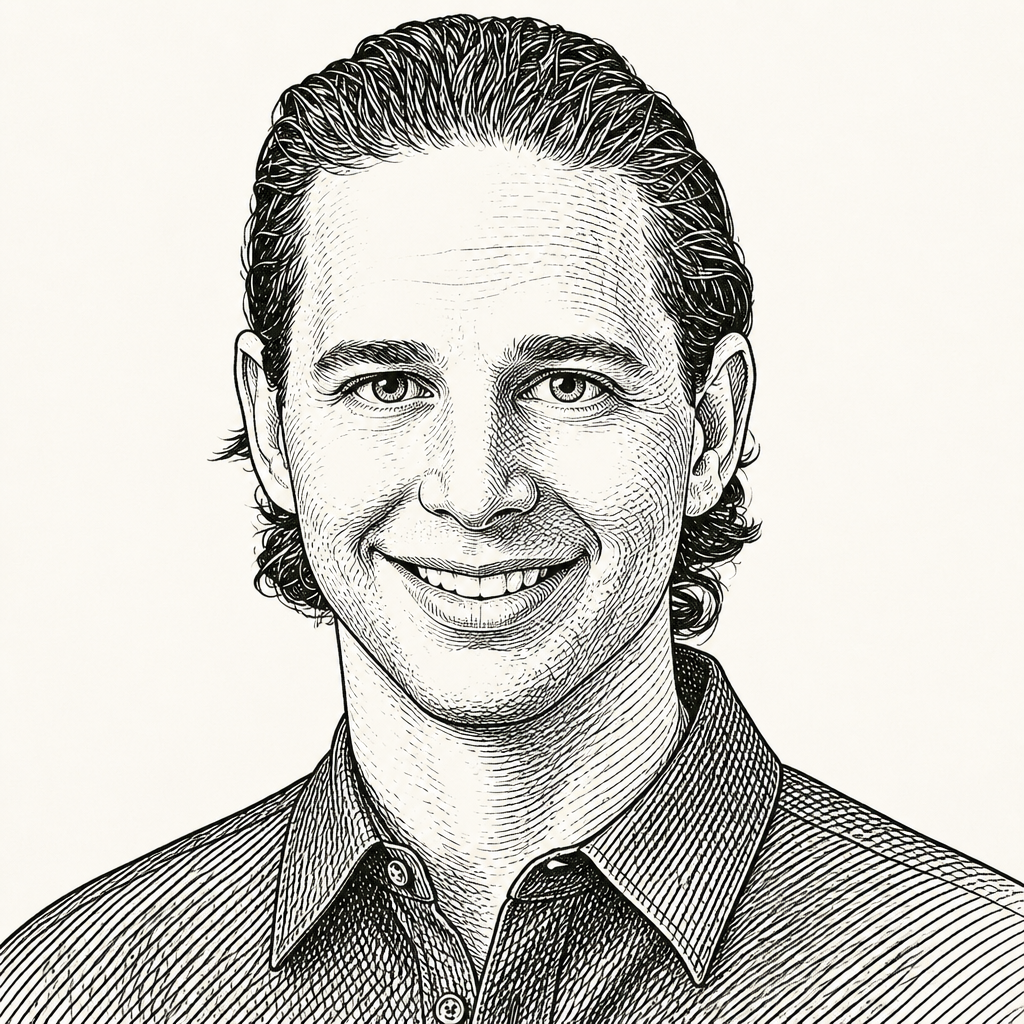
Siegel framed A-Star’s approach against a market dominated by giants: giant venture firms and giant AI companies. As funds get larger, he said, their incentives shift toward later-stage rounds and larger capital deployments. That is visible in the multibillion-dollar financings for companies such as OpenAI and Anthropic. A-Star’s preferred entry point is earlier, before the technology is clear and before the market opportunity has consensus.
The complication is that some “seed” rounds no longer look like seed rounds. Hyde raised reported multibillion-dollar examples including Thinking Machines Lab and Safe Superintelligence. Siegel answered that the market has bifurcated. Traditional seed rounds still exist, especially for younger founders from institutions such as Harvard, MIT, and Stanford building applications on top of foundation models from OpenAI, Anthropic, and others. Those companies may raise $3 million to $5 million and build in the application layer.
The other category is researcher spinouts from established model companies. Those teams can raise hundreds of millions or billions of dollars at formation to do research and possibly commercialize future technology. A-Star has largely avoided those rounds, Siegel said, while firms such as Andreessen Horowitz have led them. His view is that many founders do not need $500 million out of the gate, even if this capital market allows them to raise it.
Siegel contrasted A-Star’s model with his prior experience at Coatue, a multi-stage investor active from venture through public markets. Larger funds, he said, tend to focus on growth stages where there are clearer winners and where hundreds of millions of dollars can be deployed. Seed investing is different: a fund may invest a few million dollars before there is consensus and seek venture-style returns of 100, 200, or 300 times the original investment. A-Star also aims to keep investing in its best companies and become one of the largest shareholders over a decade or longer.
He used Decagon as the example. A-Star co-led its seed round at a $22.5 million valuation. Less than three years later, Siegel said, the AI customer support company was valued at nearly $5 billion, and A-Star had invested in every round. For him, the lesson was that less capital can force discipline and still produce large outcomes.
SAP’s answer to AI competition is that business context matters more than the model
SAP’s new autonomous enterprise platform is built around a claim about enterprise AI: large language models are improving, but they do not know a company’s data or business processes by default. Christian Klein said SAP is trying to put the “brain” of the company — ERP — into its AI platform so agents have the context needed to produce accurate, compliant, reliable outputs.
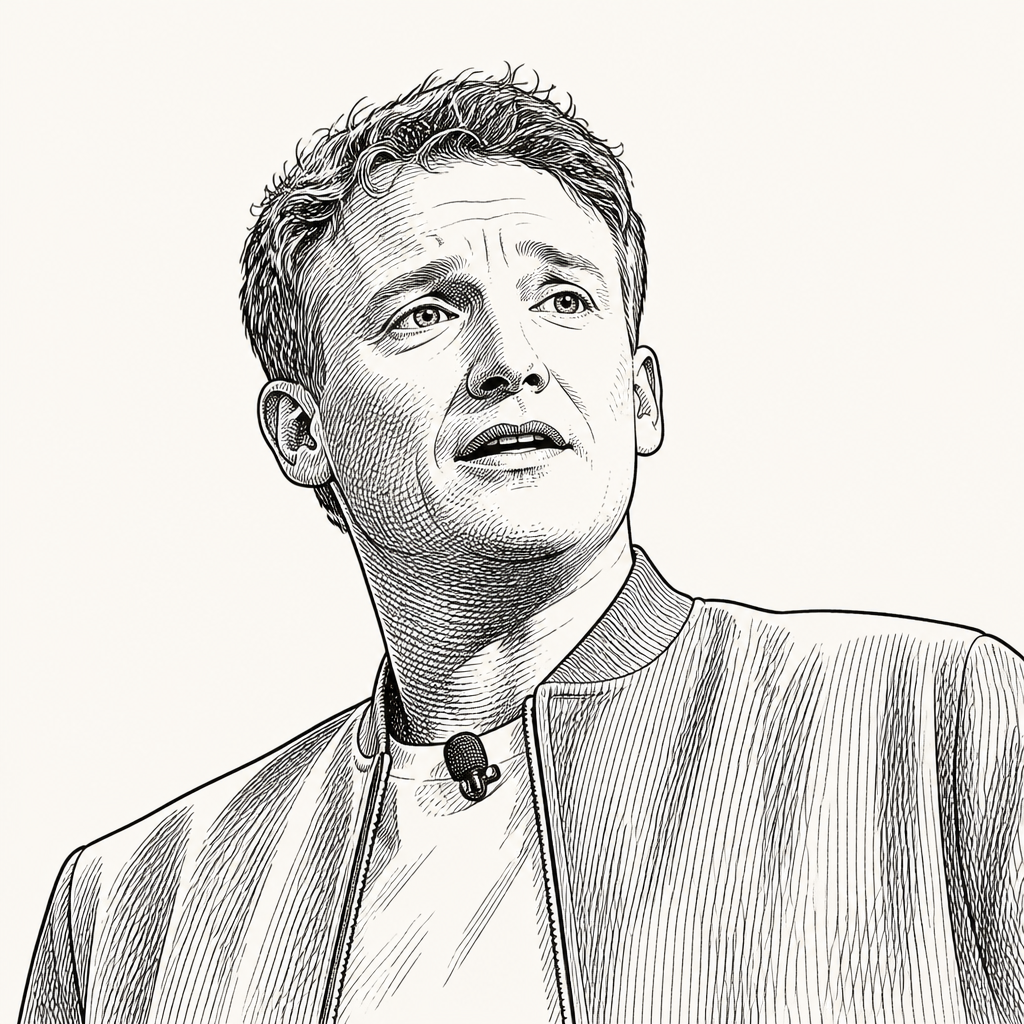
Klein said the platform is meant to support AI agents across business operations. He cited examples from H&M and JPMorgan Chase as proof points. JPMorgan Chase, he said, can now close the books 30% faster. H&M improved turnover in its commerce shop through a personalized agent. Inventory was reduced by 10% because a demand agent signaled an inventory agent about how to optimize inventory and procurement.
The competitive tension is that hyperscalers and AI infrastructure providers are also moving into agentic enterprise software. Klein positioned AWS, Microsoft, Nvidia, Databricks, Snowflake, and others as partners rather than pure threats. He said not all global data sits in SAP systems, so SAP is working with partners to build a harmonized data layer that includes SAP and non-SAP data. Agents, he said, cannot compensate for broken data models.
Asked how SAP fends off anxiety that labs and cloud partners will compete away its software position, Klein said the core differentiator is SAP’s context layer. ERP is the brain of the company, he said, containing more than 7.5 million data fields and thousands of business processes. Customers can use commodity LLMs or bring their own models, but SAP’s claim is that its platform gives those models business context that only SAP has.
Klein also described Nvidia as both a customer and a partner. Jensen Huang appeared with him at SAP’s keynote, and Klein said Nvidia’s interest is straightforward: more enterprise AI consumption at the application layer drives more compute and chip consumption underneath. SAP and Nvidia, he said, are partnering to build the autonomous enterprise, including autonomous supply chain capabilities.
Ford’s CATL deal shows the contradiction inside US-China industrial policy
Ford’s nearly $3 billion battery plant in Marshall, Michigan sits at the intersection of US manufacturing policy, EV cost pressure, and China security concerns. Keith Naughton said CATL is in Michigan training workers and helping get the plant off the ground. The plant is due to open this year. Ford emphasizes that it fully owns the facility and employs the workers, and that the CATL arrangement is only a licensing deal for lower-cost lithium iron phosphate battery technology.
Naughton said those lower-cost LFP batteries are central to Ford’s attempt to overhaul its EV strategy and launch more affordable EVs in 2027. But the political problem has not gone away. Michael Shepard said lawmakers in Washington are reluctant to allow partnerships involving advanced technology because of concerns about technology leakage, data leakage, and national security. He connected that concern to the broader TikTok fight and to state and federal efforts to restrict Chinese land purchases and investments.

CATL itself is part of that concern. Shepard said the company was added in 2025 to a Pentagon list of companies the US government believes support China’s military. Ludlow noted the déjà vu: Ford’s CATL licensing arrangement had already drawn Republican criticism in 2023 as a potential “Trojan horse.”
Naughton’s response was blunt: “you cannot pursue an EV strategy without dealing with the Chinese.” He said China controls 80% of the world’s battery capacity, the battery is the most expensive component in an EV, and CATL has half of that capacity. In that context, CATL is the battery giant an automaker must deal with if it wants a serious EV strategy.
| Category | Tariff cited |
|---|---|
| EVs | 100% |
| Semiconductors | 50% |
| Solar cells | 50% |
| Copper, semi-finished | 50% |
| Steel and aluminum | 25%–50% |
| Lithium-ion batteries | 25% |
Shepard placed the Ford-CATL issue within the broader China trip. The CEO delegation, Huang’s absence, restrictions on advanced AI chips, the Iran conflict, tariffs, market access, and rare earths all feed into the same negotiation environment. China’s position in rare earths remains especially sensitive because those materials are critical across manufacturing, including autos.
Hyde pointed to the contradiction in Ford’s own posture: the company values its CATL relationship but does not want Chinese-made cars entering the US market. Naughton said Ford CEO Jim Farley is trying to walk that fine line. US automakers need Chinese battery technology to make affordable EVs, but they could be overwhelmed if Chinese EVs were allowed into the American market.