Private Credit Faces a Confidence Test as AI Hits Software Loans
 Nate Lanxon
 Jeffrey Gundlach
 Paula SeligsonNeil Callanan
 Marc Lipschultz
 Ellen DiMauro
 Davide Scigliuzzo
 Jamie Dimon
 Tim StenovecBloomberg OriginalsFriday, May 8, 20269 min read
Private credit’s roughly $1.8 trillion boom is facing its first major test as a crisis of confidence rather than a broad default cycle, Bloomberg Originals argues. The report says the rapid growth of lending outside banks has left investors questioning private loan marks, limited liquidity in retail-facing funds, and underwriting assumptions around software borrowers whose growth prospects may be undermined by artificial intelligence.

Private credit’s test is confidence, not just defaults
The private credit market has grown into roughly $1.8 trillion of assets under management, and Davide Scigliuzzo calls the current pressure “the biggest crisis of confidence in its history.” Ellen DiMauro frames the moment as the first serious test of a market that many people had long said was untested.



Private credit firms make loans directly to companies, largely using money from institutional investors and, increasingly, wealthy retail investors. The model gives borrowers a route outside banks and bank-led markets. It also leaves outsiders with less visibility into the loans, their marks, and the assumptions behind them.
The immediate pressure has come from several directions at once: borrower stress, investor withdrawals, falling share prices among major private credit managers, and the possibility that artificial intelligence will weaken the economics of software companies that had become major borrowers. Neil Callanan says private credit had become a major lender to private-equity-backed software companies, “which by and large had seemed to be going pretty well.” Now, he says, there is “this existential risk in the form of AI that can change everything.”
The tension is not that every private credit loan is failing. Paula Seligson says widespread distress has not yet appeared. The question is whether underwriting assumptions made during a period of rapid growth, especially around software revenues, can survive a changed environment—and whether investors trust the marks they are being shown while the answer remains private.


The growth story depends on lending that banks no longer dominate
Private credit, as Davide Scigliuzzo defines it, is lending “that’s not arranged by banks.” Paula Seligson narrows the part currently in the news: direct lending, where institutions lend directly to companies rather than arranging debt through public or broadly syndicated markets. In the traditional route, a company might borrow through debt capital markets, with a bank arranging a bond or loan and selling it to investors. Private credit compresses that chain by putting the borrower and the ultimate buyer of the debt into a more direct relationship.
That structure became more important after the 2008 financial crisis. Seligson says post-crisis regulation pushed banks to do less risky lending. Scigliuzzo similarly says regulators did not want banks making many loans with their own money. Private credit stepped into the opening.
The market also benefited when public debt markets became harder to use. Seligson points to 2022, when Federal Reserve rate increases caused problems in high-yield bond and leveraged loan markets. Private credit lenders “really stepped up,” she says, and saw a chance to grow market share. Borrowers may pay more for private credit than for traditional financing, but Neil Callanan says they often accept that cost in exchange for speed, certainty, and longer-term lender relationships.
The opportunity set described by the reporters extends well beyond corporate direct lending. Scigliuzzo says the $1.8 trillion figure often cited is only a subset of what some managers see as a potential $40 trillion opportunity. He lists supply-chain finance, consumer auto loans, mortgages, rail car financing, trade finance, and music royalties. Ellen DiMauro adds that private credit has moved into areas that would historically have been financed by municipal bonds. She says some lenders, especially firms such as Apollo, view the potential as almost unlimited.
| Region | Private debt assets under management |
|---|---|
| North America | $1,138.3B |
| Europe | $504.8B |
| APAC | $85.3B |
| Diversified multi-region | $28.1B |
| Rest of world | $23.4B |
The Preqin breakdown put about two-thirds of private debt assets under management in North America, with Europe as the next-largest region and Asia Pacific much smaller. The concentration helps explain why pressure on large US-listed private-market managers has become one way investors and observers are reading concern about the asset class.
AI has turned software lending from a growth engine into a valuation question
Software companies became one of private credit’s major targets because many had strong revenue growth even when they were not profitable. Davide Scigliuzzo says many of these companies “have very strong revenue growth, but they’re not making money.” Ellen DiMauro says that is the kind of borrower banks have difficulty financing but private credit can finance more easily.
That bet looked attractive during the expansion. Neil Callanan says Ares, Apollo, Blackstone, and Blue Owl generally outperformed the S&P 500 from 2022 as they expanded credit strategies and grew assets under management. Blue Owl’s assets under management rose from around $100 billion to more than $300 billion over that period.
Then AI altered the premise. A January 2026 Bloomberg headline described the AI boom as “triggering a loan meltdown for software companies,” and Callanan says the rise of AI has “completely upended the private credit market.” Scigliuzzo says the spotlight is now on how much exposure private credit firms have to software. The underwriting question, as Nate Lanxon frames it, is whether those loans were made on sound principles or on “overly optimistic growth trajectories” that AI could now put in jeopardy.


Blue Owl is described as one of the most exposed managers. In late 2025, co-CEO Marc Lipschultz defended the firm’s credit quality while acknowledging that defaults are part of the business.
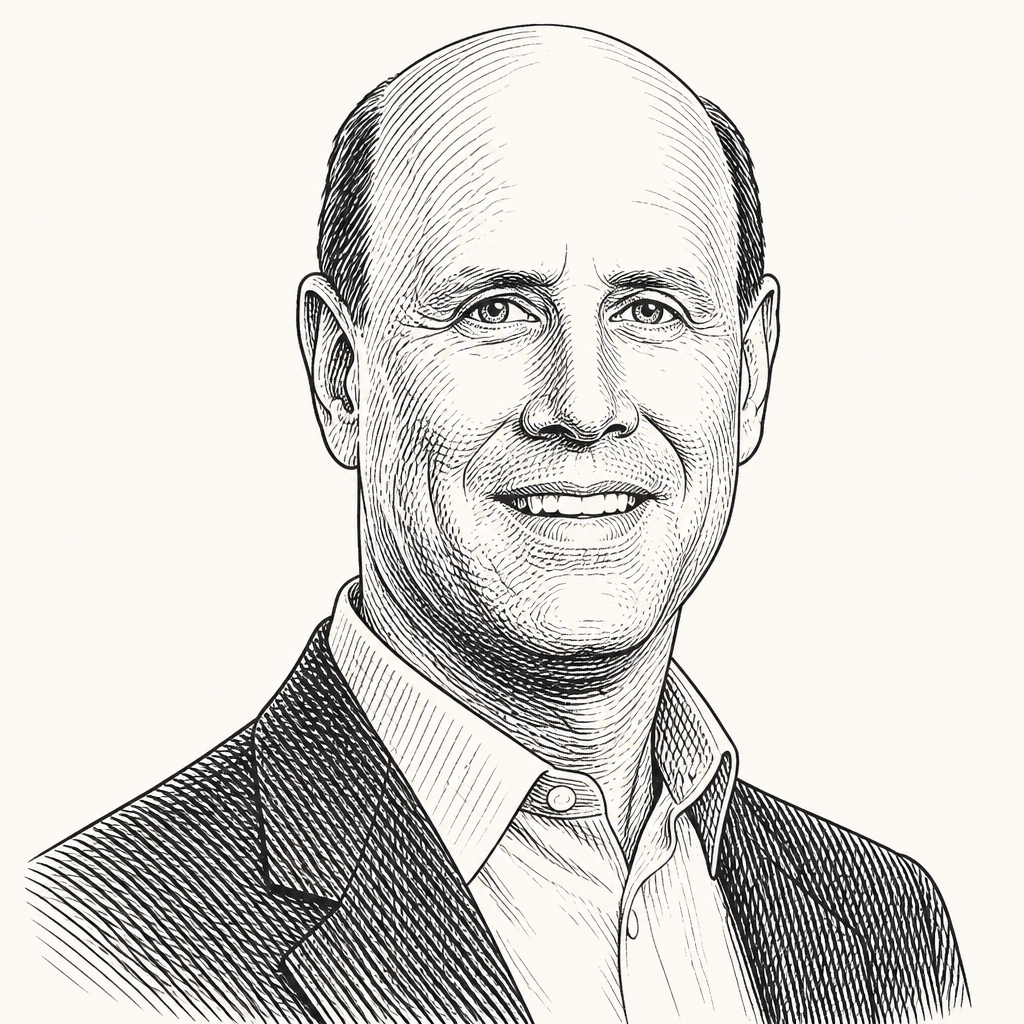
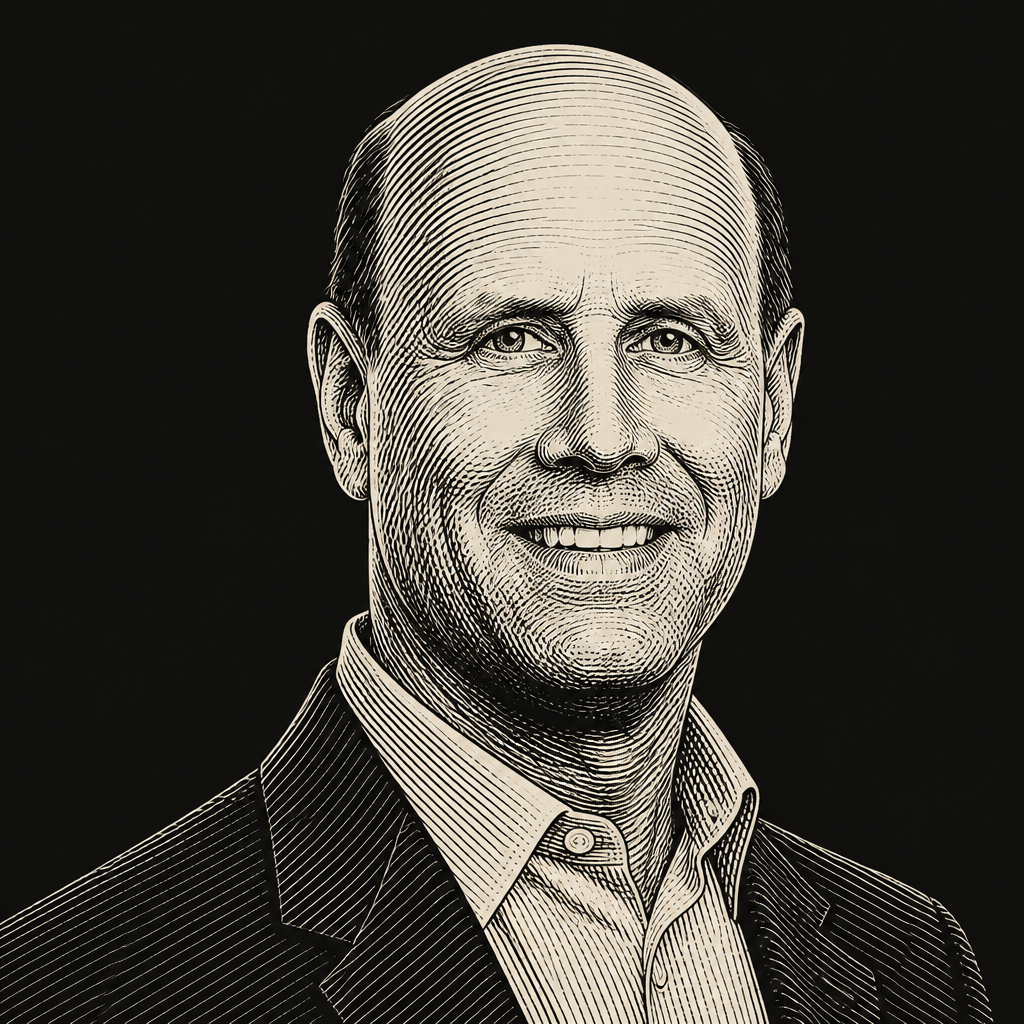
Credit quality is excellent in our book, and that doesn't mean no defaults. Everyone's gonna have defaults now and then. You just can't have many, and you have to get good recoveries.
But investor behavior became harder to dismiss. In November, Blue Owl called off a merger of two private credit funds amid scrutiny over potential investor losses. Around the same period, redemption requests rose sharply across the industry, including at Blackstone, Blue Owl, and Apollo. Seligson says “there’s really not a fund that’s been spared over the last few months here.” DiMauro describes the requests at large funds as unprecedented in private credit’s history.
The pressure also reached public share prices. Blue Owl’s shares fell sharply from January to May 2026, while Apollo and Ares also trended lower. That reversal sat against a longer run in which Ares, Apollo, Blackstone, and Blue Owl had generally outperformed the S&P 500 since 2022 as they expanded credit strategies and grew assets under management. The contrast made the recent selloff a visible proxy for doubts about private credit’s growth story, even if the underlying loans remained privately valued.
Retail withdrawals exposed the limits of liquidity
Private credit’s investor base has expanded from institutions into products built for wealthy retail investors. That newer source of money created a sharper liquidity test when investors began asking to exit vehicles holding loans that do not trade like public securities.
Late last year, Neil Callanan says concerned retail investors started trying to pull money out. Blue Owl allowed investors to take out 15% of shares from one private credit fund, sold assets to return capital, and reduced debt. An unnamed speaker says Blackstone employees put in some of their own money to help meet redemption requests. Those steps did not fully calm investors.
Nate Lanxon says that in the first quarter, funds enforced caps and denied billions of dollars of withdrawal requests, mostly from wealthy retail investors in products tailored for them. A withdrawal-cap chart, based on Robert A. Stanger data and Bloomberg calculations, compared redemptions met with unmet redemptions across HPS Corporate Lending Fund, Apollo Debt Solutions BDC, Ares Strategic Income Fund, Cliffwater Corporate Lending Fund, Blue Owl Credit Income Corp., and Blue Owl Technology Income Corp. In some cases, Lanxon says, unmet requests were tens of percentage points higher than the money investors were actually allowed to take out.
The explanation from firms, as Davide Scigliuzzo describes it, is preservation of fund value: if too much money exits too quickly, managers limit withdrawals. But the investor experience is still direct. Retail investors who had put capital into private credit products found that exit rights were capped when many investors wanted out at the same time.
That is the cash-access problem revealed by the redemption wave: private credit funds can hold bespoke, private loans whose values are not continuously set by public trading, while offering retail-oriented products that investors may expect to exit. When investors want cash in size, limited redemption windows and reported values become part of the confidence test.
Opacity makes the loss cycle harder to read
The market’s defenders and skeptics disagree less about whether some losses will happen than about what those losses mean. Jeffrey Gundlach says private credit has “the same trappings as subprime mortgage repackaging had.” Others argue that comparison is overblown, especially because private credit firms are not using bank deposits to make the loans. Neil Callanan says the issue is difficult to assess because the loans are private. Paula Seligson summarizes the concern: private credit lenders will say they made smart investments, but “what if they didn’t?”


Ellen DiMauro explains the transparency problem in structural terms. Private credit loans are bespoke transactions between sophisticated parties. They are private. They are not securities. Nate Lanxon adds the consequence: because the loans do not really trade, there is no market continuously deciding what they are worth.
That makes valuation disputes and sudden write-downs more consequential. A Bloomberg headline described a record-wide gap between Apollo and KKR in valuing a stressed private loan. Lanxon says skeptics have questioned the accuracy of private loan valuations, especially after some investments had values slashed to zero with little or no warning. Another Bloomberg headline said BlackRock had slashed a private loan value from 100 to zero.
The collapse of subprime auto lender Tricolor and auto-parts supplier First Brands is described as only tangentially related to private credit, but still important to the broader credit debate. Lanxon says their demise raised questions about underwriting and hidden leverage across credit markets. Bloomberg’s account of First Brands said its collapse left a network of auto-parts factories and distribution centers on the hook for more than $10 billion to firms including Jefferies, UBS, and Millennium, and cited an emergency court filing calling for investigation into $2.3 billion of vendor financing that had “simply vanished.”
Jamie Dimon gave the most memorable warning after Tricolor-related losses reached banks including JPMorgan.


My antenna goes up when things like that happen. And I probably shouldn't say this, but when you see one cockroach, there are probably more.
Scigliuzzo says Dimon’s larger point was that there could be more problems, that this could be only the beginning, and that “no one is really safe.” The counterargument, as DiMauro states it, is that post-2008 regulation intentionally moved risky lending away from bank balance sheets and onto investors. An unnamed speaker adds that those investors may not like losing money, but they can afford to lose it.
That distinction is why some in the source view fears of a 2008-style banking crisis as overblown: the loans are not funded by ordinary bank deposits, and the losses have been pushed toward investors rather than bank balance sheets. But that does not remove the confidence problem. Opaque marks, software exposure, retail redemptions, and sudden zeroes are enough to test the market even before widespread distress appears.