Russian Arms and Oil Keep India From Breaking With Moscow
 Lizzy Burden
 Minmin LowAnthony Halpin
 Clara Marques
 Sudhi SenJeanette RodriguesBloomberg OriginalsFriday, September 11, 20265 min read
India cannot make a clean break with Russia while Russian equipment underpins much of its military and Russian oil remains a major import, even as the US is its indispensable export market. Bloomberg shows how that bind grew from a Soviet-era relationship built on technology transfer and licensed arms production, then deepened after the Ukraine invasion as discounted crude made Russia India’s leading seaborne oil supplier.
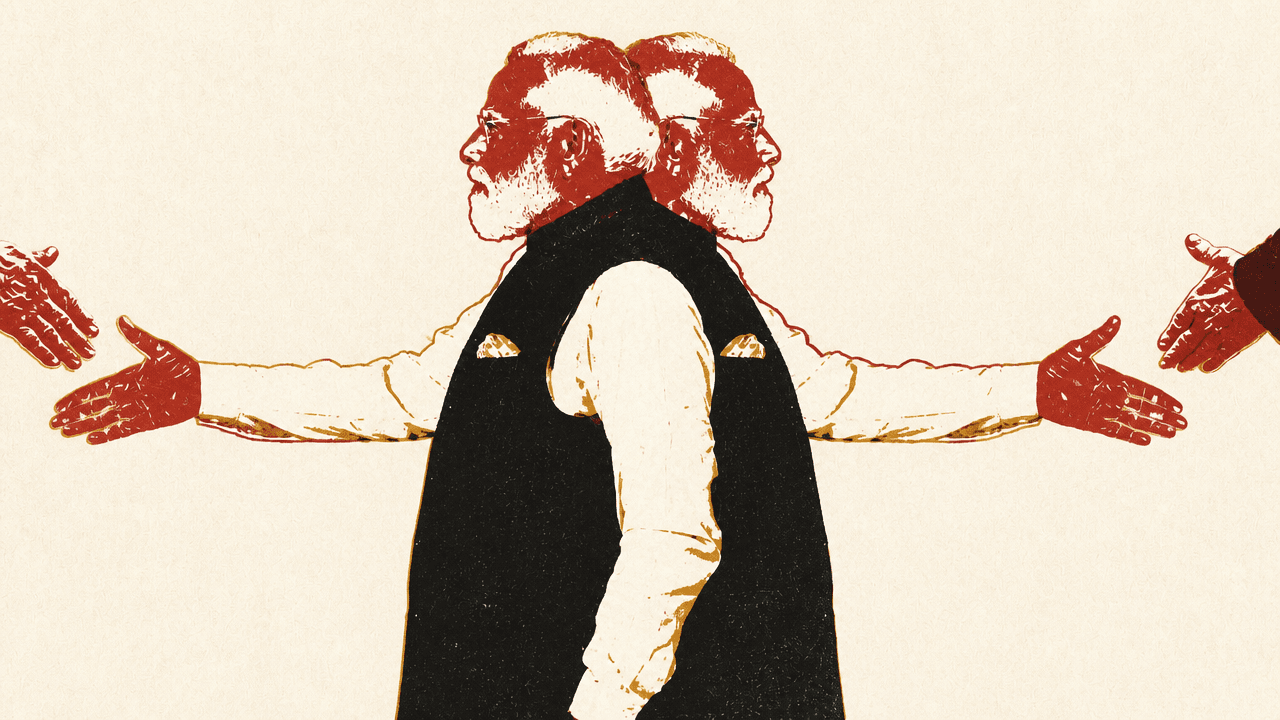
Russian equipment makes a clean break with Moscow impractical
India cannot easily sever ties with Moscow while Russian equipment still underpins much of its military and Russian oil remains a major import. At the same time, the US is India’s most important export market. That tension is the practical basis of New Delhi’s balancing act, rooted in a Soviet-era relationship built around industrial development, technology transfer and arms production.
Jeanette Rodrigues recalls the Soviet cultural presence in India through Misha, a children’s magazine full of stories about the Soviet space program: “It was propaganda for sure, but it was gorgeous propaganda.” More consequentially, she says, the Soviet Union offered technology transfer where the US offered financial aid without the same willingness to share technology.
The Bhilai steel plant became an emblem of that arrangement. The Soviet Union supplied its technical blueprint; when Khrushchev addressed India’s parliament in 1960, Rodrigues says, he wished for Indo-Soviet friendship to be as strong as the metal produced there.
US ties with Pakistan pushed New Delhi closer to Moscow. India generally avoided formal alliances, but Washington’s military alliance with its rival made Pakistan a recurring strategic fault line. Sudhi Sen calls the Pakistan issue “a constant” in India’s relations with the Soviet Union and Russia: at different moments, he says, the US taking Pakistan’s side has been a red line for Indian governments.
The Soviet model also suited India’s approach to arms procurement. A newly independent India did not want military aid from a superpower, Rodrigues says; it preferred to buy weapons or licenses to manufacture them domestically. The Soviet Union was prepared to license-produce fighter jets and tanks in India.
That legacy creates a practical dependency that cannot be unwound quickly. Russia remains India’s largest defense supplier, and Sen says India’s fighter fleet is “almost all” Russian. Keeping it operational requires Russian spare parts, technical support and maintenance capacity. Anthony Halpin estimates that Russia still supplies roughly 48%, or about half, of India’s military needs, despite sanctions complications and the war in Ukraine.
Russia-India relationship is more an emotion and less a transaction.
Oil made the relationship a direct source of US pressure
India repeatedly called for peace after Russia’s full-scale invasion of Ukraine but did not condemn the invasion. Its growing oil purchases then became a focal point of US criticism and trade pressure.
Before 2022, Clara Marques says, India was taking practically no Russian oil and sourced most of its crude from the Middle East. The price cap changed the economics: designed to constrain Russia while keeping crude prices stable, it allowed discounted Russian oil to flow. Rodrigues describes the result bluntly: “the price of oil became an arbitrage game.”


Russian crude reached nearly 56% of India’s imports in July 2026, worth about $6.4 billion a month. India had become Russia’s largest client for seaborne oil, providing vital cash for the Kremlin.
The policy environment was initially permissive. Marques says the Biden administration encouraged India to buy Russian oil under the price cap to help balance global markets. Under Donald Trump, that posture became a campaign of pressure: tariffs, public criticism and the prospect of a trade agreement were used to press New Delhi to reduce purchases. Treasury Secretary Scott Bessent accused India of profiteering from Russian oil.
The US subsequently backed off its toughest rhetoric amid the US-Israel war with Iran. Rodrigues says fresh waivers were issued for countries to buy Russian oil, and India took advantage of them.
Russia’s energy role goes beyond crude. Sen says India is diversifying toward cleaner energy and nuclear power. Marques identifies Kudankulam, the nuclear plant in Tamil Nadu, as a flagship project: expensive and delayed by the Ukraine war, but still advancing and central to India’s nuclear plans.
Washington is indispensable, but not always dependable
The US is India’s more important economic partner: bilateral trade with the US was substantially larger than trade with Russia from 2021 through 2025. Anthony Halpin says the US is “far and away” India’s largest export market. India cannot afford to alienate Washington, he argues, and wants better trade terms.
Its connection to the US also extends beyond trade. The Indian diaspora there is more than 5 million strong, while hundreds of thousands of Indian students study in the country. Jeanette Rodrigues points to Indian leaders in Silicon Valley and American finance as evidence that the relationship reaches beyond statecraft.
Yet several developments have made Washington look unreliable from New Delhi. Clara Marques characterizes the Trump administration as mercurial and therefore less dependable. Sudhi Sen says its handling of the relationship left “a very sour taste.”
Following the brief 2025 India-Pakistan conflict, Trump claimed credit for helping secure a ceasefire and said he deserved a Nobel Peace Prize. India rejected the claim. The dispute, alongside trade pressure over Russian oil, hurt public opinion of the US in India.
| Country seen as India’s top ally | Share of Indian respondents |
|---|---|
| Russia | 36% |
| United States | 16% |
The contrast is not that Russia offers India a larger economic relationship. It is that Washington’s economic importance has coexisted with abrupt changes in pressure, tone and policy.
China gives India another reason to preserve the relationship
India’s choices are not confined to a US-Russia triangle. Clara Marques argues that China is an equally important part of the calculation. Russia’s increasing dependence on China is uncomfortable for India and makes the Russia-India-China triangle as important as the relationship among India, Russia and the US.
Anthony Halpin describes Russia as the man in the middle. It lacks the reach and potential of India and China, which he calls giant economies and populations in comparison. Yet Russia remains a critical partner for India despite its damaged economy and pariah status.
This does not mean the relationship retains its earlier form. Jeanette Rodrigues calls it a “marriage of convenience”: perhaps without the love associated with the 1950s, but retaining warmth, familiarity and a sense that each side knows who it is dealing with.
Marques expects rebalancing rather than a complete turn away from Russia. She points to Foreign Minister Jaishankar’s description of the relationship as “the one constant in geopolitics”: India has changed and Russia has changed, but their relationship has endured.