Replacing Starmer Would Not Change Britain’s Fiscal Arithmetic
 Nate Lanxon
 Lizzy Burden
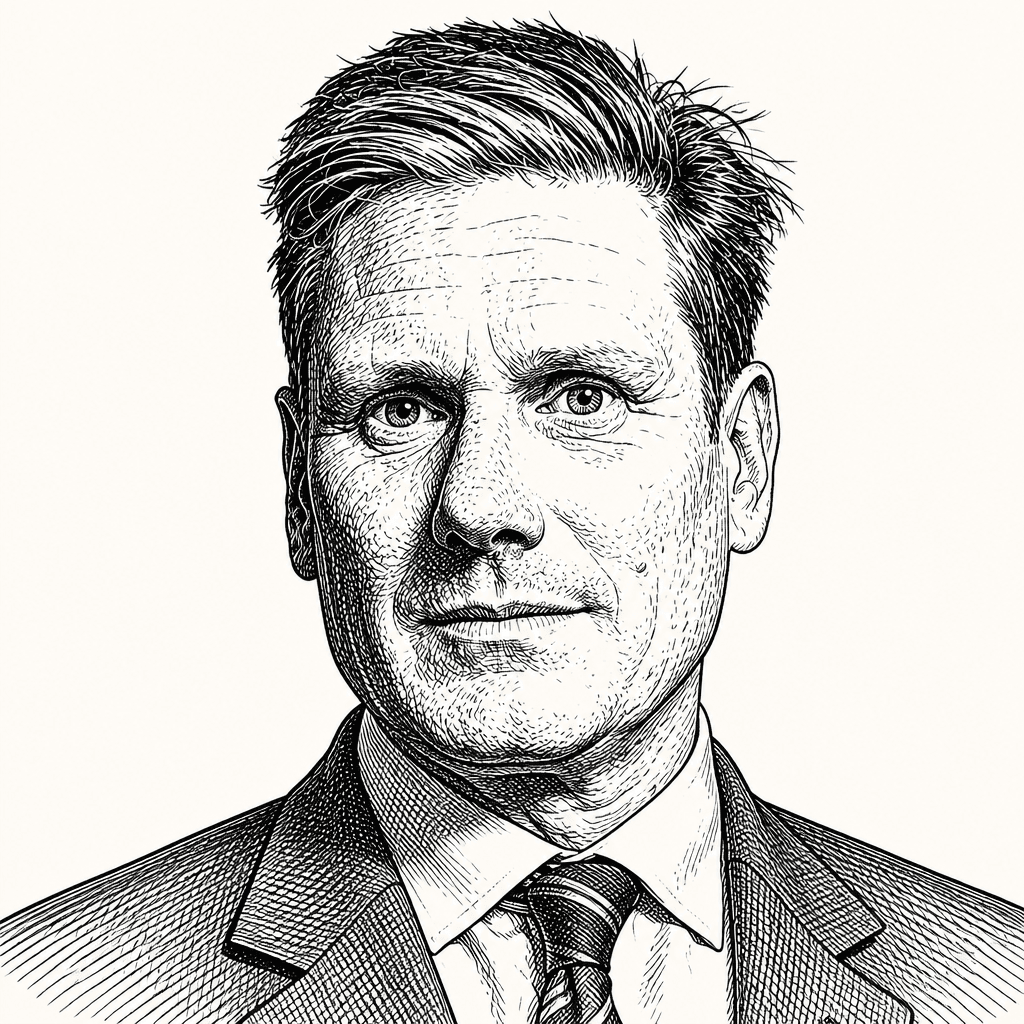 Keir Starmer
 Alex Wickham
 Andy Burnham
 Alice GledhillBloomberg OriginalsFriday, May 22, 20267 min read
Bloomberg Originals argues that Keir Starmer’s rapid loss of political authority reflects a deeper British problem: voters want fast improvement, while weak growth, high debt costs, persistent inflation and limited fiscal room leave little capacity to deliver it. Alex Wickham, Lizzy Burden and Alice Gledhill frame the churn of UK prime ministers as a response to that gap, but say changing leaders does not remove the constraints. The bond market, in their account, is now central to the politics, narrowing Labour’s choices and making any challenge to Starmer economically consequential.

Changing the prime minister does not reset the constraint
Britain’s political instability is being driven by a gap between the speed at which voters want improvement and the speed at which the economy can plausibly deliver it. Alex Wickham put the point bluntly: if you speak to recent prime ministers, they might say Britain is “ungovernable.” Keir Starmer rejected that description, but the underlying pattern is hard to ignore. In seven years, Britain has had five prime ministers, while weak growth and a cost-of-living crisis have remained.


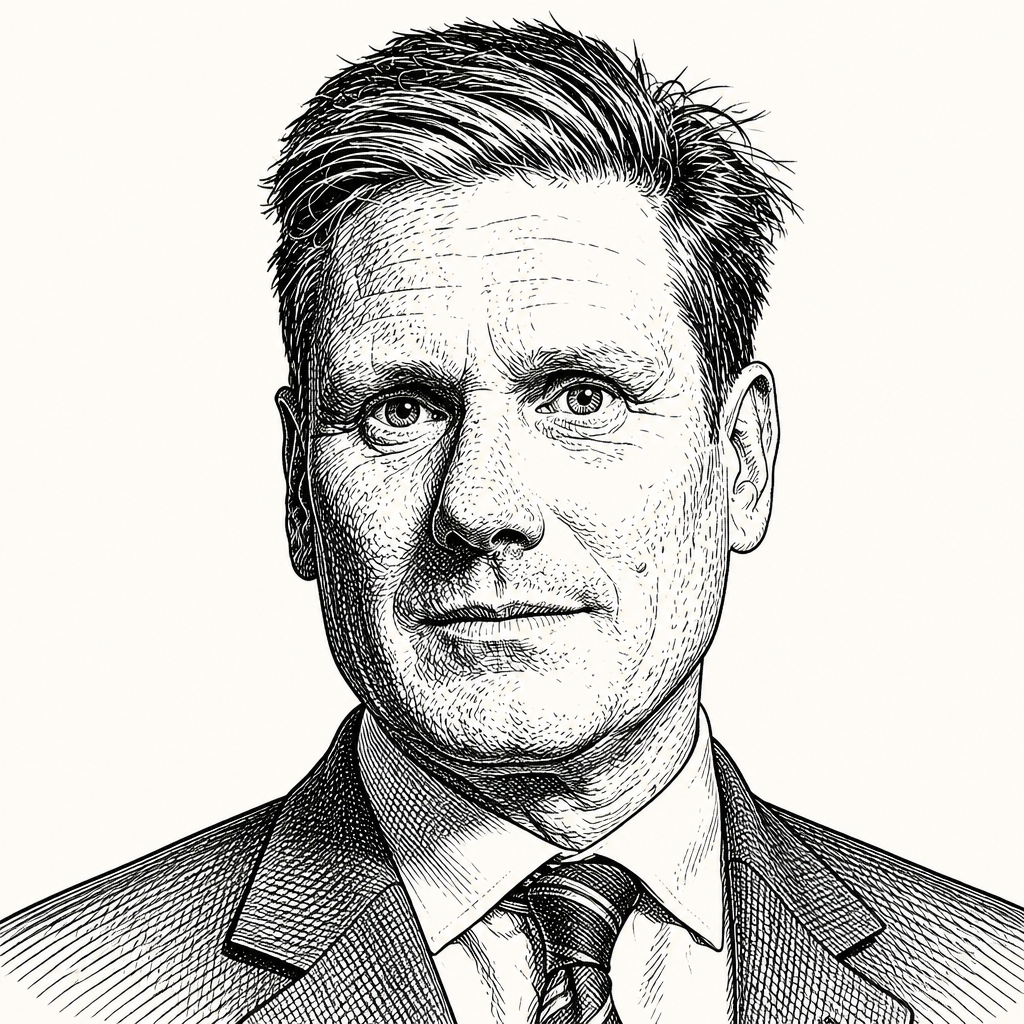

Nate Lanxon framed the current pressure on Starmer as part of that longer churn: when voters and politicians grow impatient, Wickham said, the immediate instinct is to “change the Prime Minister.” The problem is that the repeated leadership changes have not removed the same governing arithmetic: low growth, high welfare costs, expensive debt, inflation pressure, and little fiscal room.


That is why the bond market matters in a story that otherwise looks like Westminster maneuvering. Alice Gledhill said that although the drama is primarily political, “there’s no getting away from the fact that the bond market looms large over the whole” situation. Bloomberg showed UK 30-year gilt yields rising to new highs in May, and later showed the longer-run reversal: long-term UK borrowing costs had been falling for years, but rose to their highest level since 1998.


For households, Gledhill’s explanation was direct. If the government spends more servicing debt, it has less available for investment and growth. Lanxon added that the government spent about £100 billion on interest alone in the most recent fiscal year, close to the UK’s entire annual education budget.
Starmer’s mandate was broad, but not necessarily deep
Labour’s 2024 landslide gave the left its first major governing opportunity since the Blair-Brown years. Lizzy Burden called it “a huge opportunity.” But Wickham argued that Starmer was not carried into office by a groundswell of enthusiasm for him personally. The election was, in his account, “a negative vote against the Conservatives” after Brexit, Boris Johnson, Liz Truss, market turmoil, and years of chaos.


That distinction matters because the governing honeymoon was short. By the May local elections, Burden said Labour’s results were “dire,” with losses “left, right, and center, literally.” She identified pressure from Reform UK on the right, the Greens on the left, and internal Labour anger at Starmer’s perceived inability to connect with voters. Bloomberg showed a Statista chart of the 2024 general-election vote share: Labour on 33.7%, Conservatives on 23.7%, Reform on 14.3%, Liberal Democrats on 12.2%, Greens on 6.7%, and others on 9.4%.
| Party or grouping | Vote share shown |
|---|---|
| Labour | 33.7% |
| Conservative | 23.7% |
| Reform | 14.3% |
| Liberal Democrats | 12.2% |
| Green | 6.7% |
| Others | 9.4% |
The fiscal turn came almost immediately. Within days of taking office, Chancellor Rachel Reeves said the public finances were worse than feared. Burden said Reeves then announced a controversial cut for pensioners, which battered Labour in the polls and from which, in her view, the party never really recovered. Bloomberg displayed one of its own related articles: “Reeves Defends Controversial Cut to UK Winter Fuel Payments,” dated Sept. 3, 2024.
The pressure did not stay confined to welfare politics. Lanxon said Labour followed with £40 billion of tax rises focused on businesses. Critics, he said, argued that the move put Labour’s growth pledge at risk and would ultimately affect jobs. Bloomberg then presented unemployment as having risen since Starmer took office, with payrolls and vacancies falling, and businesses pointing to higher employment costs as a reason.
The government was also hit by scandal. Burden cited revelations about Peter Mandelson, then ambassador to Washington, and his dealings with Jeffrey Epstein as another event that weakened Starmer before the local elections. Wickham said a Bloomberg News investigation in 2025 found Mandelson’s relationship with Epstein was “far deeper than anyone had previously known,” after which Starmer sacked him. Starmer said he should not have appointed Mandelson and apologized to Epstein’s victims, saying they had been “clearly failed” by his decision.
The market is not just punishing Britain; it is narrowing the choice set
The rise in UK borrowing costs is part of a global selloff, but Bloomberg’s account emphasized that Britain is feeling the pressure more acutely. Gledhill said government bonds globally had endured a difficult period since the outbreak of war in the Middle East, with fears of another inflationary wave causing sharp selloffs. An unnamed market commentator cited Japanese yields at their highest levels since 1997 on some maturities, UK yields since 1998, German yields since 2011 on some maturities, and US yields at their highest close so far that year.
Bloomberg showed 30-year yields for G7 nations since January and highlighted the UK line at the top. Lanxon described it as an “increasingly costly premium” investors were demanding to lend to Britain. Burden’s explanation layered global inflation fears onto domestic political risk: higher expected inflation, higher energy prices, and political uncertainty were together making UK government debt less attractive to international investors.
Britain’s starting position makes that more dangerous. Gledhill said UK debt, measured relative to economic output, is above 90%. The more debt a country has, she said, the more vulnerable it is to rising interest rates because issuing and servicing debt become more expensive.
The inflation picture compounds the constraint. Burden called inflation a chronic UK problem. Before the war in Iran, Lanxon said, the Bank of England had forecast inflation would return to its 2% target by 2026, making rate cuts look possible and potentially easing borrowing costs for households and government. But the projection was revised upward in March. Burden said the Middle East war had pushed oil prices higher, and that inflation is higher in the UK because it imports energy.
The source did not deny that the economy has grown under Starmer. Lanxon explicitly said it had. But he added that after inflation, wage gains had fallen, making growth feel theoretical for many households. Bloomberg illustrated that contrast with side-by-side charts: cumulative UK GDP growth rising between July 2024 and March 2026, and UK real wages falling over the same period.
The bond market may be protecting Starmer from his own party
The paradox in Starmer’s position is that the same market pressure making government difficult may also be shielding him. Burden said the pressure on gilts feeds into the Westminster atmosphere of repeated prime-ministerial turnover, but added that Starmer’s case is different: “the bond market seems to be defending him.” In her account, investors want Starmer and Reeves to stay.
Gledhill explained why: markets see them as fiscally disciplined politicians who have set out fiscal rules and repeatedly said they will abide by them. That makes any Labour leadership challenge economically consequential, not just politically consequential. Lanxon said analysts were pricing in the chance that Starmer could be replaced by someone more willing to borrow into already expensive markets.
Andy Burnham is the obvious figure in that speculation. Wickham described him as the key person in Labour over the coming weeks, months, and potentially years. Lanxon said Burnham had decided to leave his role as mayor of Manchester to stand for a parliamentary seat, from which he is expected to challenge Starmer for the top job.


Burnham’s fiscal positioning is the market concern. Burden said his comment that Westminster should not be “in hock to the bond market” spooked investors because it suggested he might not care if bond markets sold off and would press ahead with large spending plans. Bloomberg displayed a related article by Wickham, “Burnham to Reject Any Change to UK Fiscal Rules If He Wins,” dated May 18, 2026.
Burnham then tried to reassure. “The rules are there for a very important purpose, to give confidence to investors,” he said. “The rules will stay in any context.” Burden’s view was that even though he had tried to walk back the earlier comments, bond vigilantes would have a hard time forgetting them.
There is a political upside case for Labour. Wickham said the best scenario is that voters take to Burnham and that he offers policies bold enough to make a difference. Bloomberg also showed a Guardian article saying Burnham had called for energy and water to be put under public control. But Wickham stressed the scale of the limitation: many of the economic problems are structural, immense, and difficult to change quickly. The next prime minister, he added, would be operating amid international instability in “the world of President Trump,” with very little any prime minister can do about it.