China Is Betting on Megaregions to Escape the Middle-Income Trap
 Monica Smith
 Shawna KwanEmily UnknownYukon Huang
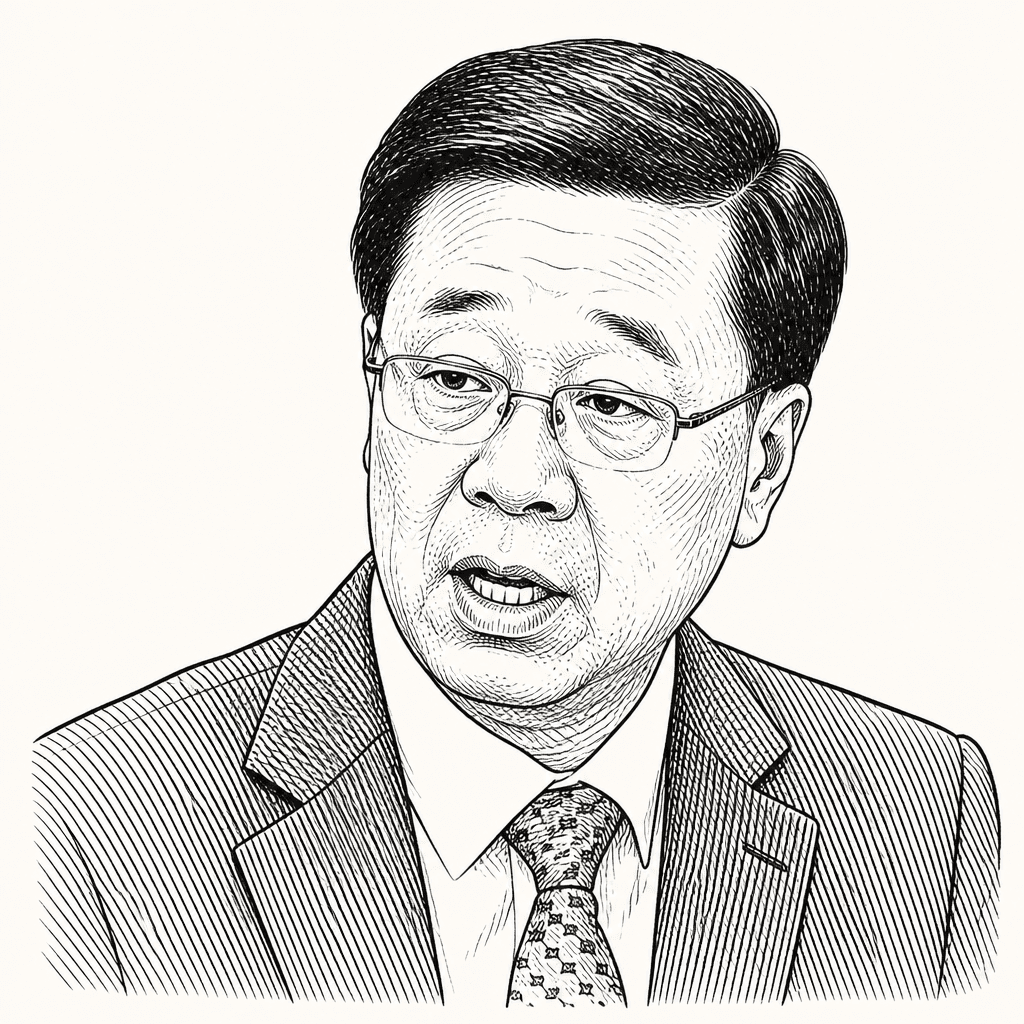 John LeeBloomberg OriginalsMonday, June 1, 20268 min read
Bloomberg’s documentary argues that Hong Kong’s Northern Metropolis is not just a local development plan but a test case for China’s attempt to turn megaregions into a new growth engine. The project would convert rural land near Shenzhen into a technology hub linking Hong Kong more tightly to the mainland’s Greater Bay Area, an 11-city, $2tn economy. The source presents the strategy as a bid to escape slower growth through concentration of people, capital and ideas, while showing the displacement, political constraints and institutional frictions that come with it.
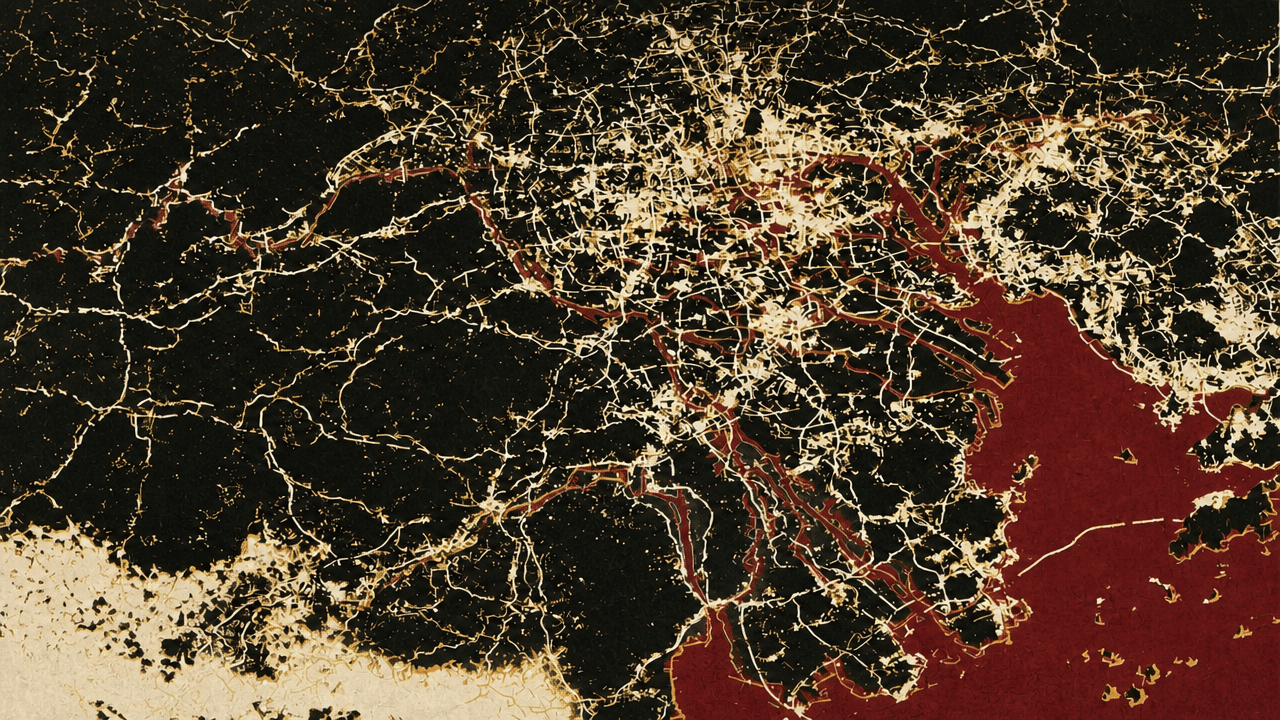
China is trying to turn proximity into a national growth model
China’s megaregion strategy joins an economic problem to a physical one. The country is trying to move from older growth engines — textiles, cheap electronics, and a real estate boom — toward a higher-productivity economy built around innovation. In Hong Kong, that strategy means turning fish ponds, farmland, villages, and green areas along the Shenzhen border into the Northern Metropolis, a technology hub meant to bind Hong Kong more tightly to mainland China.
The larger unit is China’s Greater Bay Area: an 11-city urban and economic system made up of Hong Kong, Shenzhen, Macau, Zhuhai, Zhongshan, Jiangmen, Foshan, Guangzhou, Dongguan, Huizhou, and Zhaoqing. It is described as the largest continuous urban area the world has seen: 86 million people and a $2 trillion economy fused into one regional engine.
For Beijing, the Greater Bay Area is not an isolated project. It is the leading example of a broader turn in China’s planning: away from individual cities and toward “mega-regional China,” a network of 19 large urban clusters intended to integrate hundreds of millions of people into shared labor markets and innovation systems.
Allen Wan calls the Greater Bay Area “a bold, very ambitious attempt by the Chinese government to integrate eleven cities.” Yukon Huang says China is relying heavily on the region to become “a powerhouse innovative economy” with a long-term role in national growth.
The theory is that cities work because they concentrate choice, labor, knowledge, and opportunity. Monica Smith, an anthropology professor at UCLA, frames the modern megaregion as an extension of a 6,000-year urban pattern: people gather, then find employment, education, entertainment, and possibilities unavailable elsewhere. Cities have objective disadvantages — crowding, pollution, faster disease transmission — but Smith’s point is that people continue to move toward them anyway.


What has changed is the scale and speed. Ancient trade routes and small urban settlements are giving way to rail lines, paving, and infrastructure that can close geographic gaps at “kilometers per day.” China’s experiment is not merely urban expansion. It is an attempt to make the advantages of dense urban life operate across an entire region.
Northern Metropolis is the physical bridge between Hong Kong and the mainland
The Northern Metropolis project is the concrete expression of that strategy in Hong Kong. The plan targets a rural strip in northern Hong Kong, near the narrow river separating it from Shenzhen. On one side are Shenzhen’s skyscrapers; on the Hong Kong side, Shawna Kwan describes fish ponds, farmland, and green areas.


The Shenzhen-Hong Kong divide is both geographic and political: two dense urban systems separated by a border, with Hong Kong’s northern edge still marked by land uses that look unlike the mainland skyline across the river. The Hong Kong government’s Northern Metropolis Action Agenda 2023 maps the project around Shenzhen, Futian, Luohu, Yantian, and Sha Tau Kok. The geography is the point: the project is meant to fill in a rural frontier and make Hong Kong’s northern edge a working connection to the mainland side of the Greater Bay Area.
The project is branded as a multibillion-dollar plan to turn that frontier into a technology hub, housing cutting-edge laboratories and promising startups while physically and economically connecting Hong Kong to Shenzhen. Hong Kong Chief Executive John Lee describes Northern Metropolis as “the engine for us not just for growth, for uplifting as well.”
Development in the northeastern New Territories used to draw visible opposition. A South China Morning Post headline cited in the piece reads, “Protesters storm Legco over northeastern New Territories plan.” After the imposition of Hong Kong’s national security law and the crackdown on mass democracy protests, the narration says, local opposition more broadly has been silenced, reducing potential obstacles for developers.
Kwan’s assessment is that resistance has shifted into resignation. Residents, she says, know development will proceed. “All they can do is just accept that fate.”
The project’s cost is measured in communities as well as land
The rural landscape is not just empty space awaiting higher-value use. Emily Unknown, a resident of Hong Kong’s New Territories, says the biggest loss will be “the untouched wildlife areas,” but above all “the local communities.” She remembers visiting on weekends as a child, with relatives teaching her farm tasks such as building bonfires. Looking over a public park, she says, is different from looking over “a real wildlife hilly area.”
Hoi Kum says she was born in the village, in a wooden hut. Her description of change is incremental but relentless: buildings going up around the area, roads changing every day, and the sense that the village “won’t be there here for too long.”
Her argument is also about choice, which cuts against the standard urban-growth premise that cities attract people because they expand options. Kum says that if people truly had the option, “the vast majority” would choose to live in a small countryside house with space rather than in an apartment block. “Now, there’s no choice.”
Hong Kong is offering cash and public housing to relocate eligible farmers and villagers. The residents’ comments point to losses that are broader than relocation itself: wildlife, family memory, rural skills, local identity, and space.
The Shenzhen precedent supports the ambition but not the certainty
The case for Northern Metropolis rests partly on Shenzhen, described as perhaps the fastest-growing planned city in human history. One archival claim expected Shenzhen to have one million people by 2000; by that year, it had seven million. It is now an 18-million-person megacity that the narration says was essentially “willed into existence” by the Chinese government because of its position between Hong Kong and Guangzhou.
Monica Smith argues that the success of planned cities often depends on “who its neighbors are.” Cities, in her account, often emerge from villages or towns located between already important places. Shenzhen’s position between Hong Kong and Guangzhou is therefore central to understanding why state-directed growth worked there.
Allen Wan presents Shenzhen and Guangdong as central to China’s rapid rise in advanced industries. He lists AI, robotics, semiconductors, cleantech, and autonomous driving, saying these are not merely industries China displays to impress the world but “important drivers for the future.”
The Greater Bay Area strategy is to distribute functions across cities. Wan gives the example of a startup that raises money in Hong Kong, builds a prototype in Shenzhen, scales production in Guangzhou, and launches in Macau. That is the clean version of the regional logic: each city contributes a distinct capability to a shared innovation economy.
But implementation is not automatic. Shawna Kwan warns that governments cannot simply declare a place the center of a city and expect people to move there. “We’ve seen that fail so many times all over the world,” she says. China’s own ghost cities show the risk: large infrastructure projects that sat empty for years, even if at least some later filled up. The “if you build it, they will come” model can work, but only under the right conditions.
The real integration problem is institutional, not architectural
The Greater Bay Area’s challenge is not only roads, towers, and rail. Hong Kong and mainland China are separated by systems as much as geography. Hong Kong has its own legal system, currency, and passports. Hong Kong and Macau are also separated from the mainland by borders. Those differences make integration through Northern Metropolis a government priority.
Allen Wan describes the problem directly: Hong Kong and China have different political systems, common law versus a socialist market economy, different tax regimes, visa regimes, “and all that.” The question is how to merge these disparate systems into something that functions as one economic region.
That is why the urban plan is also a political-economic project. Wan calls it “an economic political objective,” a regional program with “very many complex dimensions.” Proximity matters — half an hour to an hour from innovative activity, especially Shenzhen — but infrastructure is not enough. Innovation is said to depend on meetings, mobility of labor, customs, information exchange, and the ability of people and firms to move across boundaries.
Yukon Huang places the project within China’s national economic transition. The older growth engines are described as faltering. China’s growth has slowed as it confronts what is called the middle-income trap. Huang says moving from middle income to high income requires a steep rise in productivity, both for firms and labor, over the next decade.
For that reason, concentration is not treated as optional. The final economic claim is blunt: if the question is whether an economy can be successful without being a concentrated urban or regional center, the answer is no. People move where the jobs are. The Greater Bay Area concept “requires concentration of activities.” The open question is whether that concentration is managed well or poorly.
The megaregion promises efficiency and produces displacement
Megaregions are not only a Chinese phenomenon. The Abidjan-Lagos corridor in Africa and the Northeast corridor of the United States are named as examples of a broader global movement in which individual cities are being absorbed into larger urban systems.
China’s difference is that it is trying to engineer the outcome at national scale. The Greater Bay Area is one of 19 planned clusters, and Northern Metropolis is one link in that larger redesign of the country’s urban landscape.
The central tradeoff is between concentration and loss. For some, the loss of rural land, wildlife, and older ways of life is the dystopian cost of development. For others, the same process is a necessary move into a high-tech future. The Greater Bay Area plan depends on concentrating people, firms, capital, and ideas; the Hong Kong case shows that concentration also means filling fish ponds with concrete, raising skyscrapers, and moving residents out of places where they built their lives.