High Interest Costs Make Brazil’s Debt Harder to Contain
Brazil’s debt is pressing on households and businesses as high interest rates make borrowing harder to sustain, while interest on public debt exceeds 8% of GDP. As an election approaches, President Luiz Inácio Lula da Silva is seeking to support household demand and social spending, while his main rival, Flávio Bolsonaro, has pledged spending controls but offered few details. Whoever wins will face difficult choices over how to bring debt under control.
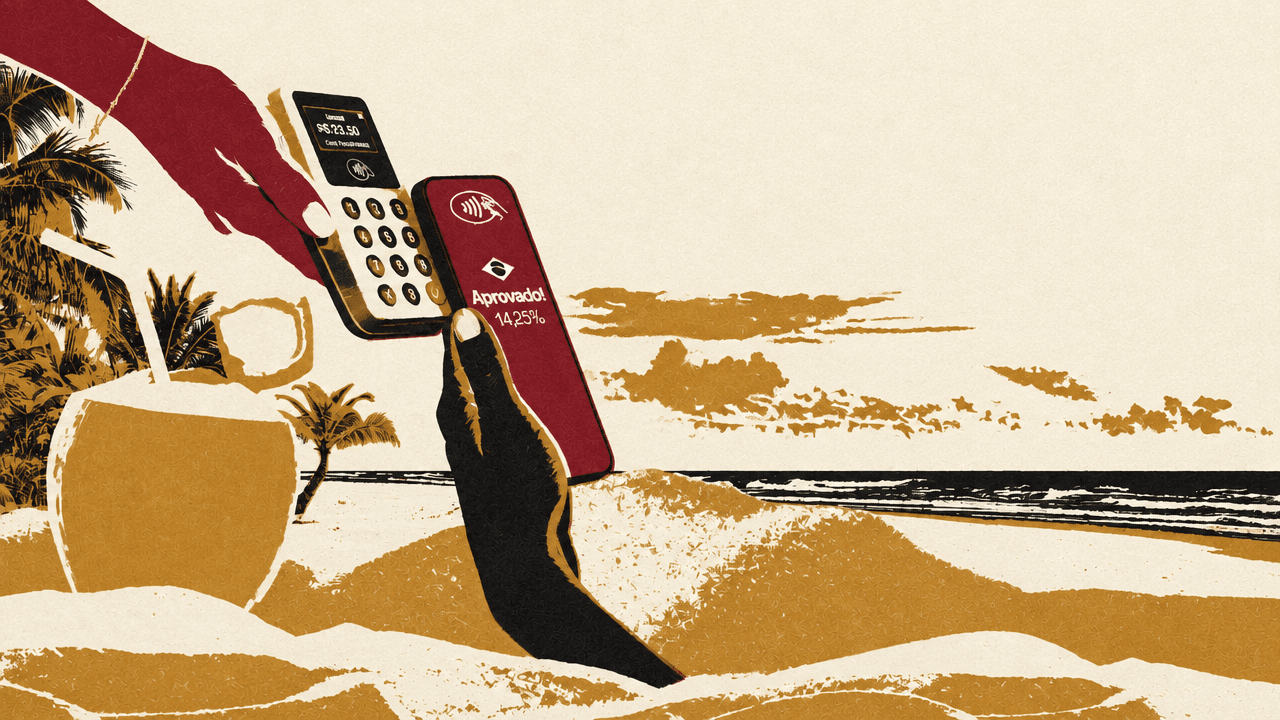
Easy credit becomes expensive when rates turn
Installments make borrowing feel ordinary in Brazil. At the checkout, a customer may ask pode dividir?—“in how many installments can I pay?” Stores commonly offer three, four or five payments with no interest, but that promise depends on paying on time. In a country marked by deep inequality, installments widen access to goods; they can also make it easier to borrow beyond one’s means. Estimates put the share of households with some form of debt above 80%.
The danger became clearer as borrowing costs rose. Antônio Carlos Ramalhete, a gym teacher and personal trainer who also invested in a business, said personal and business expenses became entangled. He had five credit cards and gradually maxed them all out. Credit-card interest rates in Brazil can exceed 400% a year. Martha Viotti Beck described the resulting debt as “a snowball that for some people is impossible to get out of.”
Ramalhete said he had always carried debt, but kept it under control until the pandemic period. Digital lenders helped expand access to credit during those years. Giovanna Bellotti Azevedo said fintechs brought credit to people who might not otherwise have had it; mobile accounts meant borrowers did not need to go to a bank to open an account.
The scale of borrowing grew quickly. From 2020 to 2024, active credit cards increased by roughly three-quarters, and the number of people using them rose by 37 million. Pix, Brazil’s government-managed instant-payment system, drew more transactions into the banking system and made purchases easier. Andrew Rosati compared it to Zelle in the United States, but said its everyday use reaches beyond conventional shops: even street panhandlers and fruit sellers may accept Pix. Azevedo added that Pix also has a credit component: in some cases, the user is effectively taking a loan to make an instant payment.
That convenience met a sharp rise in rates. Azevedo said rates went from record lows to double digits in roughly a year and a half. Loans that had seemed painless could become costly when conditions changed.
More borrowing channels mean more ways to fall behind
Online betting has added another risk for households already carrying debt. Rosati said betting had expanded rapidly, with advertising especially hard to avoid in a country where soccer is deeply embedded in public life. Brazil is now one of the world’s largest online gambling markets; Central Bank estimates put wagers as high as 30 billion reais, or $5.8 billion, a month.
Former central bank president Armínio Fraga said there was “plenty of evidence” that people were going overboard and that the odds were poor. President Luiz Inácio Lula da Silva said he would personally end betting, which he considers harmful to society.
Rosati’s concern was the combination: people already in debt, able to access credit and conduct banking on their phones, while gambling grows. For someone already underwater, he said, that is a dangerous cocktail.
Small businesses are carrying a record debt burden
The pressure extends beyond households. Azevedo said about 90% of the nine million businesses behind on debt payments are small or micro businesses. Agriculture is among the industries at record levels of delinquency. Farmers who borrowed during the pandemic to buy machinery or land are now renegotiating payments with banks and capital markets.
Across the country, companies behind on payments owe nearly 239 billion reais—about $46 billion—a record high. Larger companies have also faced trouble. Azevedo pointed to Raízen’s continuing debt restructuring and Casas Bahia, a major retail chain, which filed for bankruptcy protection amid high rates and tight credit.
The risk reaches the broader economy: when businesses and families are both struggling, the outlook for growth weakens. The strain is not confined to private borrowers. The government also faces high costs to finance its own debt.
The fiscal problem is costly, but spending is hard to cut
Brazil’s government debt fell as a share of the economy after the pandemic, but has started rising again. International Monetary Fund estimates put it above 100% of GDP by the end of the decade. The comparison with the United States and Japan offers some perspective: their debt ratios are higher. But Brazil’s double-digit interest rates make servicing debt more expensive. Interest paid on public debt is now more than 8% of GDP, the highest among the countries compared.
Reducing that burden is difficult because much of the federal budget is committed by law. More than half goes to pensions, spending the president cannot simply cut. Health, education and social programs also make up essential spending in a country where a large share of the population is poor. Roughly two-thirds of Brazilian workers earn about $600 a month or less, and nearly half of that group earn around $300 or less.
That income picture helps explain why credit fills gaps in household budgets—and why fiscal restraint carries social costs. Lula’s approach, as described in the source, treats demand and social spending as drivers of growth. Programs such as Bolsa Família provide aid to mothers with the aim of helping them feed their children and keep their children in school; these programs have helped millions avoid poverty. The government has also sought to address consumer debt.
But supporting demand can complicate the fight against inflation. Economists warn that Brazil is caught in a vicious cycle: debt service is costly, while efforts to sustain household spending can make it harder for the central bank to keep inflation under control. The central bank has been cutting rates ahead of the election and is expected to continue lowering them through 2028.
The next president inherits choices, not an easy fix
With an election approaching, the competing approaches remain broad. Lula’s main rival, Flávio Bolsonaro, has pledged to overhaul fiscal rules and cut spending, and has proposed a public-debt ceiling. He has offered few specifics, leaving uncertainty about how far he would go.
The choices are consequential. One speaker warned that a slowdown, possibly even a recession, was highly probable if people continued borrowing at current rates. Brazil’s economy is not in a crisis “by any stretch,” but the outlook would become more worrying if the government had to pull back social aid.
The closing reflection returns to the habit of paying in installments: Brazilians often believe they will manage to pay the next one and that everything will work out by month’s end. What they do not account for are the things that happen along the way.