Tennis Players Seek More Revenue Without a League’s Bargaining Machinery


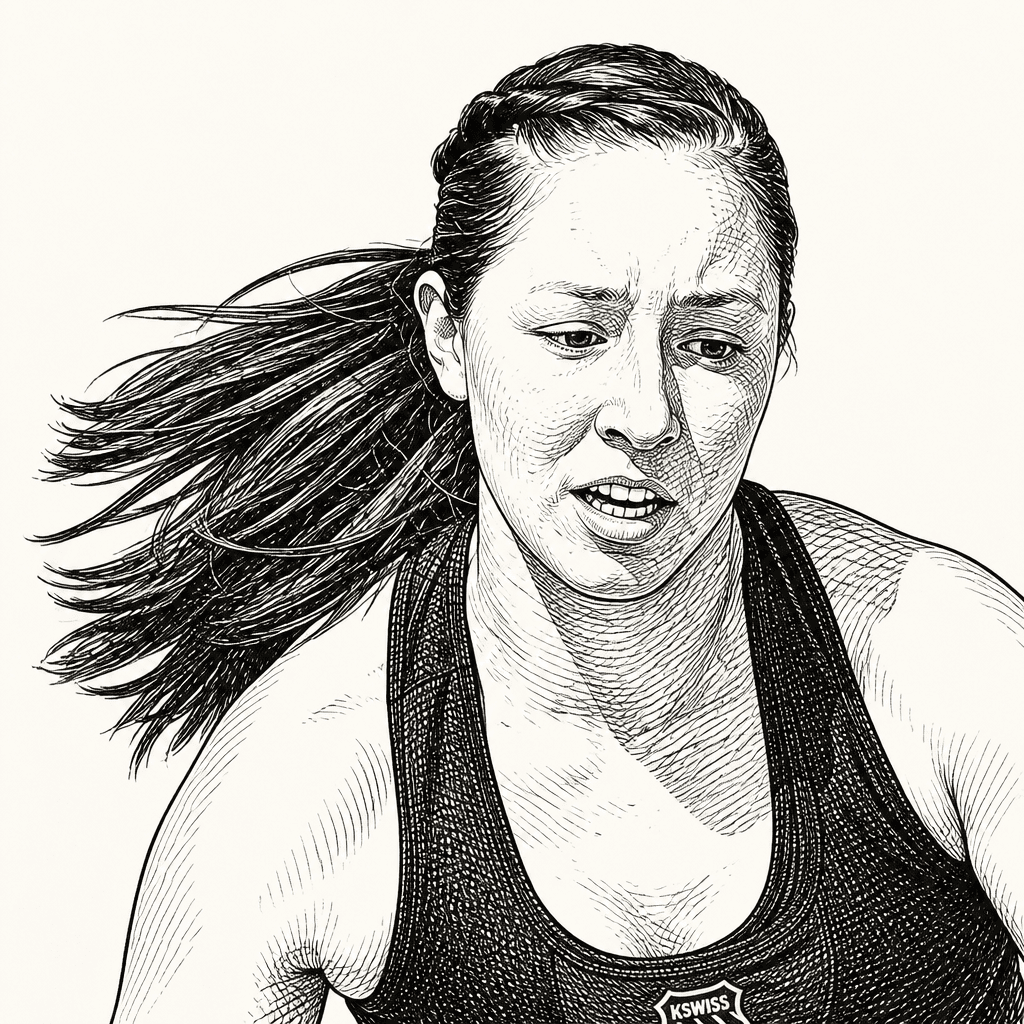
Jess Pegula, speaking with Alex Rodriguez and Jason Kelly on Bloomberg’s The Deal, argues that professional tennis players need more leverage in the sport’s economics but lack the league structure and union machinery that make collective bargaining familiar in major US team sports. Pegula says players are trying to organize across the WTA and ATP to seek a larger share of revenue, especially from the Grand Slams, while also pushing for fairer prize money and a shorter calendar. Her case is shaped by an unusual vantage point: current player, WTA Player Council member and daughter of Buffalo Bills and Sabres owners Terry and Kim Pegula.

Tennis players are asking for more, but they do not have the machinery of a league
Jessica Pegula framed the business problem in professional tennis as both structural and cultural: players want a larger share of revenue, especially from the Grand Slams, but the sport does not have the mechanisms that make coordinated player action familiar in leagues like the NFL, MLB, NBA or NHL.
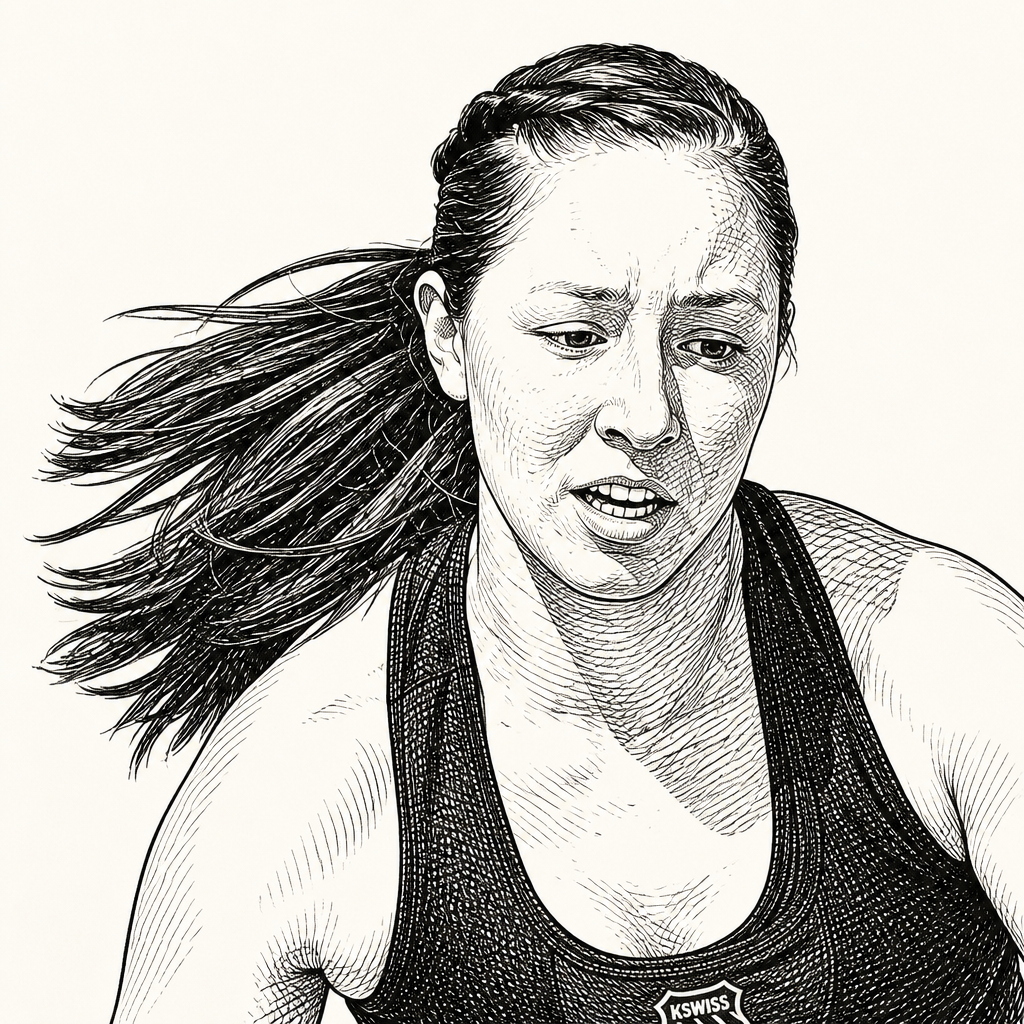

Asked by Alex Rodriguez whether tennis could ever move toward the kind of player-owner revenue split that exists in major American team sports, Pegula said the comparison breaks down quickly. Tennis players are not employees with salaries. They make much of their money by winning matches. They also do not have a players’ union in the way team-sport athletes do, and they operate as independent contractors inside a fragmented tournament system rather than inside a single league.


That makes unified action difficult. Pegula said tennis players are “very selfish” in the practical sense that they build and manage their careers individually. Each player controls their own team, schedule, travel and economics. In that environment, talk of strikes or boycotts runs into a basic problem: if a player does not play, that player does not earn.
I don’t really know if you’ll ever see like a strike or like just, you know, people agree to not play. There’s always been talks of it, but like, in tennis, you make your money a lot by winning matches.
The effort she described is narrower than a wholesale remake of tennis economics, but still consequential. Pegula said she has been in talks with WTA and ATP players about joining together to seek higher prize-money revenue, particularly from the Grand Slams. What is unusual, in her view, is that the issue aligns the men and the women. “We’ve never really had both the men and the women on both sides actually come together,” she said, calling that rare in sports because it is uncommon for both sides of a gender-divided professional structure to benefit from the same demand.
The ambition was not presented as certainty. Pegula repeatedly described the effort as a work in progress, dependent on unity among top players from both the ATP and WTA. But she also reduced the strategic logic to something simple: “You don’t know unless you ask.”
A Sports Business Journal headline shown during the discussion captured the same pressure point: “Top Tennis Players Renew Call for Grand Slams Revenue Share, Player Power,” dated Sept. 25, 2023. The on-screen framing matched the question Rodriguez put to Pegula: how much of the pie players are getting, and whether tennis players can organize themselves well enough to ask for more.
Equal prize money at the Slams masks an uneven tournament economy
The public perception, Pegula said, is that men and women in tennis already receive equal prize money. That is true at the Grand Slams, but not across the wider tour. The important distinction in her explanation was between the Slams, the WTA 1000s where several major events have moved toward equality, and lower-tier tournaments where the gap remains.
Pegula used the WTA event tiers to explain the scale of the issue. The tour includes 250s, 500s, 1000s and Grand Slams; a 500 is a strong event, though below a 1000. According to Pegula, several WTA 1000 tournaments have moved to equal prize money, including Madrid, Miami and Indian Wells. But the lower-level events have not all followed, and that leaves many players outside the top tier earning on unequal terms.
The Charleston Open became Pegula’s example of how change happens in a decentralized sport. After the previous year’s final, tournament owner Ben Navarro announced that Charleston, a WTA 500 event, would match its women’s prize money to the level of ATP 500 tournaments. Pegula called the difference “big” and the announcement an “amazing” step that set a higher standard for other tournaments.
She also joked that Navarro could have made the change a year earlier, before she won the event, but said the timing ultimately worked out: she returned and won again after the increase.
For Pegula, equal pay is not only a moral or symbolic question. She connected it to the broader ecosystem of tennis. Better prize money, better tournament investment and better player fields reinforce one another. A tournament that invests in the event can attract players; stronger player fields can improve the event; a stronger event can help the tournament grow.
Rodriguez made a related point from the perspective that players are central to the product: if the best players do not show up, tournament revenue suffers because fans are less likely to tune in, buy tickets or spend money around the event.
Pegula agreed that players are starting to understand their leverage more clearly. She said tennis may be becoming more open about these business conversations, but the difficulty remains coordination: getting players “all for it at the same time, on the same page,” and sustaining the pressure without burning out.
That fatigue, in Pegula’s account, is a real obstacle. Players want to focus on results and careers. The business fight can become tiring. Pegula said maintaining the narrative is hard, and when Jason Kelly suggested that players can get worn down, she agreed.


The long season is part of the business problem
Pegula linked prize-money advocacy to another recurring complaint in tennis: the season is too long. Kelly described it as essentially 11 months a year, and Pegula accepted that framing.
The problem, as she described it, is not only the number of weeks. It is the constant change of location, surface, conditions and country, plus the uncertainty created by injuries and results. Players cannot simply play every week, even if tournaments want them to.
“You’re traveling every single week,” she said. “You’re going to different places, different conditions, different countries. Depending on how you do, if you’re hurt — there’s so many factors.”
In Pegula’s telling, the overloaded calendar and the prize-money structure are related business problems. Both turn on how much influence players can exert in a sport where they are central to the product but lack the collective architecture of a league. Tournaments want fields. Players need earnings and ranking opportunities. But the physical cost of maintaining a full schedule limits the model.
She said players are trying to figure out “how do we condense the season a little bit,” because “these players can’t keep up with it.”
Pegula became a player advocate by learning how the business actually works
Pegula did not describe herself as someone who set out to become a formal representative for players. Her entry into WTA governance was almost accidental. She joined the WTA Player Council after another player retired and the council needed someone to fill the spot. At first, she was unsure whether it was for her.
She has now been on the council for almost four years, beginning around the period after COVID. She said she “had no idea about anything” when she joined, but that the lack of prior knowledge helped because it forced her to learn how the system worked.
That experience changed the way she saw tennis politics. Pegula said there are “definitely two sides”: the player side and the business side. She connected that perspective to what she learned from her parents, Kim and Terry Pegula, owners of the Buffalo Bills and Buffalo Sabres. The business is not always as black and white as players may believe from the outside.
Her position is therefore somewhat unusual. She remains a player advocating for players, but she also has proximity to ownership and sports business through her family. She said she has gained respect from players by trying to be a voice while also thinking clearly from both sides.
The tension she described is not that one side is simply right and the other wrong. One side pushes for what it wants; players, in her words, can also reach a place where they “don’t want to hear anything else” and “just want what they want.” Pegula’s value, in her own account, is not that she rejects the player position. It is that she can understand why the business side responds the way it does, then advocate from a more informed place.
Billie Jean King is part of that support system. Rodriguez suggested that Pegula might approach King to help organize a committee of men and women. Pegula said King was already one of the first people players spoke to about these issues, and that King and Ilana Kloss text her and support the effort.
“Billie is very supportive,” Pegula said. “We’re definitely not lacking any support from Billie.”
From her parents, Pegula took a management lesson
Pegula’s explanation of the family business centered less on wealth or access than on management. Her mother’s recurring lesson, she said, was that running an organization is “just managing people.”
That means understanding personalities, roles and fit. Some people are good in one role but not suited for another conversation or decision. Leaders have to learn where people work best and how to adapt around them. Pegula said that has helped her in her own environment, where she effectively manages a personal team around her tennis career.
She also pushed back on the idea that team ownership is something a person can be fully prepared for before doing it. “Owners of teams, there’s only so many in the world,” she said. There is no childhood apprenticeship for owning a major sports team. You buy the team, and then “figure it out.”
That was how she described her parents’ evolution after buying the Sabres and later the Bills. The Sabres, she said, felt fun. The Bills felt larger — not only because it meant the family now had two teams, but because owning an NFL team carried a different magnitude. “It definitely blew up our world a little bit,” Pegula said.
She also drew a distinction between her parents’ interests. Her father, Terry, loved sports, athletes, coaches and learning from them. She hesitated to call it a hobby, because that sounded too casual, but said it was fun for him. Her mother, Kim, gravitated toward the business side: fan experience, organizational operations and the details of how different teams created strong game-day environments.
Pegula saw value in the division. Each parent took on what they loved, without necessarily overstepping the other, as they learned how to run a sports organization.
Owners of teams, there’s only so many in the world — there’s no experience for that until it happens.
Her mother’s influence also shaped Pegula’s own confidence. Kim Pegula was shown on screen as co-owner of the Buffalo Bills and Buffalo Sabres and president of Pegula Sports and Entertainment. Pegula said her mother gave the family a phrase she still cites: “If it’s meant to be, it’s up to me.”
Pegula described Kim as independent and said she “broke all of these barriers in sports,” but not by treating them as roadblocks. “It was just like you just did it,” Pegula said. That mindset, she said, carried into her own career: people sometimes describe her as sure of herself or confident, and she connects that to not seeing the roadblock in the first place.
Buffalo is both family business and identity
Pegula said she expects to remain involved in sports after tennis, though she does not know exactly what form that will take. As a teenager, she became deeply interested in hockey and wanted to be the first female general manager. She no longer expects that particular path, but the impulse remains.
Sports, she said, gave her everything, shaped who she is and taught her lessons she cannot imagine being without. Her father would like her to be involved in the family business, she said, but he also recognizes that tennis is her priority now.
Rodriguez, speaking from his own experience as an athlete and team owner, suggested that ownership can channel the competitive drive after playing. Pegula agreed that she will miss the competitive side of being an athlete and could imagine finding another version of it through sports business.
Family ownership has also changed the family dynamic. Pegula said buying the Sabres brought the family closer together. It created something they were excited about and could share. It was also stressful, she acknowledged, but she said the family tries to return to the idea that it is fun and special to do together.
Buffalo’s fan culture intensifies that connection. Pegula called Bills Mafia “a real thing” and said she encounters Bills and Sabres fans around the world at tennis tournaments. She cannot get away from them, she said, but meant it admiringly.
She has also leaned into that bridge between tennis and Buffalo. Rodriguez recalled her writing “that was a catch” at the Australian Open, a nod to Bills discourse. Pegula said she likes to “throw little things out there sometimes,” especially because she is often in Australia during the NFL playoffs.
The bridge matters because Buffalo does not have much tennis tradition at the top level. Pegula said that, aside from herself and Jimmy Arias, there are virtually no Buffalo players who have reached that level. Being able to connect Buffalo fans to tennis, she said, is “really cool.”
Rodriguez floated a business idea: put a tennis tournament inside the new Bills stadium. Pegula said it would be interesting and would look great, with one caveat shared by everyone at the table: not in the winter, and “definitely not if it’s remotely cold out.”
The playing career still shapes the business identity
Pegula’s rapid-fire answers returned the discussion to the competitive facts of an individual tennis career: surfaces, Slams, confidence, form and the question of what kind of business life an athlete might build after elite competition.
If she had to choose one surface for the rest of her life, Pegula picked hard court. The Grand Slam she most wants to win is the US Open. Her favorite player of all time, after some hesitation, was Roger Federer.
Her most memorable match was not a final or a title run, but qualifying for the US Open main draw for the first time. Qualifying at a Slam requires three wins just to enter the main draw. Pegula remembered winning in three sets while not feeling well, whether from nerves, heat or something else. She had lost in the final round of qualifying before, so getting through that match felt like “a very big mental” breakthrough and “a monkey off my back.”
Looking toward Roland Garros, Pegula identified Iga Swiatek as the major storyline. Pegula said Swiatek had hired a new coach who previously worked with Rafael Nadal, and that videos of Swiatek and Nadal on court had other players reacting with alarm. Swiatek’s best surface is clay, Pegula said, and she described the rest of the player field as thinking, “Oh no. We’re all in trouble.”
Still, Pegula said she had played good tennis on clay the previous year and could be “a little underdog” on the surface.
On athletes whose business careers inspired her, Pegula named Maria Sharapova. What stood out was the combination: fierce competitor, interest in fashion, interest in business, and confidence in ventures she cared about. Rodriguez added that he had looked at deals with Sharapova and said she “walks the walk”: when she appears in a meeting, it is not just her team, it is her.
Pegula connected with that personality, too — quiet confidence, dry humor and business interests rooted in genuine passion. Sharapova represented an athlete-business example Pegula found credible because the ventures seemed tied to the person rather than merely assigned to a team around her.
Pegula answered on the Bills and Sabres as both insider and fan
When asked what the Bills needed to win a Super Bowl in 2027 and what the Sabres needed to do to win a Stanley Cup, Pegula answered in the rapid-fire portion rather than as a formal executive assessment.
For the Sabres, Pegula said they “just need to keep doing what they’re doing.” She characterized the team’s “first playoff appearance in 15 years” as something that “came out of kind of nowhere,” and said people were “definitely freaking out” and fired up. The claim was part of her quick answer, not a detailed organizational diagnosis.
For the Bills, she said the team has continued to put itself in good position. Her view was to keep getting into that position and learn from whatever needs to change. On Josh Allen, she had little to add beyond trust. “He’s the man,” she said.
Those answers sat beside the more developed argument she had made about tennis: Pegula was moving among the roles she occupies — player, player advocate, member of a sports-ownership family and Buffalo fan. Her case for tennis players was informed by ownership. Her view of ownership was informed by being an athlete. Her confidence, she said, came from a mother who did not treat barriers as the main fact.