Pakistan Courts Trump for Capital, Energy and Diplomatic Leverage

Pakistan is using its access to Donald Trump’s administration to seek investment, financing and regional economic openings, not merely diplomatic prominence. Bloomberg’s reporting shows Islamabad pairing commercial deals—from the Roosevelt Hotel redevelopment to minerals and crypto agreements—with mediation between the US and Iran, while preserving its ties with China. The wager, Daniel Ten Kate argues, is that a relationship built around Trump and Pakistan’s army chief, Asim Munir, can secure capital and legitimacy—though it remains vulnerable to Trump’s shifting interests.
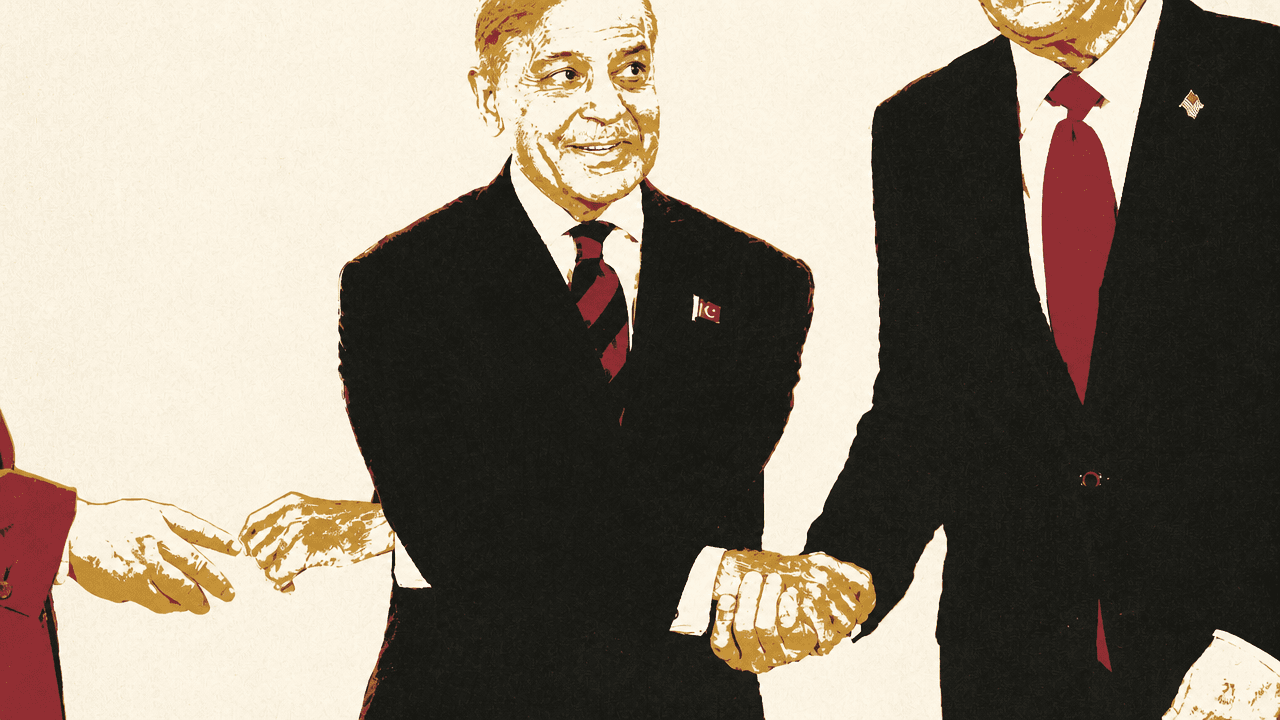
Pakistan’s opening with Trump is meant to buy economic room
Pakistan’s government is using its warmer relationship with Donald Trump’s administration to pursue something more durable than diplomatic visibility: access to investment, financing and regional economic opportunity. The immediate symbol is unusually concrete. In February 2026, Steve Witkoff, a close Trump adviser, helped broker an agreement for the US government and Pakistan to jointly redevelop New York’s Roosevelt Hotel, a property owned by Pakistan and described by Tooba Khan as one of the country’s most valuable foreign assets.
The hotel had moved from its old identity as a Manhattan location familiar from films including Wall Street, Maid in Manhattan and Men in Black 3 to a migrant center, then closure. Pakistan’s owners put its value at $1 billion. Bloomberg displayed a February 2026 report headlined “Pakistan Signs Deal With US to Revamp NYC’s Roosevelt Hotel,” making the redevelopment agreement an early, visible commercial expression of the relationship.
That matters because Pakistan has few easy financial options. A chart attributed to UN Trade and Development shows foreign direct investment remaining largely stagnant over the past two decades. Pakistan is also heavily dependent on external financing. An IMF chart dated June 30, 2026 placed it fourth in outstanding IMF credit, behind Argentina, Ukraine and Egypt.
| Country | IMF credit outstanding |
|---|---|
| Argentina | $40.2B |
| Ukraine | $15.5B |
| Egypt | $10.7B |
| Pakistan | $10.5B |
Daniel Kate says a good relationship with Washington could help Pakistan obtain support from the IMF and other Western partners. That is the underlying wager: personal and diplomatic proximity to Trump might translate into a more hospitable environment for a government continually seeking outside capital.
Pakistan is not replacing China with the US. China has invested heavily in the China-Pakistan Economic Corridor, while Pakistan’s military fleet includes both American and Chinese fighter jets, Ten Kate notes. Those ties give Pakistan relationships on both sides of US-China tension; closer access to Washington could add Western financing and investment without undoing its existing Chinese relationship.
Minerals and crypto give the relationship commercial form
The Roosevelt Hotel is one commercial channel in a broader effort to turn political access into business ties. Khan says Pakistan and the US signed a memorandum of understanding by the end of 2025 to invest in Pakistan’s critical minerals. When Field Marshal Asim Munir and Prime Minister Shehbaz Sharif visited the White House, she says, Munir brought a briefcase of minerals and gems to show Trump.
Pakistan also signed a memorandum of understanding allowing World Liberty Financial to do business in the country. The cryptocurrency venture was co-founded by Donald Trump Jr., Eric Trump and Zachary Witkoff, the son of Steve Witkoff. The signing ceremony took place in Islamabad in January 2026.
Pakistan is the world’s third-largest crypto market, according to the source, with more than 40 million crypto users. Khan says the closer relationship with Trump’s inner circle helped build trust between Washington and Islamabad. Pakistan would later draw on that trust as it sought a role in US-Iran diplomacy.
The agreements do not resolve Pakistan’s financing needs. But they give Islamabad concrete ways to present itself as commercially useful to figures close to the administration: a New York property redevelopment, critical-minerals investment and an opening for a Trump-family-linked crypto venture.
Trump dealt with the army chief Pakistan considers decisive
The people Trump appears to regard as Pakistan’s decisive interlocutors have been central to the opening. Prime Minister Shehbaz Sharif publicly nominated Trump for the Nobel Peace Prize in October 2025. Vice President JD Vance said he had “two very, very important people” in his life—his Indian wife and Pakistan’s Field Marshal Munir. Tooba Khan notes repeated occasions on which Trump referred to Munir and Sharif as his good friends.
For Daniel Kate, Munir is “the key character in Pakistan” and, in his assessment, the most powerful army chief Pakistan has had almost since its founding. Munir’s White House lunch was particularly revealing: Khan says he was the first army chief invited there for such a meeting. Ten Kate contrasts that with earlier US practice, in which presidents generally sought to deal with Pakistan’s elected prime minister as part of supporting democracy.
Trump really didn't care about that so much. He wanted to talk to the most powerful person in Pakistan, which is Asim Munir.
Pakistan’s response to Trump’s account of the May 2025 India-Pakistan ceasefire helped deepen the alignment. Trump said he had pressed both sides by tying future trade to a halt in fighting. India rejected the claim that an outside actor had mediated the ceasefire. Pakistan, by contrast, was, in Khan’s words, “extremely generous and effusive” in praising Trump and backing his Nobel Peace Prize bid. Trump later repeated a Pakistani prime minister’s assertion that he had saved 35 million lives by helping stop the conflict.
Mediation with Iran offered a larger regional return
Pakistan’s access to Washington became more valuable when US-Iran diplomacy needed an intermediary. Pakistan, Turkey and Qatar all offered to help begin a diplomatic process, but Pakistan emerged as the key mediator, supported both by its relationship with the Trump administration and by its ties with Iran.
Tooba Khan says Pakistan’s relationship with Iran has strengthened over time. Daniel Kate points to the countries’ long shared border, while Khan cites Pakistan’s large Shia population and religious and cultural ties with Iran. In the early stages, Ten Kate says, Pakistan was literally passing messages between the two sides.
In April 2026, the effort produced a rare high-level meeting in Islamabad, with the US vice president sitting down with senior Iranian officials. Pakistan requisitioned an entire luxury hotel for the talks. Khan says the government was using the occasion to show the world a different side of Pakistan. Eric Martin calls the initiative a deliberate attempt to make Pakistan “a global player.”
A lasting settlement would have had direct economic consequences for Islamabad. Khan says lifting sanctions on Iran could mean more regional trade. Ten Kate says better US-Iran relations could pave the way for the long-stalled Iran-Pakistan gas pipeline, potentially helping alleviate Pakistan’s energy problems.
The gains remain contingent on interests, not friendship
The ceasefire between the US and Iran collapsed, putting the hoped-for regional gains on hold. Pakistan also faces conflict on its Afghan border; Khan says Pakistan and Afghanistan have been attacking each other since the beginning of the year.
Pakistan’s elevated profile is real, Khan says, but its duration is unresolved. The opportunities attached to the opening—Western financing, minerals investment, regional trade and a possible energy link with Iran—depend on a relationship whose personal nature is also its weakness.
Daniel Kate cautions against reading the opening as friendship. Countries have interests, he says, and Trump can be fickle: a partner can be favored one moment and “in the doghouse” the next. He points to India, where Trump and Narendra Modi were once close before the relationship deteriorated sharply enough that the US later sought to repair it.
This isn't a question of whether Pakistan is doing this to score good points diplomatically. Pakistan needs this good relationship with the US to secure the legitimacy of the government and the regime that's in power there now.