Residents Say Renovation Warnings Went Unanswered Before Hong Kong’s Deadliest Fire
Residents of Wang Fuk Court say they had little power to challenge a costly renovation and that complaints about safety went unanswered before the November 2025 fire that killed 168 people. Their accounts, alongside the documentary’s statement that multiple fire-safety measures failed, put scrutiny of government departments and responsibility for the disaster at the center of its investigation.
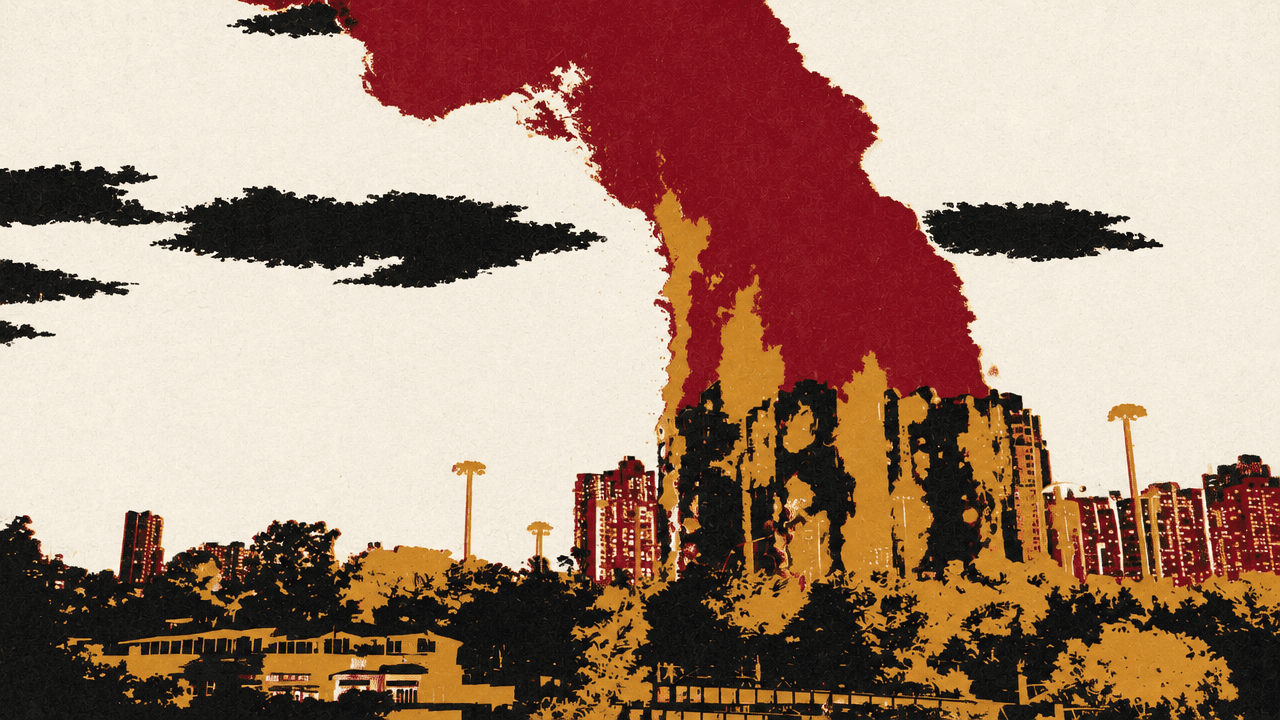
Residents say the renovation left them with little room to object
Wang Fuk Court’s renovation was required under Hong Kong’s building-safety rules, but residents describe a process whose scale and terms they could not meaningfully challenge. The documentary states that buildings more than 30 years old must undergo a safety inspection and that homeowners must appoint a registered contractor to complete necessary repairs.
Yip Kui says residents received a government inspection order in 2016. By the time they understood the project’s full cost, in 2024, he says, the renovation plan, contractor and consulting firm were already set. The contract’s displayed total is HK$336,616,277. Yip says many residents were retirees and that not everyone could suddenly pay HK$100,000. He questioned why the renovation had become so extensive, but says the plan could not be overturned.
The work began in July 2024. Residents describe the eight towers wrapped in bamboo scaffolding and green mesh, with some windows covered by styrofoam or sealed with tape and some air conditioners removed. Hilary Lau recalls that the buildings were “completely shrouded in green.” Phyllis Lo says the estate felt oppressive; she remembers her mother sending a photograph of windows blocked with styrofoam, leaving the apartment so dark that it was hard to tell day from night.
Those conditions affected a place residents describe as home in more than a financial sense. Lau says neighbors on her floor had lived there since 1983 and turned to one another for help. Lo recalls borrowing from next door and says her mother scrimped and saved to buy the flat. For many residents, she says, owning a home was a major life achievement. Yip’s account of the renovation’s cost and fixed plan sits against that history: residents say the work affected homes they had spent years securing, while their objections came too late to change its terms.
When residents reported danger, some still thought it might be minor
On November 26, 2025, the first signs of fire did not immediately register to everyone as a building-wide emergency. Yip recalls an ordinary afternoon after he and his wife returned from grocery shopping. Around 2:40 or 2:45 p.m., she heard noise outside and said there seemed to be a fire. They both thought it might not be serious.
At home alone in Block D, Ng Kuen heard what she describes as the crackling of burning bamboo and saw what seemed like sparks drifting around. She called the management office. According to Ng, she was told not to worry: the fire was at Block F and she would be fine if she closed the window. Uneasy, she took her keys and went downstairs in her slippers.
Footage shown in the documentary places the fire on the scaffolding by about 2:50 p.m. A few minutes later, voices from a nearby park call for people to leave and ask why the fire alarm is not ringing. The scaffolding and green mesh become a route for the flames to climb. Dorz Cheung recalls receiving a voice message from his grandmother, Pearl Chow, saying there was a fire at Block E. At first, he says, “You wouldn’t think it’d be so serious.”
Yip describes seeing burning mesh spatter down from the building after he reached the lobby. He also recounts later calls with his domestic helper, who was terrified and screaming, and with his wife, who told him the fire had reached her. A phone video shown in the documentary records a resident saying they were having trouble breathing, that a fire was on a floor below, and that they could not get out.
The accountability question reaches beyond the moment of ignition
Residents’ accounts connect the fire to concerns they had raised about the renovation and the warnings they say were not acted on. Yip says they had lodged complaints with many departments and “not a single one dealt with them.” Lo says government departments should not shirk their responsibilities. The documentary’s narration asks how every department could have missed the warning signals, while another spoken line says multiple fire-safety measures failed.
The allegations are sharply expressed. One speaker accuses contractors of wanting money without taking responsibility; Lo says residents were exploited and felt reduced to “a number, a unit.” Yip says he hopes the justice residents have been waiting for will not be delayed. Their statements place responsibility for scrutiny and redress at the center of the disaster’s aftermath, alongside the immediate question of how the fire spread so quickly through the scaffolding.
The source description gives the death toll as 168. A spoken line in the preview refers to 151 people burned to death. The figures appear in different parts of the supplied material; the description identifies the disaster as Hong Kong’s deadliest fire in almost eight decades.