ICE Raids in Charlotte Triggered a Prolonged Local Spending Decline
 Greg AsciuttoDavid Rebolloso
 Zeke HernandezEdna Galvis
 Andreina Malki
 Chad Wolf
 Manuel BetancurBloomberg OriginalsMonday, August 17, 20265 min read
Bloomberg Businessweek reports that DHS raids in Charlotte’s immigrant neighborhoods emptied commercial corridors, cutting customers, workers and household income from the local economy. Business owners including Manolo’s Bakery’s Manuel Betancur say fear of arrests sharply reduced sales and forced staffing losses, while University of Pennsylvania economist Zeke Hernandez estimates enforcement-targeted areas saw $14 billion less card spending and a sustained decline in foot traffic. DHS says its campaign makes communities safer, but the reporting documents effects reaching businesses, schools and families beyond those detained.
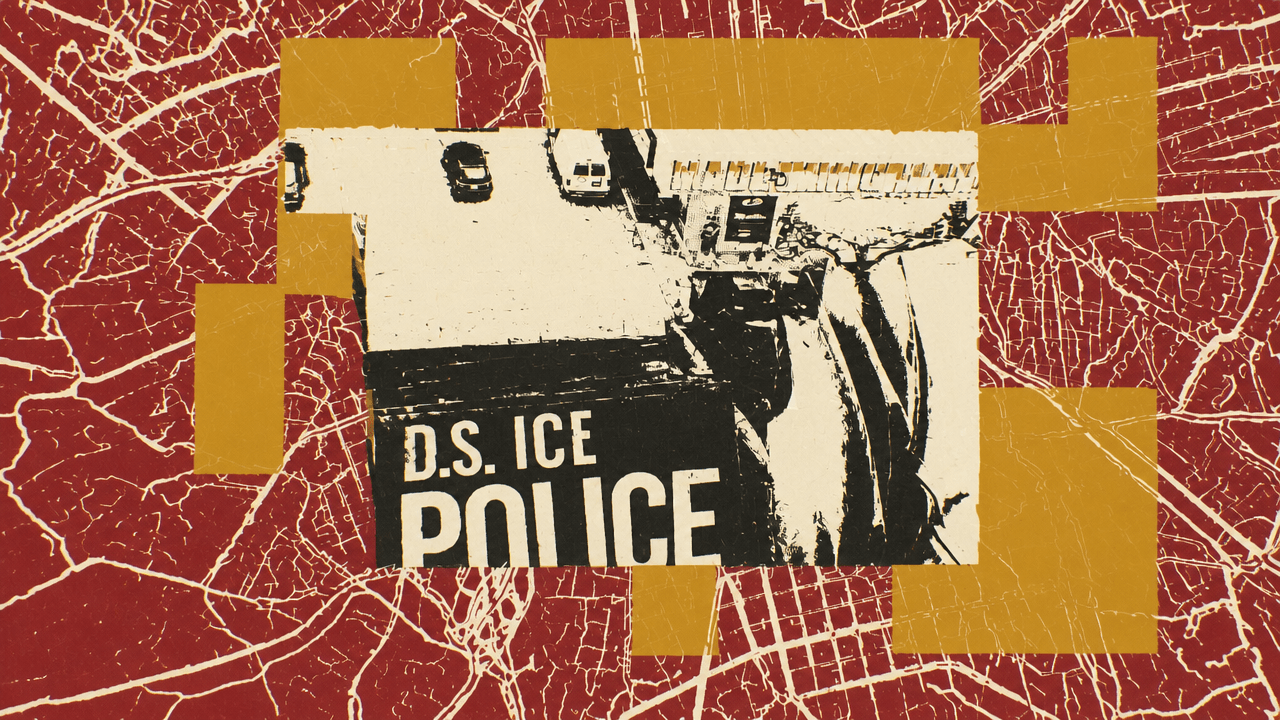
The raids turned a commercial corridor into a place people avoided
A Department of Homeland Security operation in Charlotte, North Carolina, began in November 2025 and heavily affected Central Avenue in East Charlotte, a corridor with a large immigrant community. Video from a laundromat showed a man run through the building after seeing ICE; customers followed. Manuel Betancur, who owns Manolo’s Bakery, said he could see their fear.
Andreina Malki said agents made arrests at supermarkets, parking lots, and on workers’ routes. “You cannot arrest workers and then claim to want economic development for the state,” she said. The initial operation faded from public view, but Malki said arrests continued in East Charlotte, including at early-morning vans that appeared to carry construction workers. Workers who had been going to work were suddenly absent, she said, and the effect “really paralyzed the economy.”


Chad Wolf said Congress had given ICE specific authority to remove people who do not have a legal right to be in the country. Separately, a DHS spokesperson said the enforcement campaign “makes communities safer for business owners and customers.”


Businesses on Central Avenue described a different consequence: customers stopped coming, and some stores either altered their practices or closed.
People are struggling across the board right now. Business is down.

Greg Asciutto, executive director of the community nonprofit CharlotteEAST, described a dense mix of specialized businesses: a beauty salon, a quinceañera dress shop, a Honduran restaurant, grocers, and Manolo’s Bakery. Their exposure was not equal. Grocers were affected, he said, but people still needed food. Businesses dependent on weddings, quinceañeras, and other celebrations faced a more severe loss when families deferred the events themselves.
For a bakery built around celebrations, fear became a revenue shock
Manolo’s Bakery had operated from the same corner for 28 years. Manuel Betancur said the shop makes breads, cakes, desserts, and products from across Latin America by hand. It had also sold high-quality bread to a local chain.
Betancur said the prior year was the first in which the bakery had finished in the red. Then, after the November operation, Central Avenue became a “ghost town,” with empty parking lots and businesses. He said the bakery lost $64,000 that week.
Betancur said he lost 12 employees. The chain that had bought his bread experienced weaker sales and moved to cheaper factory-made bread. Meanwhile, the bakery’s highest-value orders—about $1,000 cakes for quinceañeras and weddings—fell as customers stopped planning those occasions.
Betancur showed an account balance of $5,000 and said he needed at least $25,000 by Monday to pay employees. Making up the $20,000 difference over a Saturday and Sunday, he said, was not realistic. He rejected claims that enforcement was only removing the “worst of the worst,” saying his community was treated as criminal despite not being criminal.
The demand shock extended beyond the bakery. David Rebolloso said his parking lot had once been packed on weekends. After the first weeks of raids, there were hardly any cars, and customers continued to dwindle. He estimated that revenue had fallen 50% to 60%. He had video of ICE detaining one of his customers, though he did not know what happened to him afterward. Many families had left on their own, he said; recovery would take a long time.
Lost income and spending spread beyond the people arrested
A Bloomberg Businessweek analysis of Placer.ai location data found a year-over-year slowdown in foot traffic at 18 small businesses along Central Avenue. The charted four-week averages fell after the DHS raids began and remained below the prior year’s level through March 2026.
Zeke Hernandez, an economist and business-school professor, examined broader effects in areas targeted by DHS operations between January 2025 and February 2026. He said credit- and debit-card spending was down about $14 billion relative to the prior year, while foot traffic declined 2.73%.

| Measure | Estimated change | Scope |
|---|---|---|
| Credit- and debit-card spending | -$14 billion | DHS-targeted areas, January 2025–February 2026, relative to the prior year |
| Foot traffic | -2.73% | DHS-targeted areas, January 2025–February 2026 |
| Foot traffic in low-immigrant areas | -1.99% | Stores in below-average-immigrant areas of targeted cities versus cities not targeted |
| Spending in low-immigrant areas | -6.10% | Stores in below-average-immigrant areas of targeted cities versus cities not targeted |
What surprised Hernandez was persistence. The decline was not, he said, a short-lived disruption that quickly returned to normal. Nor was it confined to immigrants or Hispanic residents who might be most afraid of enforcement. In lower-immigrant areas of cities targeted by DHS, the University of Pennsylvania analysis showed a 1.99% drop in foot traffic and a 6.10% decline in spending compared with stores in cities that were not targeted.
Hernandez described a negative cycle: people with less income spend less; businesses receive fewer customers and less spending per customer; businesses cut back, hire less, and generate less local tax revenue. A lasting decline can turn that sequence into a downward spiral.
The disruption reached institutions beyond commerce. Charlotte-Mecklenburg Schools data showed elementary-school attendance in DHS-targeted areas dropping sharply after the November 15 raids. Churches also reported lower attendance. Hernandez said extended school absences carry a longer-term cost that is difficult to quantify: children who cannot regularly attend school lose opportunities to build the education and skills needed for productive work and future taxpaying.
A detention removes a wage earner before it reaches the local economy
Siembra NC’s hotline received 874 calls in one month from people seeking help after a loved one was detained. The organization provides detention navigation, legal referrals, and a solidarity fund. Its volunteers map confirmed ICE detentions and sightings, while callers seek help locating relatives or replacing income. A staff member said families can lose homes when the person who works in the household is taken.
Edna Galvis described that position after her husband, a barber, was arrested. In Spanish, she said that in the United States a day without work is both a lost day and another expense. From the first day, she had to cover rent, bills, and all of the children’s needs alone. Her husband was deported to Colombia in July 2026.
The reporting frames the loss of a household wage earner as an economic as well as a personal disruption: families have less money for rent, bills, food, and local purchases, while nearby businesses lose customers and workers.
An unnamed speaker in the reporting stressed that immigrants are consumers as well as workers. A graphic attributed to New American Economy put immigrants’ annual discretionary income and spending power in the United States at $1.3 trillion—money spent on local businesses’ goods and services. The speaker argued that immigration policy should be considered in relation to the economy’s need for people and skills, rather than framed solely as a safety issue.