Brazil’s Deforestation Crackdown May Be Shifting Pressure Into Bolivia



Brazil’s tougher enforcement helped cut Amazon deforestation, but Bloomberg’s Fabiano Maisonnave reports that clearing is accelerating across the border in Bolivia’s Santa Cruz department, where industrial agriculture is advancing toward San Ignacio de Velasco. Environmental researcher Sandra Cuellar says 78% of Bolivia’s deforestation occurs in Santa Cruz, while Maisonnave raises the question of whether Brazilian commodity producers are shifting pressure into a frontier where land ownership is difficult to trace. A confidential meeting between Brazilian producers and Bolivian and Brazilian ministers has added to concerns over who will control the expansion and what it will mean for the remaining forest.
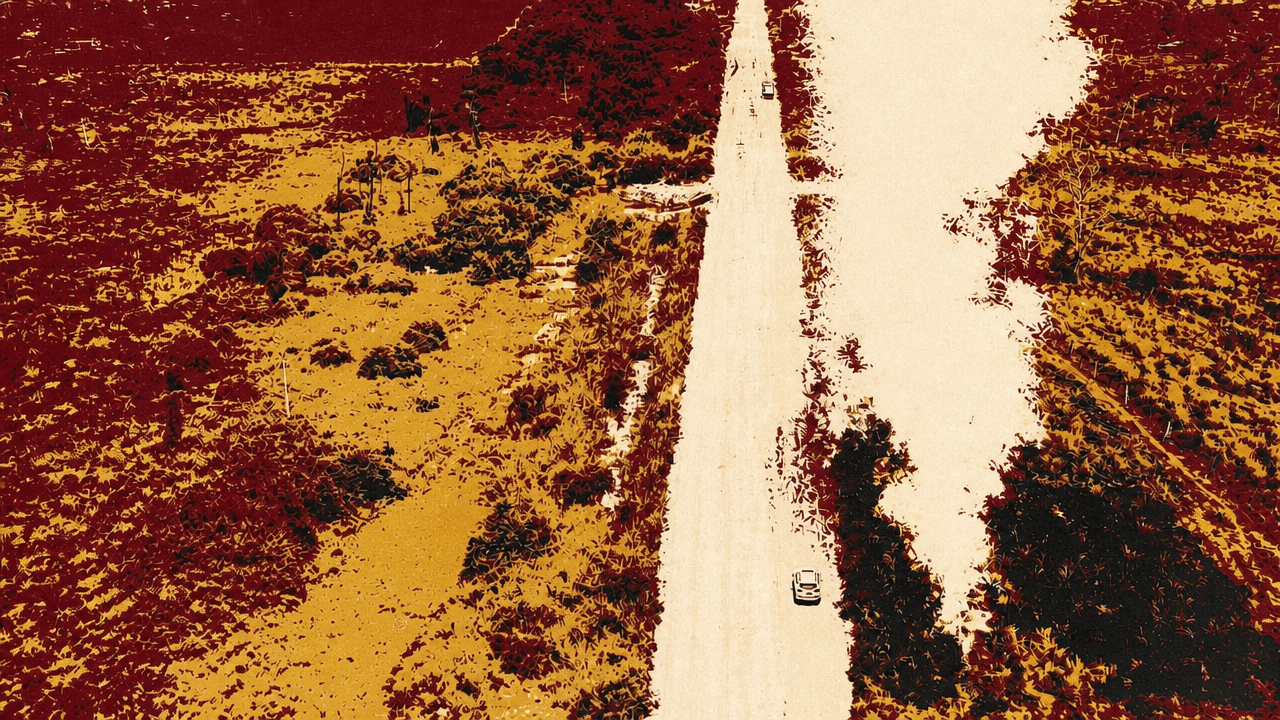
Brazil’s conservation gains may be shifting pressure across the border
Brazil cut non-fire primary forest loss by 41% in 2025, reaching its lowest level on record, according to the World Resources Institute. The organization linked the decline to stronger environmental policies and enforcement under President Luiz Inácio Lula da Silva. Globally, tropical rainforest loss fell 36% that year.
The result sits alongside an agricultural economy built around soybeans, beef and corn—commodities whose expansion depends on clearing land. Demand for those commodities has not disappeared, and neither have the producers who profit from them. Fabiano Maisonnave frames the question as whether stricter enforcement in Brazil is pushing that pressure into Bolivia.


Brazil promotes land sparing: raising production on existing farmland so that new forest need not be cleared. A UK parliamentary briefing shown in the reporting describes the theory plainly: higher yields can allow other land to be spared for conservation, potentially protecting larger areas of high-quality habitat.
The challenge is whether that outcome holds across borders. A passage from Gregory M. Thaler’s Saving a Rainforest and Losing the World, shown on screen, argues that Brazilian land sparing “did not eliminate deforestation—it displaced it,” while Bolivia’s lowland forests were being decimated by a wave of Brazilian extraction. Maisonnave traces the apparent pressure toward Santa Cruz and the Brazilian border.
When one country cracks down on deforestation, where does that pressure go?
The mapped frontier is advancing toward San Ignacio
Santa Cruz de la Sierra is Bolivia’s economic center and, according to Maisonnave, the epicenter of its deforestation. The visual record shown by the reporting makes the scale and direction of that change visible. A NASA satellite time-lapse follows the expanding cleared footprint around Santa Cruz from 1985 through 2020. At Fundación Amigos de la Naturaleza, Saúl Cuellar says annual data beginning in 1986 show deforestation rising over time and accelerating sharply in recent years.


GeoFAN’s map puts that acceleration in geographic terms. Cuellar says 78% of Bolivia’s deforestation occurs in Santa Cruz, and that clearing is increasingly moving toward San Ignacio de Velasco, near the Brazilian border. On the map, lilac and dark-red areas denote recent deforestation. They form a concentrated band extending toward San Ignacio rather than isolated patches of clearing.
The scale around San Ignacio is stark. Maisonnave identifies 155,000 hectares of clearing over two years—an area he compares with the municipality of São Paulo. Cuellar agrees with the comparison: it is large.
San Ignacio de Velasco is the ancestral homeland of the Chiquitano people. Maisonnave describes a region shifting from subsistence farming to large-scale industrial agriculture, putting local traditions and the ecosystem under pressure. The issue is not only the area of forest being cleared, but the remaking of a place whose social and ecological systems developed around a different form of land use.
The agricultural expansion is visible; control of the land is not
The road northeast from Santa Cruz to San Ignacio passes through land already remade by soy. Fabiano Maisonnave says soy is Bolivia’s leading agricultural export and a leading driver of deforestation; three-quarters of the crop goes to animal feed. Though the route lies within the Amazon basin, he finds the native landscape almost unrecognizable.
San Ignacio concentrates much of Bolivia’s forest loss and has a significant presence of Brazilian farmers, Maisonnave says. Yet foreign investment in Bolivian land is difficult to document. Bolivia’s constitution is highly restrictive about foreign land ownership, while the underlying data are sensitive.
That sensitivity extends to access. Brazilian groups contacted by the reporting team did not agree to speak, despite efforts to arrange meetings in San Ignacio. The unanswered questions concern who controls the expanding farms, the ownership and commercial arrangements involved, and the role Brazilian producers may play in the conversion.
Maisonnave also reports learning of a confidential meeting in San Ignacio between Brazilian producers and ministers from both countries. The meeting’s terms and specific commitments were not disclosed. Maisonnave says what was agreed could have serious environmental consequences.
A production agenda meets a clearing frontier
Bolivia’s new administration plans to dramatically expand agricultural output, Maisonnave says. That ambition arrives as clearing is already concentrated along the Santa Cruz–San Ignacio corridor, where industrial agriculture is moving into a region associated with Indigenous communities and forest landscapes.
Rodrigo Paz won Bolivia’s 2025 presidential runoff, Reuters footage in the reporting says, ending nearly two decades of leftist rule. In a speech, Paz called for “capitalism for everyone”: a capitalism to produce and generate resources. He said Bolivia would overcome a past of misfortune and indignity.


The production agenda gives the land-control question greater consequence. The route to San Ignacio has already been substantially converted to soy, while the maps show recent clearing pressing farther toward the Brazilian border. Brazilian farmers are present in the area, but foreign land investment remains sensitive and difficult to trace under Bolivia’s restrictive rules on foreign ownership.
We are in the Amazon basin, but the native landscape is almost unrecognizable.
The central tension is therefore not simply whether Bolivia will grow more food. It is whether an agricultural expansion centered on this frontier will intensify the conversion already visible around San Ignacio—and whose interests will shape that expansion.