Sixth Street’s Sports Bet Depends on Infrastructure and Global Growth

Sixth Street co-founder Alan Waxman told Bloomberg’s The Deal that sports investing only works if patient capital can stay in place long enough for media rights, global audiences, infrastructure and adjacent real estate to support rising team valuations. In a conversation with Alex Rodriguez and Jason Kelly, Waxman argued that the firm’s stakes and investments across the Patriots, Spurs, Celtics, Bay FC and European football are built less around short-term private equity exits than around scarce assets, durable leagues and alignment with long-term owners.
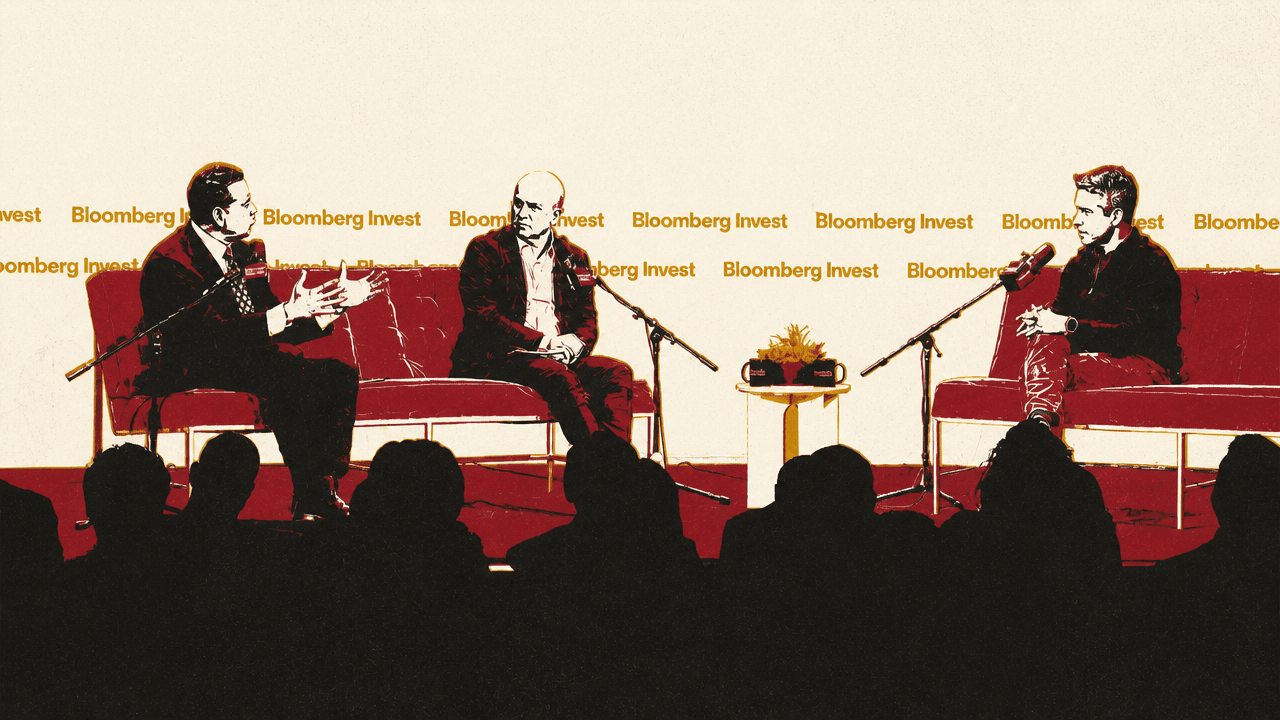
Sixth Street is betting patient capital can outlast sports’ valuation problem
Alan Waxman’s sports thesis starts with a constraint: scarce teams may keep getting more expensive, but the prices only make sense if owners and investors can wait long enough for global audiences, media rights, infrastructure, and adjacent real estate to catch up. That is why Waxman drew a hard line between conventional private equity and what he called private capital.


Waxman described Sixth Street’s investing ethos as “complete flexibility.” The firm was built to invest across asset classes, geographies, and sectors, and to ask where the best relative risk-reward sits. In his account, that flexibility depends on structure. Sixth Street raises “smaller strategy funds” sized to opportunities, rather than building around ever-larger pools of capital, and it tries to maintain what he called an “investor-first architecture.”
He linked that structure directly to sports. Sixth Street’s sports portfolio, as described by Waxman and by Jason Kelly and Alex Rodriguez, includes stakes or investments connected to the New England Patriots, San Antonio Spurs, Boston Celtics, Bay FC, Real Madrid, Barcelona, and the San Francisco Giants. Waxman said the common denominator is not simply brand prestige. It is “alignment on culture, values, and clarity of purpose.”
That phrase recurred throughout the discussion. Waxman’s argument was that sports-team investing is not only a valuation exercise because many sellers do not have to sell and many owners are choosing long-term partners, not just capital. Sixth Street tries to read culture through the practical details of an organization: how senior people treat employees, how they treat junior staff, and whether different people inside the organization tell the same story or “seven different things.”
Rodriguez pressed him on whether that high-minded alignment survives the pricing conversation. Waxman’s answer was that, with the Kraft family and the Patriots, the economics were not a drawn-out haggle. He presented that as consistent with how Sixth Street wants to do business: a long-term relationship where the negotiation should not poison the partnership before it starts.
The last thing you want to do in getting a partner is a back and forth haggle. You kind of know what’s fair, and you’re just trying to solve for fairness.
That view explains Waxman’s distinction between private equity and private capital. He objected to treating the two as interchangeable in sports. Traditional private equity funds, he said, often have fund structures that require selling an asset in five to seven years. For sports teams, whether control or minority stakes, he called that “a terrible idea.” Sixth Street’s pitch is that it has “very patient capital,” which better matches owners who are not forced sellers and teams whose values may depend on long-cycle media, real estate, and global-growth trends.
The Patriots stake tests the price of a minority NFL investment
A Bloomberg on-screen headline put the New England Patriots transaction at a valuation of more than $9 billion: “New England Patriots Valued Over $9 Billion in Sixth Street Deal,” attributed on screen to Randall Williams and dated Sept. 25, 2025. That valuation is the anchor for the central question Rodriguez and Kelly put to Waxman: why pay into an NFL franchise as a minority investor, with the Krafts still running the team, and how does such a deal get priced?
The investment was possible only after the NFL opened the door to institutional capital. Waxman emphasized that the league had long stood apart from other major North American leagues by not allowing private equity or private capital into ownership. The NFL then ran a major approval process for institutional investors. Waxman joked that “some might say it was a proctology exam,” but the substance was clear: the league was deciding which firms would receive what he called a “golden key” to invest in NFL clubs.
Once Sixth Street was approved, Waxman said the connection to the Krafts came from Joe Siclare, the NFL’s CFO, who had been on the front lines of diligence. According to Waxman, Siclare emailed him after approval and suggested that he meet Robert and Jonathan Kraft because they would likely “culturally” get along. Waxman said the Krafts were not actively looking for a minority equity investor at that point, but the introduction led to a meeting.
Waxman described the fit as almost immediate. He said it “almost felt like family,” grounded in shared views on team values, team culture, and clarity of purpose. He pointed to the Patriots’ results, but said the more important evidence was in “all the little things” and “micro things” about how the organization is run.
Asked by Jason Kelly how Sixth Street underwrote a minority stake in an NFL team where the existing owners retain operating control, Waxman put league quality first. He called the NFL’s durability and leadership “A+,” citing Roger Goodell and the organization below him. He then added the Boston sports market, the fan base, the Patriots brand, and international expansion opportunities. Sixth Street is also invested in the Boston Celtics, and Waxman described Boston as “a great sports market,” while joking, when reminded that he was speaking in New York, that strong fan bases are not exclusive to one city.
The underwriting was not only about the Patriots. It was about the NFL as a league with scarce assets, durable leadership, and the potential to export American football. Kelly said the international opportunity may have been underappreciated for a long time, including by the NFL itself, and cited Shad Khan’s experience with the Jacksonville Jaguars and Fulham as a lens on London games. Waxman replied with what he called a factual observation: there is “excess demand” internationally from cities that want NFL games and sports teams in their markets.
Alex Rodriguez framed the NFL investment case as a blend of scarcity, market, appreciation, cash flow, media rights, and leadership. He compared the 32 NFL teams to “32 beachfront properties,” each uniquely scarce. He also emphasized that the combination of appreciation and cash flow is unusual in sports, and called the NFL’s national TV deal “as A paper as can get,” adding that it would “probably” get richer. But his final emphasis matched Waxman’s: partnership with owners. Rodriguez said that “forget what the numbers say,” an investor still has to be in partnership with families “like a marriage.”
Rising team values need infrastructure and real estate behind them
Waxman did not present rising team valuations as self-justifying. He said private capital’s uptake in the NFL has been roughly what he expected: still limited, but likely to grow if valuations continue increasing. The caveat was important. He argued that the next wave of sports investing will require “substantial infrastructure and real estate adjacency investment” to justify valuations. Without that, he said, many valuations — though not all — will likely prove too high.
There needs to be substantial infrastructure and real estate adjacency investment to justify these valuations, otherwise these valuations are going to turn out to be, in a lot of cases, not all cases, probably too high.
Scarcity matters, but scarcity alone is not enough if the price assumes growth that does not materialize. For Waxman, teams increasingly need adjacent assets and infrastructure that can expand revenue opportunities around the franchise. He returned to this point when Rodriguez asked whether institutional capital could ever take full control of a team in one of the three largest U.S. men’s leagues: MLB, the NBA, and the NFL.
Alan Waxman said he had to be careful, but answered that he thinks it will happen in their lifetime. His reasoning was probabilistic, not a prediction of imminent league change: if valuations keep rising, supporting them will require “hundreds of billions of dollars” of infrastructure and real estate investment, and at some point the size of the checks will leave only a finite number of individuals capable of buying teams outright.
He added that commissioners should not interpret his answer as saying a change is near-term. “Probably a long time from now” was how he qualified it. But if the economics keep moving in that direction, he said, the leagues will have to look at it.
That is also where his patient-capital argument matters. If the future economics of sports depend on long-term development, global expansion, and infrastructure buildouts, a forced five-to-seven-year hold period becomes a mismatch. Waxman’s case for Sixth Street is that its capital can sit alongside owners through those cycles.
The NBA shifted from a distressed opening to a global growth trade
Sixth Street entered the NBA through the San Antonio Spurs shortly after the league changed its rules to allow institutional investors. Alan Waxman said Sixth Street was either the first or second institutional investor in the NBA. The Spurs deal began with a cold call, he said, made by his colleague Austin Bowers. Waxman used the anecdote to offer blunt advice: “Don’t be afraid. Just be a really real person and just ask good questions.”
The timing mattered. The Spurs investment happened in the middle of Covid, when revenue for many teams had gone to zero or was significantly reduced. Waxman said private-market themes are only useful if they are investable. In public markets, an investor may be able to express a broad theme more easily, but in private markets, “you can have the best theme in the world, but if it’s not investable, then it’s a waste of time.” Covid, in his account, made sports investable for institutional capital and began what he called the “gentrification of the asset class.”
By the time Sixth Street invested in the Celtics, the landscape had changed. More capital had entered the space. Competition had increased. The NBA was also at the beginning of a new media deal, which Waxman said created a “massive rerating.” But he argued the bigger long-term opportunity remains international.
His NBA example was Victor Wembanyama and the Spurs playing in Paris. Waxman said he attended a Spurs game there and that it felt “literally like an NBA Finals game.” One player, he argued, can open an entire country to a team and create new fan engagement. He made the broader demographic point that the NBA’s global player base helps internationalize teams and markets.
Alex Rodriguez, drawing on his own investment experience around the same Covid-era window, agreed that the NBA’s global potential was central. He said the moment was frightening enough that his mother questioned the decision, pointing to the Disney bubble and empty arenas. But he argued that, in 2026, the league’s international trajectory is clearer. He said the last eight MVPs had been non-Americans, and described the NBA as still being in the “early innings” of global growth.
Bay FC exposed the gap between impact spending and CMO spending
Alan Waxman described Sixth Street’s Bay FC investment as one of the most asymmetric investments the firm has ever made. He acknowledged that people thought the firm was “crazy.” The prior NWSL expansion fee before Bay FC, he said, had been roughly $3 million or $4 million. Sixth Street paid $53 million two or three years later.
| NWSL expansion context | Amount cited |
|---|---|
| Prior expansion fee before Bay FC | $3M–$4M |
| Bay FC expansion fee paid by Sixth Street | $53M |
The origin of Sixth Street’s interest was not a banker’s deck, in Waxman’s telling, but his then-nine-year-old daughter watching an NWSL game on her iPad. That caught his attention. Others around the soccer ecosystem encouraged him to study the league, and he said his wife also pushed him because she thought it was a strong investment opportunity.
The core insight was commercial. Waxman said much of the sponsorship revenue around women’s soccer was then sitting in the “impact bucket,” not the chief marketing officer’s budget. In other words, brands were often treating the spend as mission-oriented rather than as a mainstream audience and marketing opportunity. Sixth Street believed people were already watching, which made that mismatch attractive.
Waxman said Bay FC was the only investment in his career where he publicly printed the firm’s investment thesis. He posted it on LinkedIn, despite not being a large social-media user, because he thought the opportunity was so asymmetric and wanted people to understand the logic. He cautioned that growth will not be linear, but said the investment has been good for Sixth Street and remains early.
Jason Kelly pointed to subsequent market evidence: Mellody Hobson paid substantially more for the Denver NWSL expansion franchise — Kelly characterized it as about four times more than Bay FC — and Willow Bay bought Angel City at a $250 million valuation. Waxman said investing ultimately comes down to supply and demand. A theme can be attractive, but if there is too much capital chasing too little demand, the trade can fail. Here, he argued, the teams are scarce assets, comparable to valuable real estate. As more expansion teams are sold, fewer attractive pieces remain.
Waxman then made an explicit prediction. Mellody Hobson and Willow Bay, he said, will look “very smart” in three or four years based on what they paid. He expects the same conversation to recur, with people later saying new buyers paid multiples of their prices.
Baseball looks attractive to Rodriguez because the uncertainty is visible
Alex Rodriguez closed with a contrarian case for baseball. He said the best time he has seen in the past 15 years to invest in baseball is today, precisely because of uncertainty. He cited uncertainty around the collective bargaining agreement and whether there will be a strike. As an investor, he said, he likes that because the bet is likely to get better, not worse.
His second baseball argument was about media rights. Rodriguez said he expects Rob Manfred to integrate the regional rights issue and try to “copy what Roger Goodell has done with the NFL.” He pointed to the World Series as evidence that baseball can still command a huge audience when the product, teams, stars, strategy, and quality of play align. He said Game 7 drew 53 million viewers when including the U.S. market, Japan, and Canada, and called it one of the best games he had seen.
Alan Waxman offered a quick “straw man” for improving baseball’s economics and competitive structure, warning that he would probably get criticism for it. First, he said the league needs to raise minimum standards, including the minimum salary across the league. Second, he suggested a salary cap combined with one or two — perhaps more — designated players per team who could be paid whatever the market supports. If a player such as Shohei Ohtani is worth $1 billion, Waxman said, a team should be allowed to pay him that amount without disrupting competitive balance.
His broader point was that baseball needs better alignment around growing the total pie rather than fighting a zero-sum game. That includes television deals and media rights, but also international opportunity. Waxman said baseball has done a good job internationally, but “there’s a lot more fruit out there.”
Rodriguez added a union-side perspective from nearly 25 years as a member of the players’ union. He said the union should want a system where 70% or 80% of the revenue does not go to 10% of players, but where compensation is more democratic and “everybody gets to eat a little bit.” Waxman agreed.