Anthropic Reports a New Enzyme System With CRISPR-Like Repeats
Anthropic’s new molecular biology group is using Claude to search large DNA datasets for proteins that scientists may not recognize or understand. The researchers say the model helps widen the pool of candidates, while they decide which ones merit experiments; in an early research program, they report finding a novel enzyme system with CRISPR-like repeats.
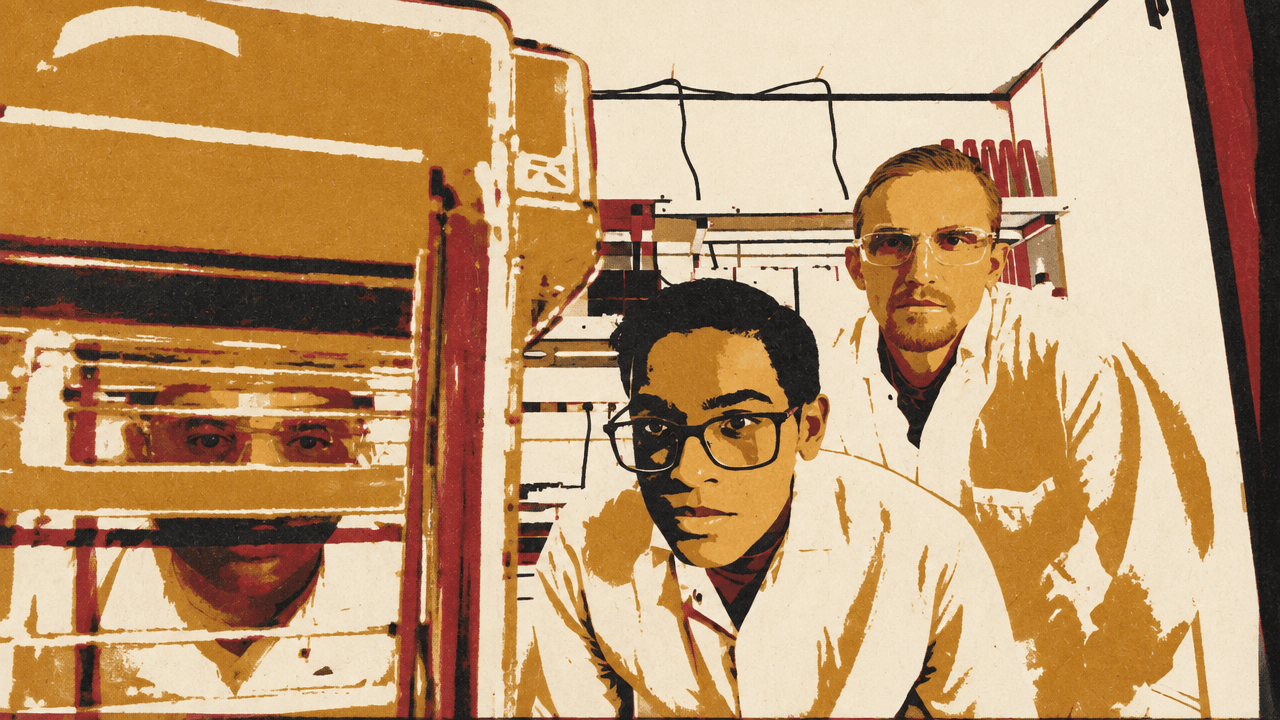
Claude searches for candidates; scientists decide what reaches the bench
Anthropic’s molecular biology group describes a two-part research process: Claude searches large DNA datasets for interesting or uncharacterized proteins, then scientists decide which possibilities are promising enough to test in the lab. The model helps widen the search; the researchers select candidates and do the experimental work.
That distinction matters. The group’s first research program produced a specific reported finding: a novel enzyme system with CRISPR-like repeats. The finding is an example of what the search is intended to surface, not a description of every candidate the system identifies. Anthropic’s account says the team used Claude in making the discovery, but the short presentation does not lay out the experiments or the system’s properties.†
The researchers bring experience tracing how CRISPR systems evolved and finding enzymes for cell and gene therapies. In the lab’s workflow, Claude can comb through a volume of DNA data and flag proteins that merit attention; scientists then apply their judgment to decide what to investigate. The presentation characterizes Claude as a collaborator in the scientific process and says it will enable the team to make more discoveries than it could previously. The work shown still depends on researchers choosing what to test and taking those choices to the bench.
On-screen displays offer glimpses of the work without establishing more than that. One monitor shows text beside a colorful 3D protein-structure model. Another screen shows bar charts, and a close-up identifies a structure as “Human Carbonic Anhydrase II metazolamide.” A separate interface displays bulleted points under the heading “What this means for the prioritization.” Together, these images place computational analysis, protein structures, and the ranking of biological targets in the same research setting. They do not specify how the charts were generated or what criteria the prioritization uses.
The practical aim is to bring potentially useful candidates into view, not to treat a model’s output as a result in itself. A flagged protein is a reason to consider a test; the scientists’ account puts experimental investigation between that suggestion and any conclusion about what the protein does.
The unknowns are part of the research problem
The researchers frame the search against a large gap in biological understanding. They say scientists do not know how half of the proteins involved in molecular functions work. Asked how much remains to be discovered, one answers, “I think it’s unlimited.” The group presents that uncertainty not simply as an obstacle, but as part of biology’s appeal: there is room for unexpected findings because many molecular functions remain poorly understood.
That outlook affects how the scientists describe research plans. They hope an experiment will go as intended, but say it is almost inevitable that the work will take turns. A new technique can lead to a discovery, and the discovery can change how researchers think. In that account, the direction of inquiry is not fixed at the outset. What the team learns can alter which questions seem worth asking next.
The researchers’ caution applies to interpretation as well as discovery. One describes the common rule of biology as letting expectations be “completely obliterated by reality”: expect the unexpected, and do not believe a result until you see it. The principle sets a limit on what a search tool can settle. Claude may flag possibilities across large datasets, but the team’s stated process leaves the evaluation of those possibilities to scientists and their experiments.
This is the balance the lab is trying to establish: use Claude to help find candidates that might otherwise be missed, while keeping the work grounded in testing and observation. The CRISPR-like-repeat enzyme system gives the group an early example of the kind of finding it hopes to uncover. The broader claim is more open-ended: when researchers do not yet understand many proteins, a more capable search can help them decide where to look, but each discovery may also change what they think they are looking for.