Peer Review and Grant Funding Have Made Scientific Dissent Too Costly
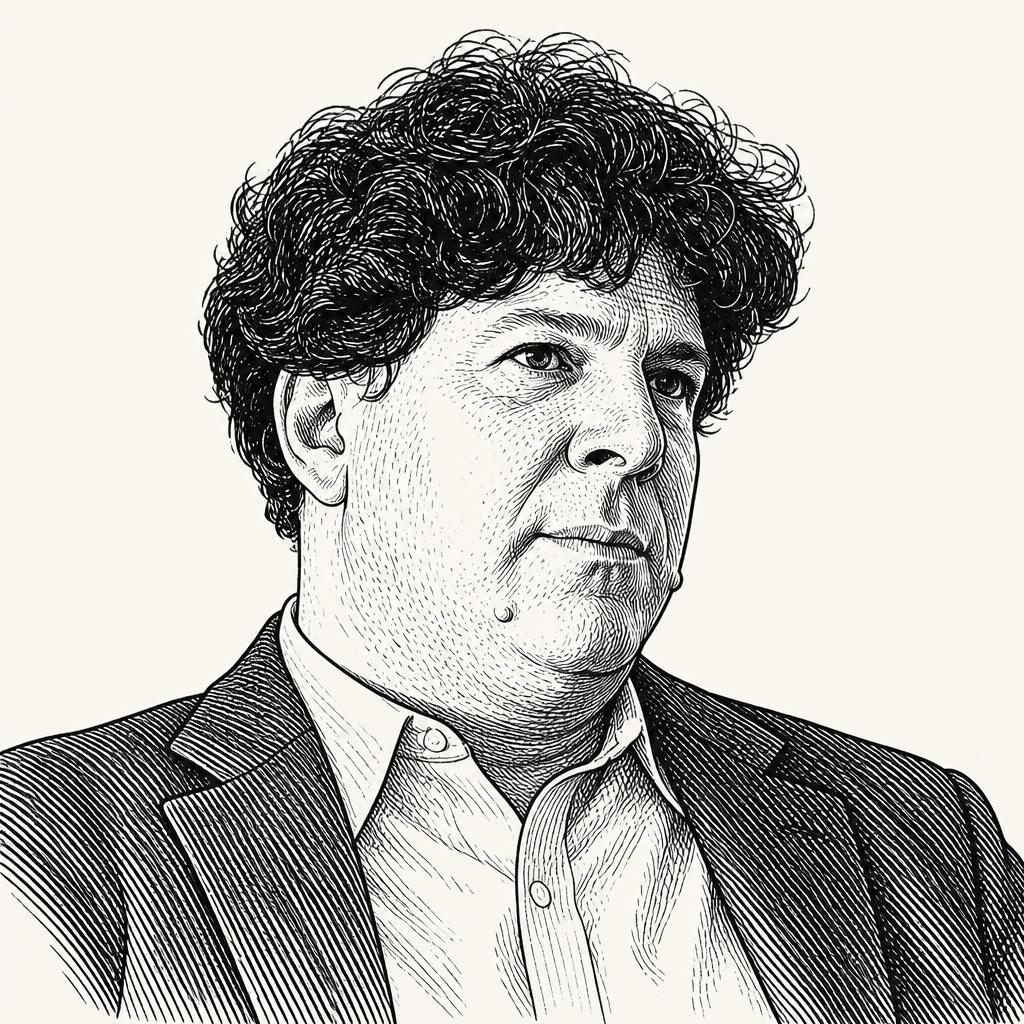

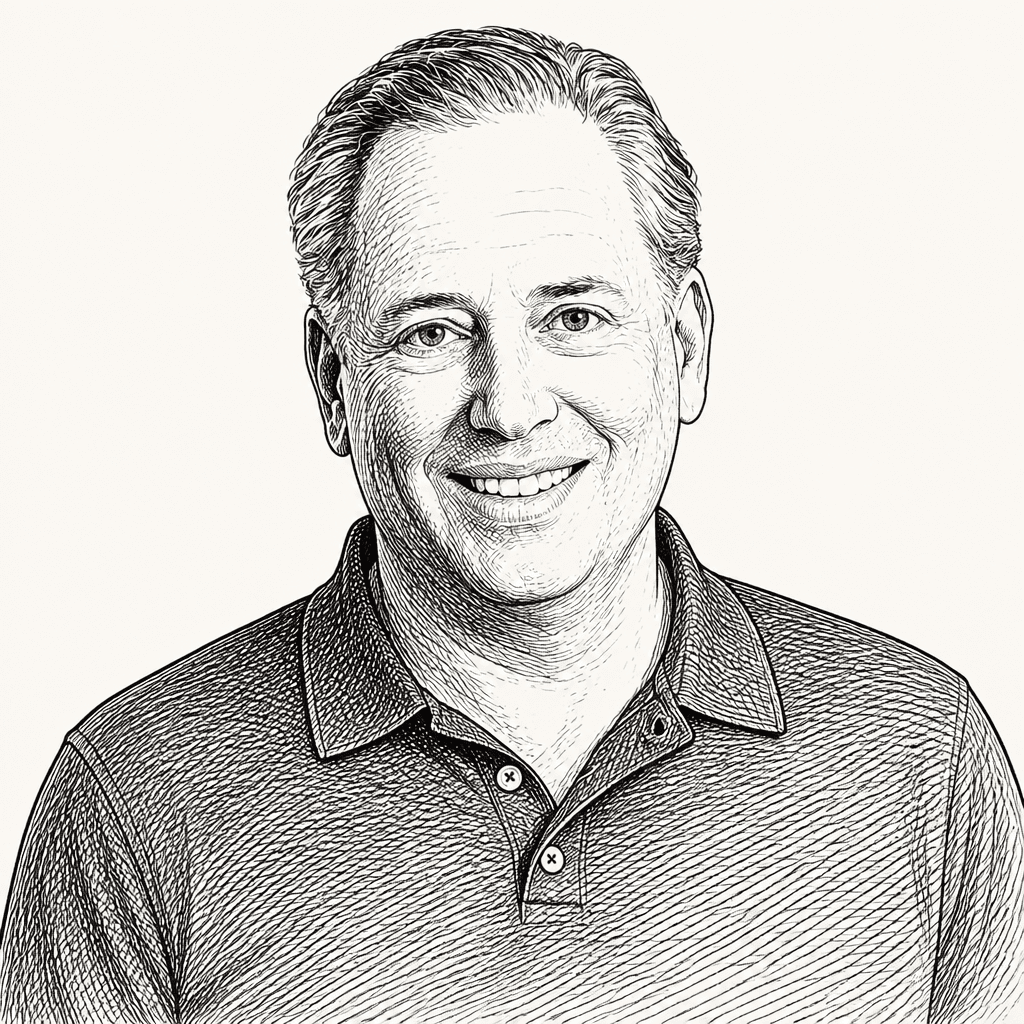
Eric Weinstein argues that grant funding, peer review and university hierarchies make dissent professionally irrational by tying publication, jobs, funding and legitimacy to prevailing views. He proposes that government fund exceptional scientists over long periods rather than narrowly defined projects, even when their work is unpopular or likely to fail. But his alternative depends on discretionary judgments by formidable scientists, without resolving who selects them or how their choices are held accountable. He warns that China and AI could exploit neglected ideas if US institutions continue to treat them as professionally hazardous.
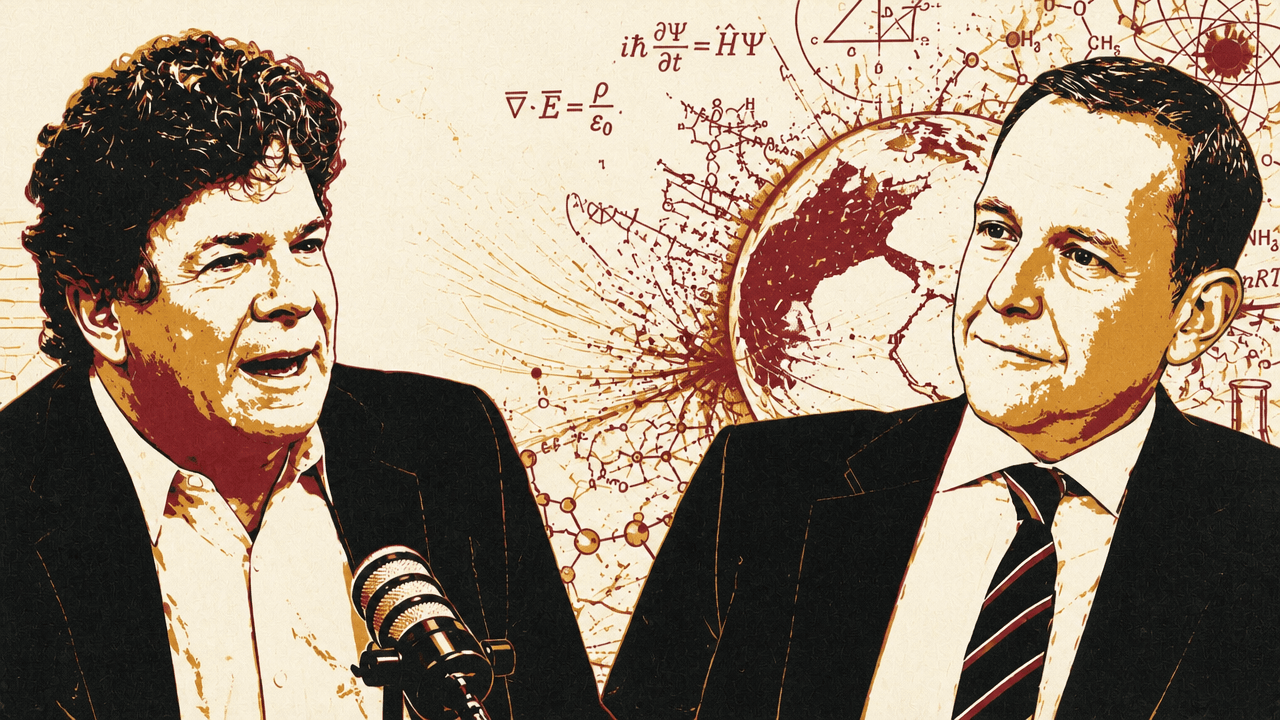
Scientific precarity makes dissent economically irrational
Eric Weinstein does not argue that every scientific field has stopped moving. His complaint is that the United States has become reluctant to make the kind of scientific bets it is uniquely positioned to make: expensive, high-variance work pursued by people willing to risk status and career on being unfashionably right. Incremental research can be careful and useful, he says, but a rich country that equates low variance with excellence is failing to use its comparative advantage.
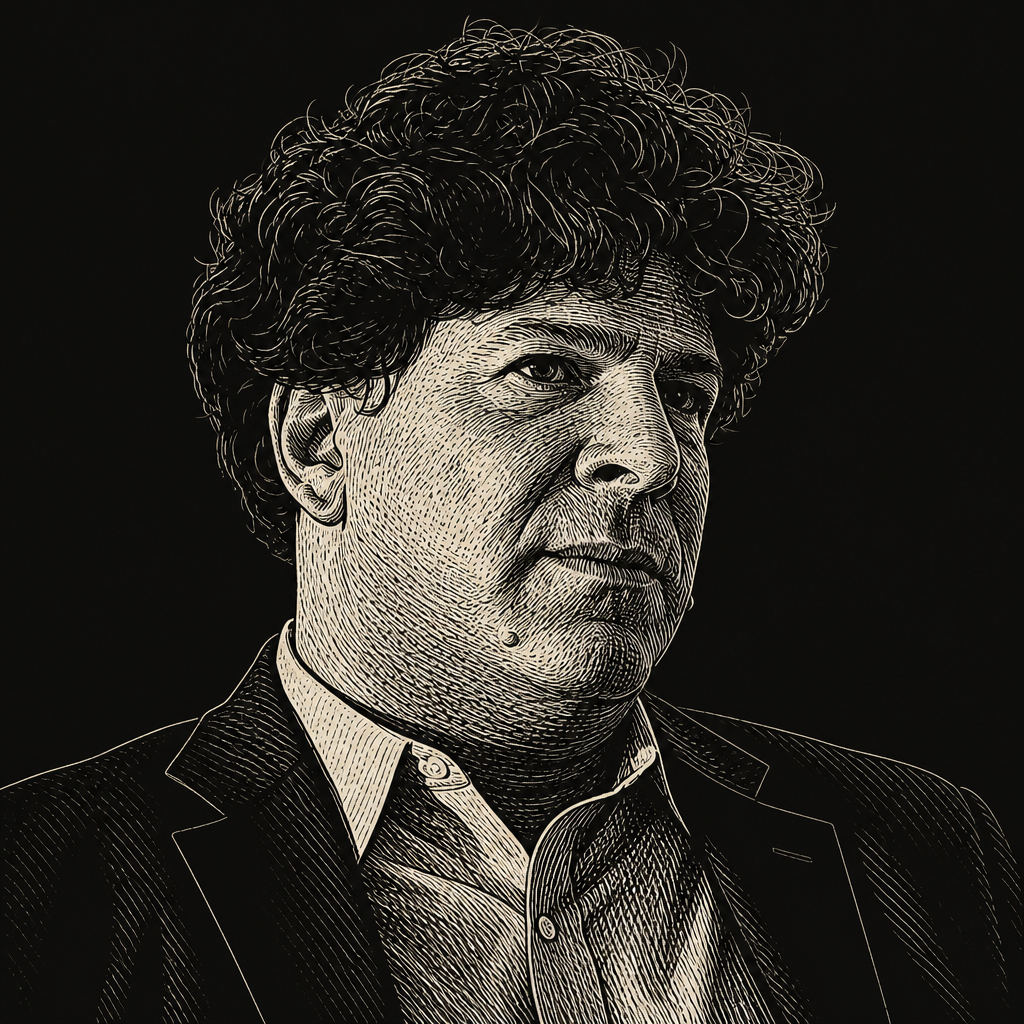
The mechanism is what Weinstein calls the scientific precariat. Professors and researchers depend on grants, tenure, chairs, departmental standing, collaborators, and institutional approval. In that setting, dissent is not simply intellectually costly. It can cost income, security, professional relationships, and the ability to support a family.
We created a world in which professors cannot afford to go against a consensus.
For Weinstein, “consensus” is a warning sign rather than an achievement. Nobody needs an arithmetic consensus that two plus three equals five; it is simply true. Institutional consensus, by contrast, can mean agreement maintained through pressure and professional dependence. A young scientist ought to be able to conclude that a field is heading in the wrong direction, wager a career on that conclusion, and not be stopped by supervisors or grant committees before the idea has a chance to be tested.
His example is the treatment of Jay Bhattacharya during the pandemic. Weinstein points to Bhattacharya’s association with the Great Barrington Declaration and says he was dismissed as a fringe epidemiologist before becoming head of the NIH. The larger claim is not that heterodox views deserve acceptance because they are heterodox. It is that a scientific institution must be able to distinguish a bad claim from a question that is professionally inconvenient because it threatens an official story.
Weinstein applies the same reasoning to government secrecy and public narratives. He speculates about U.S. government links to pandemic-related research, EcoHealth Alliance funding, and Anthony Fauci’s role in biodefense or covert activity. His underlying argument is that capable scientists can interrogate material evidence, biological signals, and causal histories in ways that make covert narratives vulnerable. Officials trying to preserve a politically necessary account, he argues, may therefore prefer compliant science and compliant journalism.
He treats secrecy as legitimate in narrow circumstances. The Manhattan Project could not have operated as an open academic project, and he cites wartime suppression of reporting on Franklin Roosevelt’s disability as another instance in which public disclosure was constrained. But he believes that habits developed around exceptional secrecy now reach much more broadly into science and public life. The question, for him, is why people who challenged prevailing pandemic claims have not subsequently been given chairs, leadership positions, or the material security to keep taking risks.
The material question is central. Weinstein uses the phrase “third home” deliberately, rejecting the expectation that scientists should accept financial insecurity as proof of moral seriousness while others capture the wealth created by science-derived technology.
You’re not allowed to want better for your life. You’re supposed to be humble.
The point is not principally luxury consumption. It is risk capacity. A researcher who can lose a job, a grant, a network, and the ability to provide for children has a strong incentive not to be early, unpopular, or difficult. Weinstein argues that scientists are then pushed toward what he calls a collectivist mindset: they cannot materially win by being right ahead of the field, so the rational professional strategy is to remain inside it.
He presents his own work as an example. Weinstein says he developed a set of differential-geometry equations in 1987, was treated badly for doing so, and watched those equations take over his field in 1994. His complaint is less about the original treatment than about the absence of repair. A field that does not revisit how it treated someone whose ideas later proved influential, he argues, teaches its younger members that conformity is safer than originality.
That concern extends to the kind of people institutions are willing to tolerate. Scientists are often strange, abrasive, intensely competitive, and difficult to manage, he says. A system that treats interpersonal smoothness and administrative order as its overriding values will select against the people most likely to produce a large discontinuity in knowledge. Weinstein cites Palmer Luckey’s irreverence and work on lethal technology, and Nima Arkani-Hamed’s independence from what Weinstein calls the string-theory fad, as examples of temperaments he thinks science needs to accommodate.
He invokes James Watson, Mark Ptashne, and Eric Lander as examples of formidable, difficult figures whom he believes institutions have turned against. He is not asking for a needlessly brutal workplace. His sharper claim is that scientific work itself is unforgiving, and that organizations organized chiefly around avoiding discomfort may be unable to sustain exceptional work.
A high-variance science system still needs someone accountable for judgment
Eric Weinstein traces the current funding regime to what he describes as a postwar breakdown in the relationship among government, universities, and elite science. In his telling, the decisive period runs from roughly 1965 to 1975, with the sharpest shift between 1969 and 1971.
He points to the MIT physics department’s Vietnam War protest, including participation by people connected to the Manhattan Project, as a sign that government no longer regarded university science as reliably aligned with national security. He connects that change to the separation of MIT’s Instrumentation Laboratory into Draper Laboratory and to the Mansfield Amendment. In Weinstein’s account, the amendment restricted military support for university research that lacked a direct military purpose.
Before that break, he says, military funding maintained broad scientific capacity rather than purchasing only specified projects. Scientists were left to pursue blue-sky questions because the government expected that, when a national problem arrived, the country would have deep reserves of mathematical and physical talent ready to address it. The newer system, in his telling, replaced that reservoir with administratively specified deliverables.
He makes a parallel historical argument about peer review. Review and criticism existed, but Weinstein argues that “peer review” became a central institutional mechanism only after the 1960s and 1970s. He links that development to the Medicare Act, where physicians offered peer review as an alternative to direct government oversight of medical decisions, and to controversy around the National Science Foundation’s Man: A Course of Study program, known as MACOS. The point is not that scientific work should be immune from criticism. It is that reviewers now control publication, funding, jobs, and legitimacy, giving incumbent fields the power to deny rival approaches enough support to fail or succeed on the merits.
David Friedberg frames the funding problem in financial language. Grants typically specify objectives in advance and favor lower-beta projects: work with predictable outcomes, plausible completion paths, and limited downside. Weinstein accepts the analogy but argues that the federal government should not behave like a cash-constrained department managing a narrow portfolio.


His illustrative case is a researcher with a 1% chance of curing all cancer. A conventional grant committee may focus on the 99% likelihood of failure. But a government with large resources, he says, can rationally fund a small probability of an extraordinary result.
The present distortion, in his account, is that agencies and departments act as though they are poor. They hire people likely to yield modest, dependable output and then inflate the importance of that output because the ecosystem depends on appearing successful. Weinstein names particle theory as an example: he believes it is a bad time to be a particle theorist, but says practitioners cannot comfortably acknowledge that without weakening the institutions that support them.
The alternative is person-centred support. Rather than funding only a tightly defined proposal, Weinstein wants exceptional scientists retained over long periods with enough freedom to change direction as evidence and problems change. When the country confronts an urgent problem, it should be able to call on people with broad intellectual capacity rather than assemble expertise through a new procurement process.
Friedberg compares this to backing a founder rather than a fixed business plan. He recounts Stewart Butterfield’s pivot from a failing project to the internal communications tool that became Slack. Weinstein accepts the underlying point: a failed project does not necessarily make the person pursuing it a bad investment.
Tell me who the established leaders of a field will block but will not short. Fund that guy. Or gal.
The proposed test is deliberately adversarial. Established leaders may tell an outsider that an idea has virtually no chance, Weinstein says, while refusing to make a meaningful formal wager on that conclusion. To him, the gap exposes a form of protected uncertainty: enough doubt to avoid accountability, but enough institutional power to block the researcher. He applies the standard to his own Geometric Unity program, saying he would welcome a serious market bet against it.
The hard policy problem is that Weinstein asks for judgment while rejecting many of the institutions that ordinarily formalize judgment. He wants formidable scientists, rather than administrators or peer-review panels, to identify people worth backing. He describes an older professional world in which senior figures could make a call and place a capable scientist in an appropriate position without a formal application cycle. He also wants such people kept “on retainer,” available when government faces a problem.
But his program gives only broad answers to the questions that would govern a modern version: Who selects the selectors? What evidence marks promise rather than charisma, institutional grievance, or mere contrarianism? How long does an open-ended grant run before it is renewed or ended? What records distinguish a bold failure from a patronage network protecting its own choices?
Weinstein’s answer is principally cultural. He wants selection to be made by people capable of recognizing exceptional work, and he believes contemporary KPI-driven institutions lack that capability. The tension is real: a system built to escape short-cycle accountability still requires a way to exercise long-horizon accountability.
Basic science is a public good, not a philanthropy niche
David Friedberg presses a market-based objection. If pure mathematics, physics, and cosmology are genuinely valuable, wealthy people should recognize that value and fund them. He cites Jim Simons and Yuri Milner as people with serious scientific backgrounds who have supported research.
Eric Weinstein rejects private capital as an adequate substitute for government. His first argument is economic: science is not readily excludable or exhaustible. Markets work where goods can be priced and access can be limited; basic knowledge does not fit that pattern without artificial mechanisms. On his account, basic science is therefore precisely the kind of public good that requires public funding.
His second argument is epistemic. Even wealthy people with extraordinary mathematical ability cannot reliably assess every specialized research frontier. Weinstein recalls trying to explain a relationship between Chern-Simons theory and the Einstein-Hilbert action to Simons. The point was not that Simons lacked intelligence. It was that the work is difficult enough that even adjacent specialties can struggle to communicate. Weinstein describes the distance between differential geometry and algebraic geometry as an example of how close fields can nevertheless become mutually opaque.
A funding model that requires a billionaire expert for every scientific niche is therefore incoherent, he argues. Government must remain the basic funder, but it should not let administrative measurement become a substitute for scientific judgment.
He particularly rejects the idea that science should be limited to biomedical work or research with an immediate industrial endpoint. He cites homotopy theory, a branch of pure mathematics concerned with properties preserved under continuous deformation. It may not have an obvious commercial application, he says, but eliminating it because its use is unclear could remove a structural element from an intellectual ecosystem policy makers do not understand.
Weinstein’s most provocative institutional proposal is a call for “national interest waivers” from parts of ordinary employment law and HR oversight. He says he wants to “blow a giant hole” in the Civil Rights Act, then clarifies that he does not want it repealed. He wants exceptions for elite teams that would allow them to operate without constant fear of complaints and compliance intervention.
His example is a long-standing friendship among two Jewish men and a Muslim man whose joking would be unacceptable if evaluated by an HR department without the context of their relationship. The underlying claim is that tightly cohesive, high-agency teams may develop rough internal cultures that outside administrators do not understand well enough to regulate from isolated fragments of speech or conduct.
Weinstein does not define the scope of such waivers: which teams would qualify, who would authorize them, what protections would remain in force, or how participants could challenge coercive or discriminatory behavior. His proposal rests on the belief that conventional compliance systems can mistake the norms of high-performance groups for evidence of dysfunction. Its practical legitimacy would depend on boundaries that preserve room for unusual teams without making membership in one an exception to ordinary protections.
He also wants scientists to participate in government rather than abstain from it. Friedberg cites a Nature reader survey in which, he says, 6% of roughly 2,000 respondents voted for Donald Trump and about 85% for Kamala Harris. Weinstein treats the disparity as evidence that many PhDs have withdrawn from institutions where their expertise is needed because they regard the administration as politically contaminating.
He says he sought the White House science-advisor role held by Michael Kratsios and was initially worried by Kratsios’s lack of a PhD background. After meeting him, Weinstein says, he was impressed by Kratsios’s willingness to learn. He also praises Bhattacharya and Jim O’Neill. Even scientists who detest Trump, he argues, should decide whether refusing to work with officials attempting science reform is a failure of those officials or of the experts who refuse to enter the room.
The funding argument rests on Weinstein’s claim that physics lost the physical world
Eric Weinstein grounds his policy argument in a much broader claim about theoretical physics. He says the field has been stalled for four decades, tracing the turn to the rise of string theory and quantum gravity in the mid-1980s. He calls Edward Witten the smartest man in the world while accusing Witten, Leonard Susskind, and David Gross of driving theoretical physics “off a cliff.”
David Sacks uses the term “fringe scientist,” which Weinstein resists because he believes it assumes the dominant narrative of physics is correct. His own account is that physics made sense in 1983 and did not in 1984, when leading theorists moved toward programs that did not materially advance knowledge of the physical world.
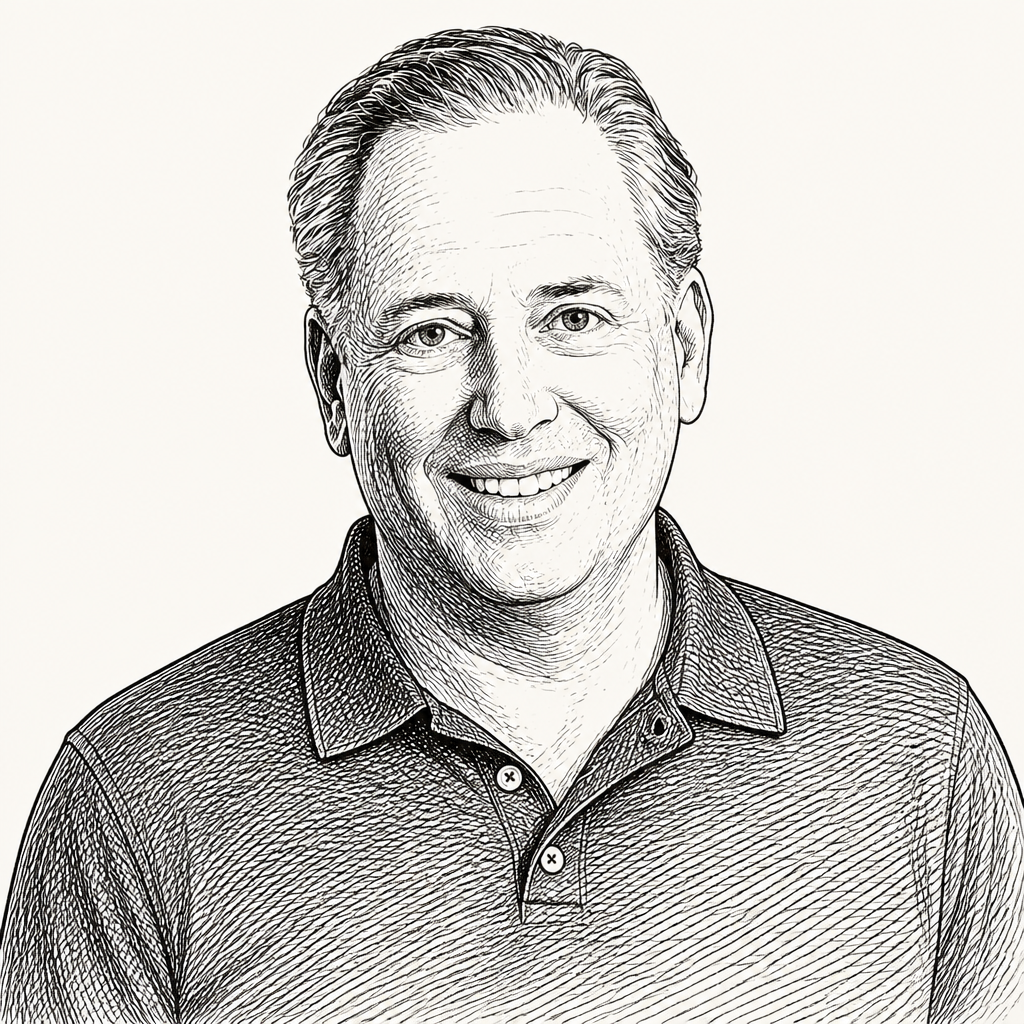

He offers a blunt indicator: search the Strings 2026 program for terms such as “electron,” “hadron,” “Higgs,” and “lepton.” In Weinstein’s description, the absence of those terms shows a community devoted to sophisticated mathematics without sustained engagement with particle physics as physical reality. He recalls asking two leading theorists at a major institute how to advance the Standard Model and being told that neither had an interest in the physical world. To Weinstein, that is not an incidental preference. It is a symptom of a prestige hierarchy detached from the subject it claims to study.
The strategic stakes are captured in his shorthand: “boom, vroom, and zoom.” Boom means weapons; vroom means energy; zoom means propulsion, computation, and the technological capabilities that follow. He argues that the Standard Model has been largely settled for more than half a century and that humanity has therefore been denied potential advances across all three categories.
The stagnation in physics may have led to the survival of the human species.
Weinstein means that as both warning and qualification. New fundamental physics might create energy, transport, and computational breakthroughs. It could also create new forms of destructive power. He invokes black powder, volatile compounds, the Teller-Ulam design, and efforts to control nuclear-weapons information to argue that a modest amount of scientific knowledge can have immense leverage.
His discussion of speculative particle physics follows the same pattern. He discusses possible extensions beyond the Standard Model, including a Pati-Salam-style unification, transformations involving quarks, leptons, and neutrinos, and what he calls “decoupled matter.” These possibilities are illustrations of what could become technically consequential if physics were moving more rapidly; he does not present them as established capabilities.
Weinstein’s concern about proliferation is more immediate. If the United States is no longer regarded as a credible security guarantor, he argues, more states will seek nuclear weapons. A world with many independent nuclear actors is not simply a larger version of a two-party Cold War. It is a harder strategic problem, with more actors and less stable deterrence logic.
That creates the paradox at the centre of his position. The United States should recover its capacity for radical science, but it should also seek cooperation with rivals quickly because the next layer of scientific leverage may be too dangerous to discover in a fully contested environment. He frames American leadership as necessary not simply because America should win, but because the alternative could be a race toward capabilities no state can safely monopolize.
China and AI could reopen paths that institutions have treated as closed
Eric Weinstein raises the possibility that consequential physics might be pursued in compartmentalized settings while public theoretical physics follows safer paths. He supports the possibility by recounting what he calls the Reference Committee within the National Research Council during the Manhattan Project. In his account, outside papers on chain-reaction physics were redirected and delayed, making it difficult for researchers outside the secret program to publish or earn a living in that area.
The point is not that every scientific impasse conceals a secret program. It is that secrecy has historically made it possible for public science to be constrained while decisive work takes place elsewhere.
Weinstein names Renaissance Technologies as his leading candidate if a modern analogue existed. He points to its unusual technical hiring, its proximity to Brookhaven National Laboratory and Stony Brook, and the exceptional returns of its Medallion Fund. Sacks presses him on the absence of corroborating disclosures from former employees and on whether an advanced-physics program could remain hidden.
Weinstein does not claim to know that Renaissance is conducting secret physics research. He says that it has a secure campus, a talent pool and institutional relationships that he finds unusual, and a stated trading purpose that he regards as insufficiently explanatory. The speculation is an extension of his institutional argument: protected programs can separate public narratives from private work.
China is more central to his practical concern. Weinstein says China is approaching American, Russian, and other scientists with an offer of prestige, money, and latitude to work. He adds that this freedom has firm political limits, naming Tibet, Tiananmen Square, and Taiwan. But he argues that China can still offer more room for technical inquiry than U.S. institutions currently offer dissatisfied researchers.
The risk, in his framing, is not merely conventional brain drain. China can recruit scientists trained in the United States and invite them to reconsider questions that American institutions have made professionally hazardous. It need not outperform the United States across every settled discipline if it can attract people who believe the settled disciplines have suppressed productive alternatives.
AI may change the economics of that reconsideration. Weinstein argues that current systems are trained on prestige-weighted corpora: journals such as Cell, Nature, and Science in biology, and the Annals, Inventiones, and Journal of the American Mathematical Society in mathematics. Those sources preserve the narratives fields have elevated.
But discarded work is also a corpus. Weinstein calls it the “trash can corpus”: rejected papers, mocked hypotheses, neglected proposals, and ideas that never received institutional access. He expects advanced models to read that material alongside canonical work and ask what the prestige system failed to test.
David Friedberg suggests that this may be where discovery and reinvention occur. Weinstein agrees, imagining a private Chinese model instructed to treat string theory, M-theory, and quantum gravity as possible distractions rather than privileged starting points, then to search systematically for what their dominance obscured.
The claim is not that AI will validate Geometric Unity or any particular outsider theory. It is that machine reading could lower the cost of revisiting neglected material and weaken the gatekeeping power of journals and reviewers that once determined which work received serious attention.
Friedberg notes that models have been distilled, open-weight systems released, and capability diffused. Weinstein accepts that containment may already be impossible, but considers commercial deployment reckless. He compares the industry to hiring Hannibal Lecter as a household consultant: intensely capable, visibly restrained, and dangerous enough that the restraints should not produce confidence.
For Weinstein, AI’s greatest consequence may not be faster conventional research. It may be the ability to search rejected scientific material for high-leverage ideas before governments and publics have decided how such discoveries should be governed.
UAPs are Weinstein’s most speculative extension of the same institutional concern
Eric Weinstein says there is “definitely something there” in the UAP question, though he says his view does not rest on videos. He attributes it to conversations with people he regards as smart and sober, recurring accounts, and the existence of special-access programs concerned with the subject. The explanation could be U.S. technology, Chinese technology, a false story, or something more radical.
Compartmentalization is central to his reasoning. He argues that stove-piping is the one institutional method that reliably keeps secrets, and that information can be divided so thoroughly that almost nobody can assemble the whole picture. A government, on this account, may possess relevant pieces while lacking a unified understanding of what it knows.
If general relativity is effectively complete, Weinstein says UAPs are most likely experimental nation-state weapons systems, perhaps linked to historical interest in gravity shielding or anti-gravity research. If general relativity is not the final theory, he entertains a more expansive possibility: that physics could alter effective distance through transformations he calls “pinch-to-zoom” and “shear-to-tilt,” without merely violating the speed of light.
That possibility leads to his idea of “multi-temporal” adversaries: entities with access to more dimensions of time than humans understand, much as a vehicle gains freedom of movement when it is no longer confined to a rail. He also entertains extraterrestrial visitation, comparing Earth to North Sentinel Island: a population unaware that it belongs to a much larger surrounding order.
Nuclear weapons matter in that analogy because Weinstein sees them as a threshold signal. A civilization capable of nuclear explosions may be approaching the physics needed for profound propulsion. Humanity, in his view, may have demonstrated technological danger before developing the maturity to handle the leverage available in a next theory.
He names possibilities including multi-temporal movement, “dark chemistry,” “dark light,” additional families of matter, and an SU(4) cross SU(2) cross SU(2) grand-unified structure. He believes Geometric Unity is the next theory and argues that a theorist with a candidate theory should state it and invite engagement.
The UAP argument is not necessary to Weinstein’s institutional program. It is the outermost version of his warning: a science system that rewards consensus and confines unconventional inquiry may fail both to recognize dangerous advances and to pursue beneficial ones. His operative demand remains more terrestrial—fund unusual people, tolerate informed risk, and test radical claims rather than excluding them by default.