AI Lowers the Floor for Creation, but Humans Still Raise the Ceiling
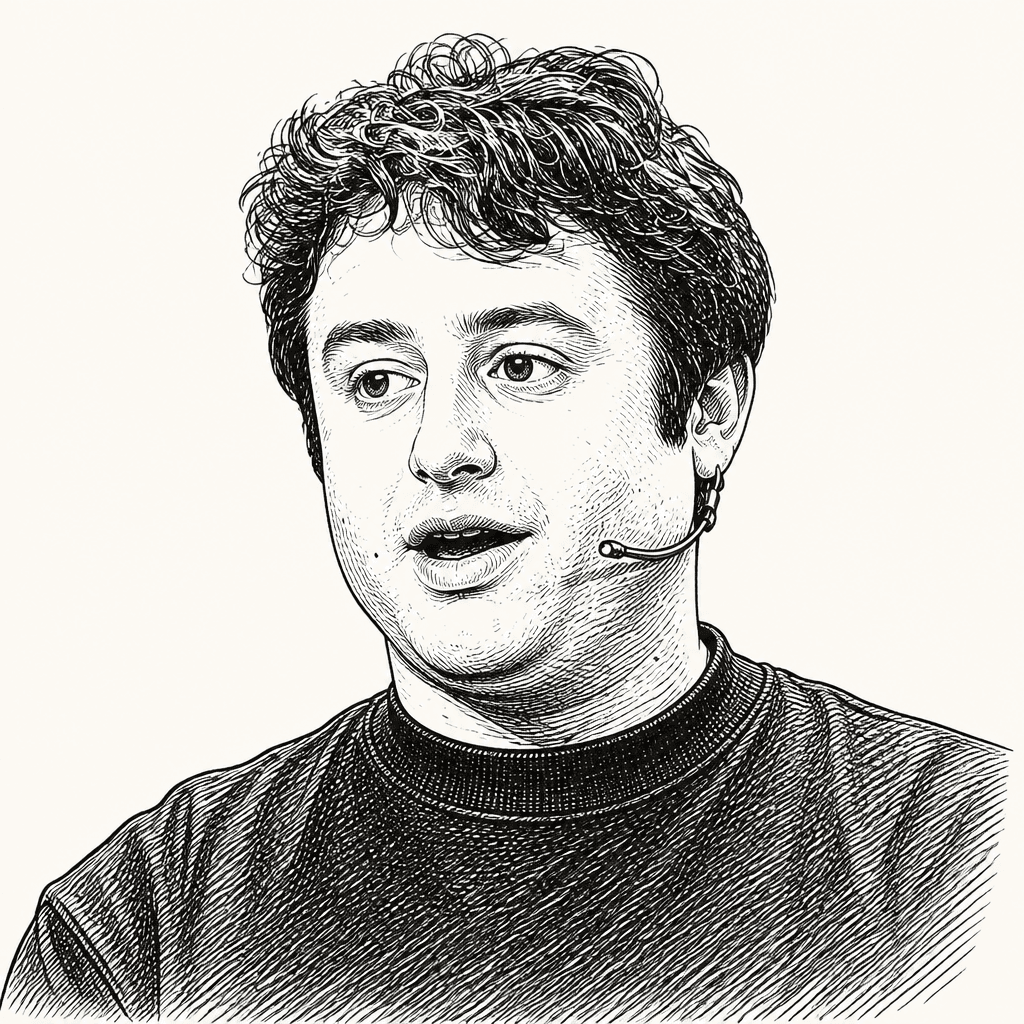


Figma chief executive Dylan Field argues that AI is making software easier to produce without making distinctive products or creative work automatic. As coding becomes less of a differentiator, he says, design, craft and a clear point of view matter more—not because they replace engineering, but because they help products stand apart. Field also argues that AI can expand who gets to create, while leaving the harder work of judgment and execution to people.
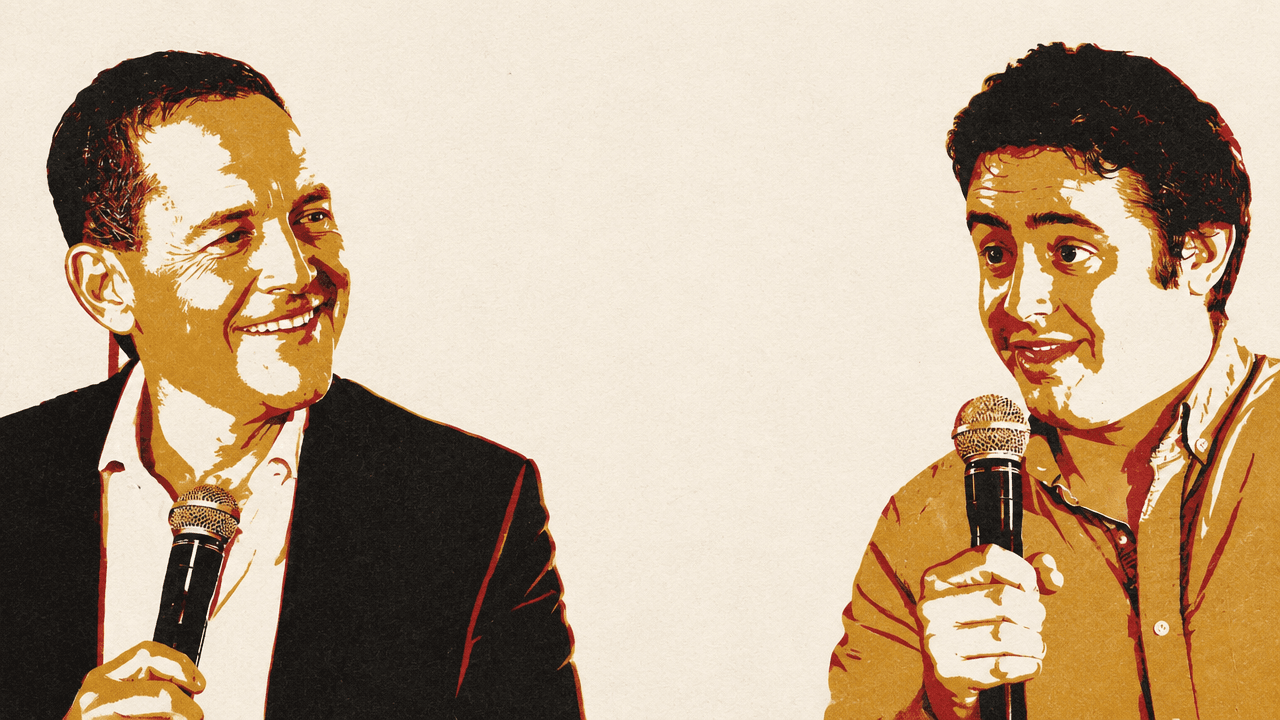
AI lowers the floor; people still raise the ceiling
As coding models improve, the value of differentiation shifts upward, Dylan Field argues. Engineers remain essential at Figma, but producing code is becoming less of a differentiator. Design, brand, marketing and point of view matter more: they help determine whether a product feels distinct and whether it can elicit an emotional response.
Field calls this shift “design is the new code.” He does not mean that design replaces engineering. He means that when more people can make software, the harder problem is making something that stands apart.
AI is lowering the floor for digital production, Field says. More people can produce code, motion, video and design than could before. But he has revised an earlier belief that AI would raise the ceiling of what people can create. In his view, it has not.
The ceiling has stayed the same. AI is not raising the ceiling. Humans are raising the ceiling, though.
Humans raise that ceiling when they invest time, take risks and try something others have not done. That distinction matters in a market where software is proliferating. Field says the number of apps is growing exponentially while people’s usage of apps remains flat. If more products compete for roughly the same attention, creators need to give people a reason to choose theirs. A competent average result may be enough for some tasks; for others, the bar is a product that shows care and offers a distinctive point of view.
Field thinks point of view is often the missing piece. People may be reluctant to say something outside consensus, even though novelty requires doing something that has not already been done. He connects this to the attention economy: distinctive work can cut through a stream where ideas are quickly absorbed and diluted. But standing out is not simply a matter of being provocative. His question is whether a message can rise above the noise and hold attention over time.
A design tool is more than a model
That emphasis on craft helps explain why Dylan Field is skeptical of treating model progress as product progress. Asked whether Anthropic’s Claude Design threatened Figma, he said the online reaction was familiar: one moment a company is declared finished, and soon afterward the panic passes. Figma’s business, he said, was not significantly affected.
Field distinguishes the underlying model from the product built around it. A model may be capable, but a professional tool also has to get its workflows, mechanics and feel right. He likens a design tool to an instrument: details shape how it works for different people, tasks and contexts. Figma has spent years developing those workflows and still hears from users about what needs improvement.
That does not make Field bullish or bearish on Claude Design. He says it is a broad product, aimed at several kinds of design work, and may do well in some areas but not others. Serving professionals takes more than demonstrating what a model can generate. A tool has to support the particular work people are trying to do across many scenarios, and the right experience can vary with the user and the task.
This is the product-level version of Field’s distinction between lowering the floor and raising the ceiling. AI can make it easier to produce a first result; it does not automatically supply the judgment, workflow or point of view that makes a tool useful—or the work worth choosing. The same distinction runs through his account of creative practice: generation gets people started, while craft and human choices shape what comes next.
Field sees more than one viable form of software in the AI era. Some businesses may be vulnerable; others can endure and grow by understanding a specific audience and building carefully for it. As an example, he points to Cursor, which grew despite competition from frontier labs with their own models. In his account, Cursor succeeded by focusing on users, anticipating their needs and making product decisions with the customer in mind.
His formulation resists both extremes: it is not true that every software company is safe, or that every software company is doomed. The outcome depends partly on whether a company can make a product people want to use, rather than relying on access to a model alone.
AI can generate a starting point; creators still have to shape it
For Dylan Field, AI is useful as a way past the blank page. A person can prompt a system, get something to react to, then identify what is wrong and revise it. That back-and-forth can make the work easier to begin.
But using AI to implement a fully formed vision has a constraint: the result comes through the model’s own tendencies. If the creator has a specific aesthetic or experiential vision, Field says, they should not assume the model will reproduce it exactly. The model has its own distribution; the creator still has to recognize what is missing and shape the output.
Field says Figma wants to support both modes: building with code on the canvas and working directly with one’s hands, moving between them quickly. He points to generative tools in Figma Design and to Weave, a node-based product that connects model outputs to other inputs. The aim, he says, is not only to generate material but to give people a way to shape it. He has seen users make video and photo work with Weave that he considers remarkable. The decisive factor is whether someone brings intention and is willing to keep working toward a better result.
He sees a parallel in the history of creative software. David Friedberg recalled that Photoshop’s layers and filters prompted fears that the tools would undermine photography and graphic design. Instead, they gave artists new ways to work, though the people who thrived with the new tools were not necessarily the same as those who had mastered the old ones. Field agrees that new tools can open creative possibilities, while cautioning that the larger disruption in photography was the camera phone, which changed how people took and shared pictures.


The point is not that every new tool improves every kind of work. Field says there are still photographers doing exceptional work, and he does not label the broader change as simply better or worse. The tools change what is possible and who participates.
Field also distinguishes human novelty-seeking from how current AI systems learn. He describes a human response to consequences: if someone splashes water on another person and sees that person get angry, they are unlikely to repeat the act. With reinforcement learning, he says, an AI system may need to be told many times not to do something. He allows that architectures may change, but says the brain and current AI systems are different, while acknowledging that people still know relatively little about neuroscience.
That distinction informs how he thinks about creativity, though he does not claim to have settled what makes human creativity unique. Design, in his account, is not creativity alone. It means solving a user’s problem while accounting for brand, culture, marketing and business needs. A designer may have to hold those considerations at several levels of abstraction while producing a specific screen or flow. Field finds that combination—and the number of possible solutions it creates—part of what makes design interesting.
AI’s progress, he says, has been uneven. In formal, verifiable domains such as mathematics and cybersecurity, model capabilities have advanced sharply. In design and other creative domains, he sees progress as more incremental. He suggests that the difference may have something to do with these being non-verifiable domains. A new model can produce striking results and set off a burst of excitement, but its familiar patterns soon become apparent. The next question is how to move beyond them.
Trust depends on whether people have engaged with the work
AI-generated work raises a question for Dylan Field beyond originality: whether the person presenting it has actually engaged with it. He describes receiving AI-made decks and wondering whether their creators had read them or knew what they contained.
At Figma, the company asked employees to label writing created with AI as “written with AI.” Field says the practice is simple and that people follow it, despite some internal jokes about the request. He presents it as a way to make clear when AI was used in writing. He also expects some kind of division around trust, and says one way to establish trust is to do something with your hands.
Field’s concern is whether the person using AI has read, assessed and taken responsibility for what they produce. He sees AI as useful for getting started, but says a creator must still decide what to keep, what to change and what the work should become. That is the same human work he sees in making a professional tool useful: not merely producing an output, but understanding the task and making choices about what serves it.
He is drawn to creative projects that use AI to change the form of an experience, rather than simply produce a familiar image or object. One example he describes is a web page that became slightly more degraded each time a visitor left and returned, as a comment on attention. He also recalls Holly Herndon’s work with her voice, which explored how something personal could be made available for others to use. Field says the boundary between what belongs to an individual and what becomes collective, and what is unique or ownable, remains compelling to him.
The acquisition’s uncertainty mattered as much as its outcome
Figma began in August 2012 with a goal Dylan Field describes as helping the world’s best teams design, create and build software. Design remains its center, but people also use the product for marketing, advertising, presentations, whiteboarding and diagramming. Field calls design a broad term: it can mean product, industrial, interior or brand design, among other things. He describes it as creativity meeting problem-solving, while acknowledging that the word has many definitions.
The proposed Adobe acquisition tested the company’s ability to keep building under uncertainty. Field says Figma respected Adobe and saw the deal as a chance to join a company with a long history in creative software. Figma signed the agreement, but regulators in the United States, the European Union and the CMA reviewed it. Field says the review lasted 16 months.
Field disputes the idea that the deal was necessarily anticompetitive. He says the arguments against it focused on past market boundaries rather than how technology might change those markets. The difference, as he described it, was between a regulator defining a market by looking backward and a technologist imagining how it might expand.
For the company, the immediate problem was uncertainty. Field initially thought the deal would move through quickly, but within a month or two it was clear that would not be the case. Figma had to keep shipping and building because it could not know what would be on the other side of the review. Field called 16 months of regulatory uncertainty punishing for any company, and said that in a genuinely anticompetitive situation a delay like that could be destructive for one or both parties.
He also cited the proposed Amazon acquisition of Roomba as a cautionary example. Field said Roomba went bankrupt after the deal was blocked and argued that the market had largely gone to China. He used the case to make a broader policy point: pursuing idealism does not always produce outcomes that help the country.
The company had told employees to enjoy the holidays on Friday, the first day of winter break. Over the weekend, Field says, it became clear the acquisition was coming to a conclusion. He called an all-hands meeting for Monday and explained what had happened. He remembers the response less as disappointment than relief: after so long living with two possible futures, employees no longer had to manage the ambiguity.
He also gave employees a clear choice. Those who were tired, or who had joined expecting to work at Adobe and did not want to return to startup life, could leave with a few months’ pay, without damaging their relationship with Figma. Field said only a relatively small percentage took the offer. Some made larger career changes, including pivots to entirely different paths. He describes the option as healthy for both the company and the people who chose it.
The choice is whether to use AI to think less or do more
Dylan Field frames AI’s effect on human agency as a choice. People can use it to let something else think for them, or use it to learn and attempt work that once seemed too difficult or time-consuming. He is more interested in the second path: AI as a way to expand what a person can understand and do. He says he sees people letting AI think for them in his interactions outside Figma, and asks why he would want something else to do the thinking when he has spent his life learning how to think.
“Everyone can be a maker,” Field says, but access alone does not guarantee meaningful work. Curiosity, willpower and a willingness to do the work still matter. He hopes people use AI to create good and become a force for it, rather than join what he calls the hive mind.
He is optimistic about the scale of change, but not without ambivalence. Reflecting on an OpenAI release that he described as involving more than 700 papers on prominent mathematical problems, Field said it felt both exciting and sad. Progress could bring new possibilities while also removing some of the mystery that makes unsolved problems meaningful. He does not think it is wrong to mourn that loss even as he welcomes what the progress may make possible.