Home Depot Built a Warehouse Model Around Project Expertise


Acquired’s Ben Gilbert and David Rosenthal argue that Home Depot’s enduring advantage was not the warehouse format alone, but a system that combined low prices and broad inventory with knowledgeable store associates who helped customers complete projects. They trace how Bernie Marcus and Arthur Blank built that model after their firing from Handy Dan, how Bob Nardelli’s operational overhaul weakened its service culture, and how Frank Blake restored growth by making stores the local nodes of a wider fulfillment network.
A warehouse was the right store for a project business
Home Depot’s scale is easy to miss because its physical form seems ordinary: a large store in a suburban shopping center. Yet it is the world’s largest specialty retailer, with a roughly $350 billion market capitalization and 470,000 employees. Only general-merchandise retailers such as Walmart, Amazon, and Costco are larger. Home Depot operates only in North America, but Ben Gilbert notes that it is more valuable than companies including Netflix, Alibaba, Goldman Sachs, LVMH, and Disney.
Its investment record reflects an unusual degree of compounding. Home Depot went public in 1981, one year after Apple. Gilbert says that $1,000 invested at its IPO, with dividends reinvested, would be worth roughly $17 million today: nearly 25% annually over 45 years, and the highest total return in the S&P 500 over that span. The same $1,000 in the S&P 500 would have become about $170,000.
The premise was radical for a hardware retailer. Put the whole store in a warehouse. Let customers shop the warehouse rather than maintaining a separate showroom and back room. Carry far more inventory than conventional hardware stores. Buy directly from manufacturers and sell at lower margins.
The early plan called for roughly 60,000 square feet and 25,000 SKUs, against 10,000-square-foot, 8,000-item stores typical of Handy Dan and Lowe’s at the time. The wager was not merely that larger stores would sell more. A home-improvement project is a bundle of dependent purchases. Someone repairing plumbing, building a deck, or refinishing a room needs tools, materials, fasteners, and often advice. Before Home Depot, those purchases were spread across lumberyards, small hardware stores, plumbing suppliers, tool stores, and lawn-and-garden outlets.
Home Depot took the physical insight from Sol Price’s Price Club—warehouse space as selling space, direct purchasing, low markups—but departed from the warehouse-club model in two ways. Price Club could operate with a narrow assortment. Home Depot needed breadth: a customer had to believe that one store could supply an entire project. And while shoppers already knew how to buy toilet paper or packaged food, they did not necessarily know how to install flooring, replace a fixture, or build a deck.
That made the business structurally harder than a conventional warehouse club. Low prices favor minimal labor and fast-moving merchandise. A deep specialty assortment and knowledgeable floor staff add cost and operational complexity. The warehouse mattered, but the more consequential question was how to make that warehouse useful to someone trying to complete a project.
A firing created the team that could build it
Bernie Marcus and Arthur Blank arrived in hardware from retail rather than the trades. Marcus, raised in a poor Jewish immigrant family in Newark during the Depression, became the first in his family to attend college. He wanted to attend medical school but could not afford it, worked as a pharmacist, and found his way into retail through a discount-store concession.
By 1972, Marcus was an executive at Daylin, a Los Angeles retail conglomerate, when Daylin made him CEO of Handy Dan, its hardware-store subsidiary. He recruited Blank, a younger Daylin finance executive, as CFO. The broader retail environment was hostile: oil shocks, stagflation, and interest rates in the teens were punishing suburban retailers. But Handy Dan became the strong operator inside a weakening parent.
The hardware market they entered was fragmented, regional, and operationally unsophisticated. Even Lowe’s, then the largest operator in the category, was a small-store regional chain doing about $150 million in annual revenue. Marcus and Blank brought experience in discounting, merchandising, and finance to a sector that still resembled a collection of local specialty stores.
Ken Langone entered through an investment thesis. After taking public a Philadelphia hardware chain, Panelrama, he asked who the industry’s best operator was and was directed to Handy Dan. Its public financials appeared implausibly cheap to him: the stock traded near $3 per share while expected post-tax earnings were reported at about $1.50 per share.
Langone flew from Philadelphia to Los Angeles the next day to meet Marcus. Satisfied that Handy Dan’s business and accounts were real, he urged Marcus to mortgage his home and buy stock. Marcus declined. Langone began buying instead, ultimately accumulating close to 20% of Handy Dan. He started at about $3 per share and bought some of the final available shares near $9.
That ownership stake put Langone into conflict with Daylin’s turnaround CEO, Sandy Sigoloff, who called himself “Ming the Merciless.” Sigoloff wanted Langone out. Langone had no desire to sell, believing he was protecting Marcus and Blank from a CEO who resented their success. Marcus eventually asked him to do so because the conflict had become a burden. Langone sold for $25.50 per share. Three months later, Sigoloff fired Marcus, Blank, and Handy Dan audit manager Ron Brill, using an alleged labor-relations violation as the pretext.
Langone had warned Marcus that selling would be his “death warrant.” After the firing, Marcus was panicked: he was 48, had no Handy Dan equity, little savings, and faced the labor investigation. At breakfast in New York, David Rosenthal recounts, Langone gave him the line that became Home Depot lore.


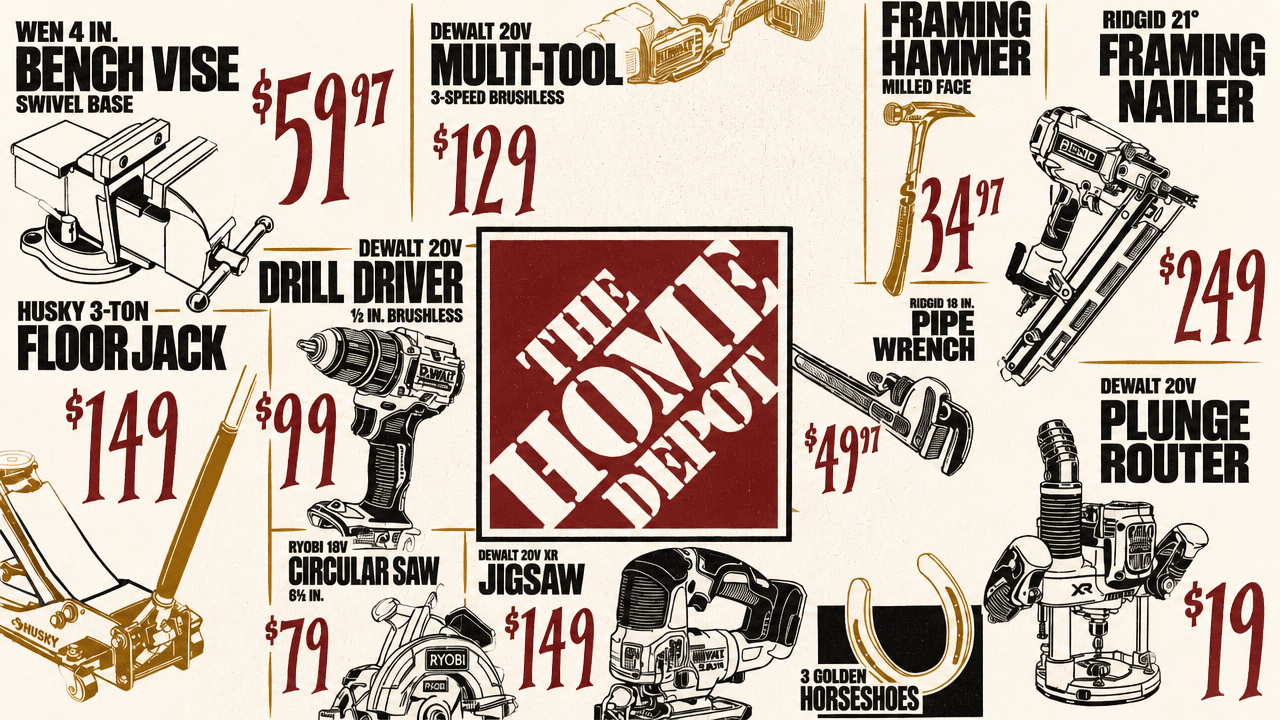
Bernie, relax. You just got kicked in the ass with a golden horseshoe.
Marcus had already been carrying the idea that would become Home Depot. After visiting Sol Price in San Diego and seeing Price Club, he concluded that warehouse retail would eventually come to hardware. The warehouse could be the store; direct buying could remove middlemen; low prices could create demand. Marcus believed that if Handy Dan did not build that business, someone else would and destroy it.
Price gave Marcus the final push after the firing. If Marcus believed he had the talent to create something on his own, Price told him, he should tell Sigoloff to go away and do it.
Langone’s job was to finance it. Ross Perot initially agreed to invest $2 million for 70% of the new venture. Marcus walked away from the deal at the last minute, in a dispute nominally about Perot’s objection to Marcus driving an old Cadillac rather than the Chevrolets required at Perot’s company, EDS. Marcus read the disagreement as something larger: Perot appeared to be treating him as an employee rather than as a partner building his own company.
Langone replaced Perot with a syndicate of roughly 40 investors contributing $50,000 increments. The investors received 50% of the company; Langone received 5%, after putting in about $100,000 and assembling the financing; and Marcus, Blank, and the management team held the remaining 45%.
A fourth founder arrived through a failed acquisition. Pat Farrah ran HomeCo, a Los Angeles hardware warehouse that closely resembled Marcus’s vision: enormous selection, goods piled high, and prices designed to create a buying frenzy. HomeCo’s sales were real, but the business was insolvent because Farrah had not paid suppliers and did not understand its economics. Marcus, Blank, and Langone abandoned the purchase but recruited Farrah after HomeCo’s bankruptcy. He would run merchandising; Blank and the rest of the team would control finance and operations.
The capital constraints were immediate. The $2 million was not enough to casually fill warehouses with expensive tools, lumber, and building materials. The company pushed suppliers for long payment terms and tried to receive merchandise as close to opening as possible. It focused first on cash-paying consumers and smaller professionals rather than commercial buyers expecting credit. Supplier terms still finance about half of Home Depot’s inventory at a given time, the discussion says.
Scarcity forced the company to create demand fast
Atlanta offered the conditions the founders could not find in Los Angeles: favorable suburban demographics, cheaper real estate, and distance from Handy Dan. J.C. Penney had a failing Kmart-like subsidiary called Treasure Island and subleased several Atlanta-area locations to the new company.
The first two Home Depot stores opened on June 22, 1979, just over a year after Marcus and Blank had been fired. They did not yet resemble the high-ceilinged warehouses associated with the brand. The locations were repurposed discount stores, with low ceilings, linoleum floors, and conventional retail racks.
The launch was improvised. A major newspaper ad failed to run, leaving prospective customers unaware that the stores existed. Marcus and store associates went into the parking lots offering free $1 bills to entice people inside. The company also had too little merchandise to make its immense ambition credible. Farrah borrowed cardboard boxes to fill racks and obtained empty paint cans that could be stacked high enough to suggest abundant inventory.
Those details were more than theater. Home Depot needed customers to understand the store as an “action place,” in Marcus’s phrase: somewhere a person in the middle of a project could enter in work boots, find what was missing, ask a question, and get back to work. The store was meant to function as real-time replenishment for a contractor or homeowner, not as a polished showroom.
The economics soon began to validate the premise. Home Depot opened a third Atlanta store by the end of 1979 and produced $7 million in sales during its partial first year. Research cited by Rosenthal found early pricing ran 10% to 25% below competitors. Direct manufacturer deliveries, warehouse-style handling, and gross margins around 30%—rather than the 45% typical in hardware retail—made that possible.
The expansion model followed from local advertising economics. Home Depot did not scatter isolated stores around the country. It concentrated stores in a city, saturated the market with advertising, became locally dominant, and then moved to another metro area. That pattern would later contribute to its density and fulfillment advantages.
Capital was still scarce. Home Depot lost about $1 million in 1979, then made about $1 million in 1980. When J.C. Penney offered former Treasure Island sites in Florida, the company needed new funds. Langone took the four-store chain public in 1981, when interest rates had moved above 20%.
The IPO was initially meant to raise $6 million, with half going to expansion and half allowing seed investors to cash out. Bear Stearns cut the offering shortly before launch, saying it could sell only $3 million. The seed investors left their capital in the company, and Home Depot ultimately raised $4 million at a $32 million post-offering market capitalization.
Growth followed quickly: 31 stores by 1984; $1 billion in sales and 60 stores by 1986; and 118 stores by 1989. That year, Home Depot surpassed Lowe’s as the largest U.S. home-improvement retailer. Handy Dan went out of business.
The operating system turned service into volume
The warehouse format was visible, but it did not explain why copycats failed. Builders Square, Home Club, Home Quarters Warehouse, and Mr. HOW Warehouse all pursued large-format home improvement in the 1980s. None became an equivalent national business.
Rosenthal locates the difference in the specialized service a home-improvement retailer had to provide. General-merchandise retailers can compete through price, selection, and convenience while limiting help on the sales floor. Specialty retail requires expertise specific to the customer’s problem. Tire stores install tires; beauty stores offer sampling and makeovers; electronics stores troubleshoot. Home Depot’s distinctive service was education.
Rather than employ separate instructors, Home Depot recruited plumbers, electricians, carpenters, and other tradespeople into store roles. The work could be attractive to someone leaving residential contracting: more regular hours, steadier income, less driving, fewer client-management problems, and less strenuous physical labor. In return, Home Depot gained associates who could show a customer how to do the job.
The logic was not merely generous service. It could expand the customer’s ambitions. A homeowner who receives useful help choosing paint may become willing to try drywall, flooring, or a larger renovation later. The company’s fabled internal example is the customer who arrives ready to buy a $200 faucet. An experienced associate recognizes that a 25-cent washer will fix it. The customer returns later for a much larger kitchen project because the store earned trust.
It’s not the gross margin percentages that put food on the table; it’s the gross margin dollars that put food on the table.


That was the central economic challenge. Home Depot held far more SKUs and employed more knowledgeable staff than a pure warehouse club. It had to compensate through volume: low prices, a broad one-stop assortment, high transaction counts, large baskets, repeat purchasing, and a store environment designed to create urgency and excitement.
Higher volume strengthened supplier relationships. As Home Depot placed larger orders, it could negotiate better terms. For much of its history, it passed much of that benefit to customers, feeding a cycle of lower prices, higher traffic, more supplier leverage, broader selection, and still more volume.
Employee equity connected the floor to that cycle. Salaried employees, beginning at assistant-store-manager level, received stock options. Hourly associates could buy stock at a 15% discount and, early on, received a guarantee that the company would make them whole if the price dropped below their purchase price. Training explicitly tied customer service to repeat business, store sales, corporate growth, and the stock price.
The company’s cultural language reflected that hierarchy. Its corporate office was a “store support center,” not headquarters: associates served customers, and the rest of the organization existed to support associates. Frank Blake later said the best indication of cultural health was associates watching the stock price in the break room.
The early store economics supported Marcus’s original hunch. In 1980, Home Depot stores were about twice the size of Lowe’s locations and held three times as many products, but produced four times as many transactions. The larger assortment was not simply inventory bloat. Once customers regarded the store as a reliable place to complete a whole project, breadth could create increasing returns.
Operational discipline solved real problems and put the model at risk
By 1996, Home Depot had reached about $20 billion in annual sales, was opening a store roughly every four days, and had more than 600 locations. It was becoming more serious about professional customers, adding credit accounts, Pro Desks, dedicated salespeople, pro-grade tools, bulk pricing, and job-site delivery.
A 2015 comparison cited by Gilbert shows why professionals mattered: the average DIY customer interacted with Home Depot about five times a year and spent roughly $330, while the average professional customer interacted 66 times and spent about $6,500. Some professionals spent hundreds of thousands annually.
Rapid growth had also masked weaknesses. The company settled a major gender-discrimination lawsuit in 1997, though Marcus and Blank disputed the claims in their memoir. Its culture had been heavily male-coded, and Lowe’s would later target a broader customer base with a more comfortable, consumer-oriented store experience.
Home Depot had also relied on radical decentralization. Local managers could tailor decisions to local demand, and Marcus estimated that the approach could produce 15% to 20% higher sales per store. At national scale, however, it created fragmented systems, inconsistent operations, numerous local buyers negotiating with suppliers, and weaker purchasing leverage.
Lowe’s recognized the opportunity. Starting in 1990, it abandoned its smaller legacy format and adopted warehouse stores. It then differentiated around a more welcoming experience for younger and often female homeowners buying kitchen, bath, décor, and refresh projects rather than lumber and pipes. Its slogan, “Improving Home Improvement,” was aimed directly at Home Depot’s rougher, professional-oriented identity.
When Marcus retired as CEO in 1997 and Blank succeeded him, the board found it had not developed an executive successor beyond Blank. It considered Jamie Dimon, who admired Home Depot’s culture but chose not to pursue the job. Langone, who sat on both the Home Depot and GE boards, looked instead to General Electric’s management bench.
After Jack Welch selected Jeffrey Immelt as GE’s next CEO, Bob Nardelli became available. Home Depot offered him a president and COO role with a succession path and a $150 million equity package to replace foregone GE options. Nardelli then said he would accept only if he became CEO immediately. Blank yielded, though he would later say Nardelli was “the wrong choice by a lot.”
Nardelli did address genuine weaknesses. He centralized nine buying offices, upgraded technology systems, and improved purchasing leverage. National buying, shared data, and more disciplined operations were necessary for a company of Home Depot’s scale. The problem, in Gilbert and Rosenthal’s account, was treating those necessary changes as a complete management philosophy for a specialty retailer whose customer proposition depended on local expertise and entrepreneurial judgment.
Nardelli reduced store staffing and replaced many experienced associates with part-time general retail labor. Associates per store fell from roughly 200 to 170 between 2000 and 2006, according to research cited in the discussion. He also began favoring college degrees when selecting store managers, weakening the internal promotion path that had let store associates rise into management.
Customer satisfaction fell from near the top of major U.S. retailers to the bottom. The staffing figures and satisfaction decline do not by themselves establish every consequence of the changes, but they are the evidence behind the hosts’ broader interpretation: Home Depot was reducing the knowledge base on the sales floor that had helped turn immediate problems into trust and future spending.
Nardelli’s compensation made the conflict visible. The board paid him about $200 million over six years in addition to his initial equity grant. He resisted tying his compensation to Home Depot’s stock price, arguing that it was the one measure he could not control. Revenue and profit did rise, but largely through store expansion: from about 1,100 stores to 2,000. Same-store sales remained flat. Home Depot spent $20 billion on dividends and buybacks without lifting its stock price, while Lowe’s shares rose 200%.
Nardelli also increased gross margins from the historical high-20s or roughly 30% range to about 33%. That lifted current profits but moved the company away from its earlier practice of sharing scale benefits aggressively with customers. Gilbert and Rosenthal frame the resulting conflict as one of incentives: compensation tied mainly to current operating results can reward extracting more from the existing business, while stock-price alignment can favor investments whose value appears later in customer loyalty, traffic, and future cash flow.
The conflict exploded at Home Depot’s 2006 annual meeting. Protesters chanted, “Hey, Bob, why are you chicken while the stock price takes a licking?” Nardelli appeared without the board. Shareholders’ microphones were cut off on a timer. The meeting became a public symbol of executive excess and contempt for shareholders, including current and former employee-owners.
The board fired Nardelli in January 2007. His departure included an $18 million cash severance and a retirement package publicly valued at $210 million, although Langone later said he received only a fraction of that amount. Reports of associates celebrating in stores captured the distance between the CEO and the workforce.
Frank Blake rebuilt growth around existing stores
Frank Blake was an improbable successor who understood what Nardelli had missed. Blake was another GE executive, a lawyer by training who had worked in government, clerked at the Supreme Court, led GE’s M&A function, and joined Home Depot under Nardelli. He had not run a P&L or managed stores. But his son worked at Home Depot, giving him a direct view of store life that did not pass through corporate filters.
At his first board meeting as CEO, Blake asked to call Marcus, who had left the board alienated from the company. Blake and Langone traveled to Florida to meet him. Blake then took a Costco store walk with Marcus, a choice that reflected Marcus’s belief that Home Depot had lost contact with the fundamentals of great retailing.
Blake revived the inverted pyramid: customers at the top, associates directly beneath them, and the CEO at the narrow bottom. He also made a sharp contrast with Nardelli’s pay structure, asking for 90% of his compensation to be stock options.
The timing was severe. Home-improvement spending began falling in 2006 as the housing bubble broke. Home Depot’s revenue declined from 2007, bottomed in 2010, and did not return to its 2007 level until 2014. Blake did not answer that contraction with more stores. He closed roughly 30 locations, took a $1 billion write-off on planned development, and largely stopped new-store growth for more than a decade.
The result was a change in the company’s growth logic. Store count stayed near 2,300 in 2008 and around 2,400 years later. But sales rose from $70 billion to $130 billion, net income from $4 billion to $11 billion, and sales per store from about $30 million to roughly $65 million. Home Depot no longer relied on new locations to make growth visible. It focused on making existing stores more productive.
Blake also sold HD Supply in 2007 for about $8.3 billion. The business, assembled from Nardelli-era acquisitions, served homebuilders, infrastructure contractors, municipalities, and commercial maintenance customers through wholesale distribution, commercial credit, specialized salesforces, and large job-site delivery. It had reached 13% of Home Depot’s revenue by 2006, but required capabilities far from the store-centered core.
Home Depot used the proceeds primarily for share repurchases. It retired about 14% of outstanding shares in the first year and roughly 30% over Blake’s tenure, much of it while shares traded between $30 and $50. The policy continued through the housing crash and financial crisis. From 2008 to 2012, Home Depot stock rose 132%.
The largest operating investment was e-commerce and the distribution system required to support it. In 2009, Home Depot opened 12 rapid deployment centers, shifting away from the original model of manufacturers shipping directly to stores. The facilities could receive goods centrally, break them into store shipments, and support online fulfillment.
E-commerce did not mean only parcel delivery. A contractor who has run out of materials, or a homeowner who has run out of grout on a Sunday, often needs the item immediately. Home Depot could ship from a distribution center, fulfill from a nearby store, deliver from that store within hours, or make an online order ready for pickup.
The company changed its slogan in 2009 from “You can do it. We can help” to “More saving. More doing.” The change did not abandon the original customer promise so much as broaden its delivery. Low prices remained central, but digital ordering and local fulfillment let customers obtain project materials with less friction and, in some cases, with greater urgency.
Stores became the local edge of a specialized logistics system
Home Depot’s investments made stores more useful rather than obsolete. Its aim, Gilbert says, is that 90% of U.S. homes can receive more than one million SKUs at home, on a job site, or at a nearby store within two to 24 hours.
That promise depends on a dense store base and a logistics network built for materials that do not fit conventional parcel fulfillment. Lumber, drywall, roofing materials, insulation, and bulk job-site orders require handling and delivery systems that differ from Amazon’s standard model. Home Depot can fulfill an urgent small order from a nearby store, ship an online-only item from a dedicated fulfillment center, or deliver a professional order through specialized distribution.
The network includes import distribution centers, rapid deployment centers, stocking and bulking centers, flatbed distribution centers, market delivery operations, and direct-fulfillment centers. The point is not simply to offer delivery. It is to match the fulfillment method to the job: immediate pickup when work has stopped, fast local delivery for an urgent need, or scheduled delivery for a large planned purchase.
This changed the significance of Home Depot’s physical density. Its original expansion model—saturate a market before moving to the next one—created a local asset decades before e-commerce made that asset strategically legible. California has about 250 Home Depot stores; Washington has 48. Those locations make store pickup and local delivery possible in ways that a sparse network cannot.
The company later returned to adjacent professional markets from a stronger position. It repurchased the most valuable part of HD Supply for about $8 billion to serve maintenance, repair, and operations customers with specialized distribution requirements. In 2024, it acquired SRS for $18.25 billion, its largest transaction, and paused buybacks to absorb it. SRS serves roofers, landscapers, pool contractors, and other trades through planned bulk orders, job-site delivery, dedicated fleets, and specialized distribution.
The traditional stores and those distribution businesses serve different moments in the same customer’s work. A store can supply the fitting, fastener, grout, or replacement part needed immediately in the middle of a project. SRS and HD Supply are built for larger purchases planned ahead of time and delivered outside the retail-store model.
That creates a genuine tension rather than a settled conclusion. Blake’s first major strategic act was to shed HD Supply because the business looked too operationally different from the core at a moment when Home Depot itself needed repair. The later SRS and HD Supply moves rest on a different premise: Home Depot now has logistics, fulfillment, and professional-customer capabilities that make those businesses more connected to its core than they were under Nardelli.
The source presents that as a disciplined extension, not simply a repetition of the earlier adjacency strategy. But the distinction depends on execution. Specialized distribution can deepen Home Depot’s relationship with professionals and make its store network more useful. It can also demand commercial credit, dedicated fleets, separate sales motions, and operational capabilities that differ from the retail model. The company’s earlier experience establishes why the new strategy cannot be judged merely by the size of the addressable market or the scale of the acquisitions.
Today, Home Depot is a $165 billion annual-revenue company, growing roughly 2.5% to 4.5% per year. A little over half of sales come from professional contractors, with the remainder from DIY consumers. Gross margin is slightly above 33%, operating margin about 12.5%, and last year’s net income about $14 billion.
Online sales represent about 15% of revenue. Their importance lies in making inventory and stores more responsive, not in replacing the physical network. Home Depot carries roughly 35,000 store SKUs and more than one million online. It turns inventory about 4.5 times annually and holds about $11 million of inventory in a typical store.
Exclusive and house brands add another layer of retention. Behr paint, Hampton Bay lighting and fans, Glacier Bay fixtures, Ryobi, Ridgid, Anvil, HDX, Everbilt, EcoSmart, and Husky are among the brands identified as exclusive or proprietary. Industry estimates cited in the discussion put house brands at 15% to 25% of sales. Battery-powered tools can create practical switching costs: customers who own one platform’s batteries have reason to keep purchasing within that ecosystem.
Scale changed the tactics, not necessarily the value proposition
Home Depot changed many practices that were once presented as essential. It once resisted aisle numbers because associates were supposed to walk customers to products; modern stores have aisle numbers. It rejected contractor discounts and promotional sales; modern Home Depot has Pro Desk pricing and daily deals. It once relied heavily on direct manufacturer-to-store shipping and decentralized decisions; it now depends on centralized purchasing systems and a complex distribution network.
Ben Gilbert and Rosenthal draw a distinction between founding values and founding tactics. The early tactics were often practical answers to being small, undercapitalized, and trying to establish credibility. At scale, centralized buying can improve supplier terms, and fulfillment centers can make a broader assortment more available. Those changes can strengthen the original promise of wide selection, low prices, and the ability to finish a project.
The Nardelli-era labor changes were different in their analysis. Replacing knowledgeable associates with cheaper general retail labor was not presented as an unavoidable consequence of scale. It cut against the service relationship through which Home Depot had helped customers become more capable, built trust for larger future purchases, and gave employees a visible stake in the company’s performance.
Home Depot is only marginally more profitable than Lowe’s, and the two retailers have converged in many respects. But Home Depot’s greater scale—roughly three times Lowe’s by the comparison offered—should give it more purchasing leverage, greater ability to support exclusive brands, and a larger specialized logistics network.
Early on, its advantage was also counterpositioning. Existing hardware chains faced a painful transition: their smaller real estate, distributor relationships, higher margins, and limited assortments were poorly suited to a direct-sourced warehouse model. Lowe’s deserves credit, Gilbert and Rosenthal argue, for making the pivot anyway.
The company’s size rests on several conditions working together. Warehouse retail produced major cost advantages because home improvement proved unusually well suited to a no-frills warehouse environment. The U.S. home-improvement-store market is about $300 billion, compared with $180 billion for furniture. It is concentrated: Home Depot holds 51%, Lowe’s 29%, and Menards less than 5%.
The larger tailwind was the aging U.S. housing stock. The median age of U.S. homes stayed around 23 years from 1940 to 1980, then rose to about 25 years in 1990, 30 in 2000, 33 in 2010, and 42 today. Residential improvements and repairs grew from $28 billion in 1975 to $47 billion five years later and, by the figures cited, to $600 billion today.
Home Depot entered as the housing base was growing older and requiring more maintenance. It helped make DIY a mass-market behavior by combining inventory, price, and instruction. It then built different ways to serve professional customers, from immediate in-store replenishment to planned bulk delivery.
Rosenthal adds a precondition beneath the retail story: widespread U.S. homeownership, single-family housing, long-term mortgage financing, and related incentives created an asset base that owners have reason to maintain and improve. A large housing market alone is not sufficient. Home Depot’s failure in China, where it misread the culture around DIY and the structure of urban housing, illustrates the limitation.