Direct Distribution Is Replacing Old Media’s Gatekeeping Role
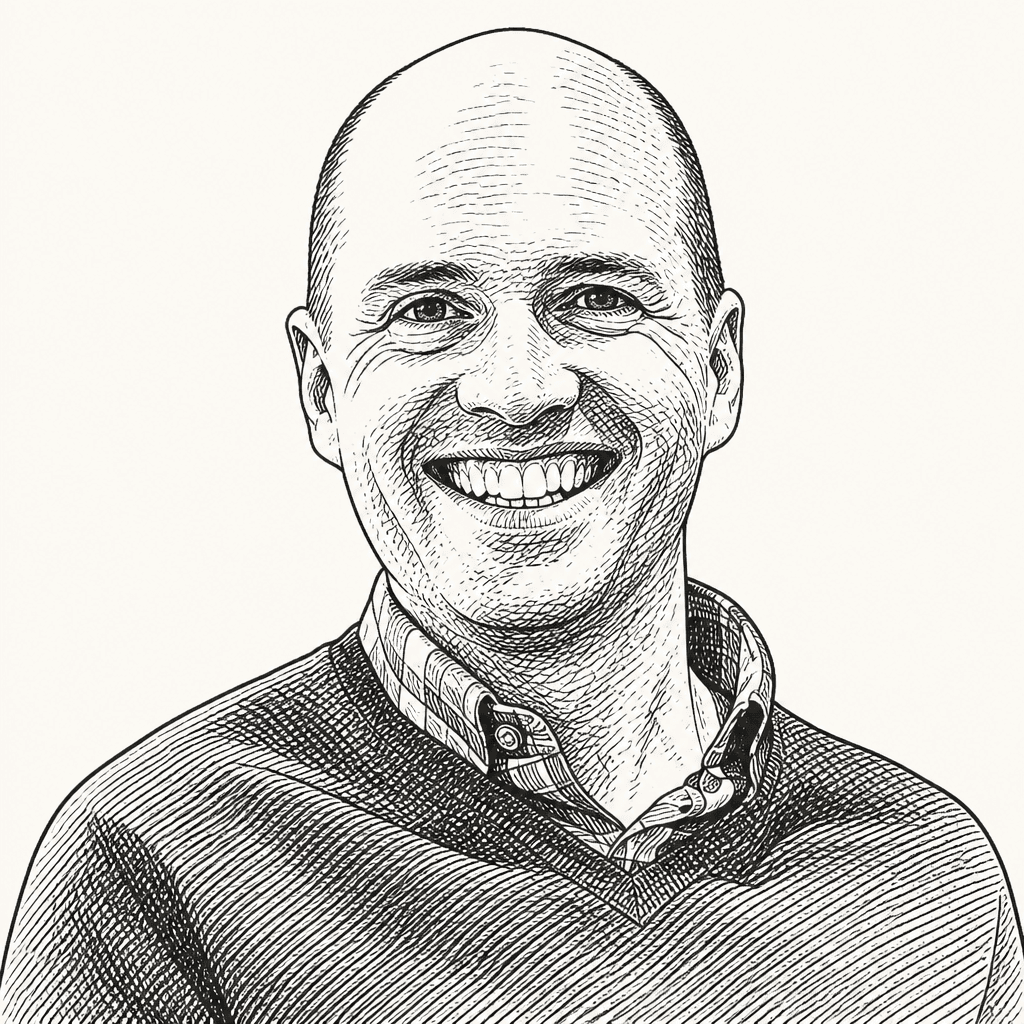
Ben Horowitz, a16z cofounder and general partner, argues in “This is New Media” that founders should stop treating legacy media as the source of prestige and legitimacy. The source presents old media as a system of scarce channels, fixed formats, and institutional brands, then contrasts it with a16z’s direct audience metrics, startup-heavy visual world, and willingness to try unproven production formats. Its case is that credibility and storytelling for founders can now be built outside the old media system.
Prestige no longer has to come from the old channels
Ben Horowitz frames new media as a break from the media environment founders inherited. In the old model, he says, distribution was constrained by “very restricted channels” and “very restricted formats.” The institutions that owned those channels were the brands. Respectability, reach, and public legitimacy attached to those companies because the available paths to an audience ran through them.
Old media, you had very restricted channels, very restricted formats, and the brands were the companies.
Horowitz’s sharper point is psychological. Many people, he says, still carry an anxiety that legacy media is where prestige resides. He rejects that premise directly: “I don’t believe that anymore.” The important move, in his view, is for people to “get that out of their system” because “the world has changed.”
I don’t believe that anymore, and I think it’s very important for people to kind of get that out of their system because the world has changed.
The images reinforce the contrast. Vintage newspaper pages and business clippings appear on screen, including fragments such as “WHAT SHOULD WE DO ABOUT THE ECONOMY?,” “Netscape, Microsoft duel,” and “Sunday Business.” The visual language is archival: broadsheets, old business coverage, and newspaper authority. It is followed by a retro computer monitor showing an a16z-styled interface, then flashing text fragments including “NEVER,” “HAS CHANGED.,” and “NEW MEDIA.”
The point is not nostalgia. The old media system is presented as a world of scarcity: limited channels, limited formats, and company brands that carried the authority. Horowitz’s claim is that new media does not need to borrow prestige from that system. The relevant channels, formats, audiences, and signals have changed.
Reach is shown as part of the new-media case
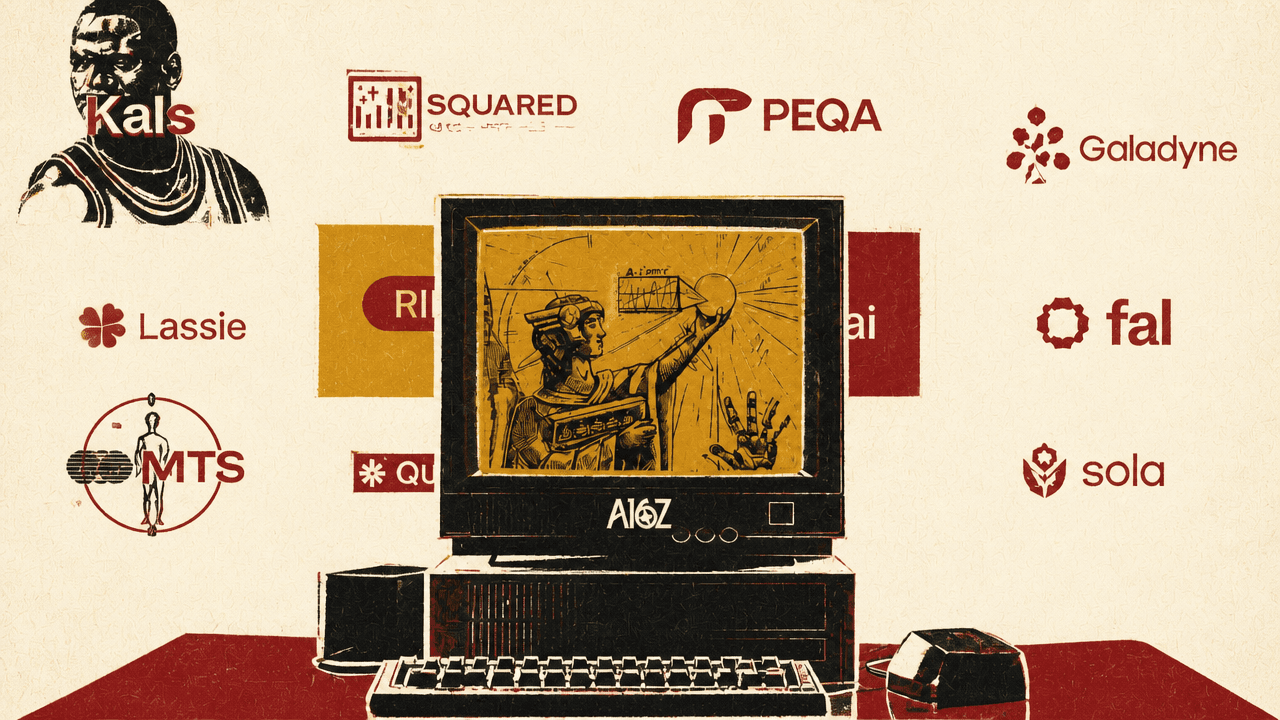
A montage places a16z branding alongside a rapid sequence of company names and logos, including ElevenLabs, Kalshi, EliseAI, Wabi, Lassie, QuiverAI, Sola, Rillet, Arc, Oboe, Hilbert, Endra, and others. The sequence is fast, brand-heavy, and founder-oriented. It presents startups, speakers, and a16z itself as the visual world around the argument about new media.
The displayed metrics make that argument more concrete, though the source does not explain each number in detail. Over shots of speakers and a16z branding, the source shows “79 M+,” “317 M+ ALL TIME IMPRESSIONS,” “1.8 M+ TOTAL FOLLOWERS,” “0.6 M+,” and “2M+ TOTAL HOURS WATCHED.” One card identifies Horowitz as “Cofounder / General Partner a16z.” The clearest labeled figures are impressions, followers, and hours watched; the other visible numbers appear as additional audience metrics without fuller labels in the source.
| Displayed metric | Value shown |
|---|---|
| All-time impressions | 317M+ |
| Total followers | 1.8M+ |
| Total hours watched | 2M+ |
| Additional audience metric shown | 79M+ |
| Additional audience metric shown | 0.6M+ |
Read alongside Horowitz’s remarks, the metrics function as evidence for a different kind of distribution. If old media depended on access to a small set of established channels, the visual sequence suggests that a16z is pointing to direct audience scale as part of the new-media alternative. The source does not claim that reach alone creates credibility. It does show reach, followers, viewing time, company logos, and speakers as the context in which a16z wants its media work to be understood.
Unproven formats are treated as worth attempting
A second voice describes a production decision that captures the operating posture behind the media thesis. An unnamed speaker says a team pitched “this idea of working with a virtual production.” The schedule was tight: the calendar showed the event was only four weeks away. The speaker emphasizes uncertainty rather than polish: “No one has ever done this before. It’s such a crazy idea. But we like crazy ideas, so we’re like, let’s do it.”
The line is paired with behind-the-scenes footage of virtual production and large text overlays: “IT’S SUCH A CRAZY” and “LET’S DO IT.” The anecdote gives the media claim an operational version. If old media relied on established channels and familiar formats, this posture treats an unproven format as something to try rather than something to wait on.
The brief invocation of “That’s one small step for man, one giant leap for mankind” gives the decision a deliberately large metaphor. In context, it frames a production experiment as part of a broader change in how stories can be made and distributed.
The audience is new founders
The closing title cards state the positioning plainly: “A16Z” and “NEW STORIES, FOR NEW FOUNDERS.” That phrase ties the media argument to a specific audience. The claim is not only that digital distribution can produce large numbers. It is that founders are the intended audience for a different kind of storytelling.
“New stories” carries both narrative and format. The visual sequence contrasts newspaper clippings and old business pages with a retro web interface, a company-logo montage, audience metrics, virtual production footage, and bold title cards. Those elements support Horowitz’s central warning: if people still treat legacy media as the place where seriousness is granted, they may be holding onto an assumption from an older media environment.