Critical Minerals and Grid Hardware Are the AI Economy’s Physical Bottlenecks



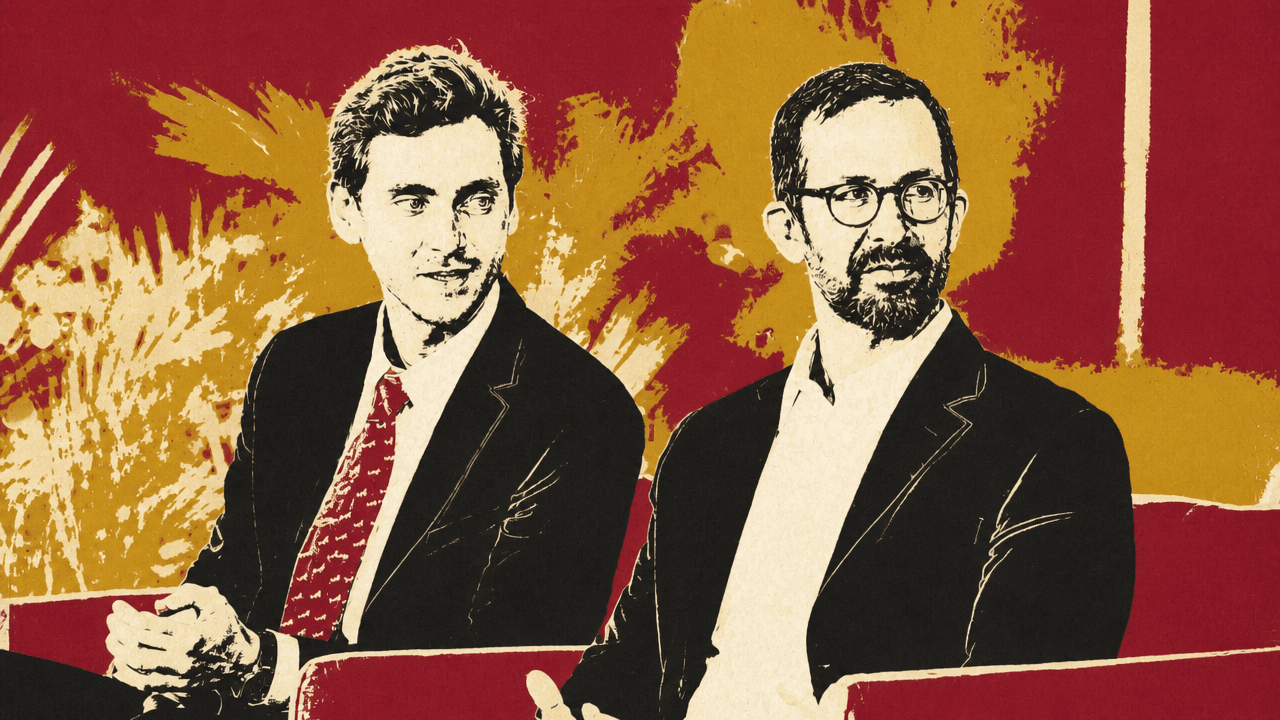
In an a16z conversation with Erin Price-Wright, former Tesla executives Turner Caldwell and Drew Baglino argue that America’s AI ambitions depend on rebuilding the physical systems beneath them: critical minerals, refining, power electronics, manufacturing and the grid. Caldwell, now CEO of Mariana Minerals, says the US is decades behind China in minerals capacity and must use automation and vertical integration to speed mining and refining. Baglino, CEO of Heron Power, says outdated mechanical grid equipment should be replaced with silicon- and software-based power electronics, backed by durable industrial policy and coordinated infrastructure planning.
AI infrastructure is constrained by minerals, power conversion, factories, and grid buildout
Erin Price-Wright frames AI dominance and reindustrialization as physical projects: energy projects, mining and refining projects, manufacturing projects, and grid-scale projects. Every “breakthrough model, new factory, and autonomous system,” she says, has real-world requirements underneath it: materials, energy, and the ability to move electricity where it is needed, when it is needed.


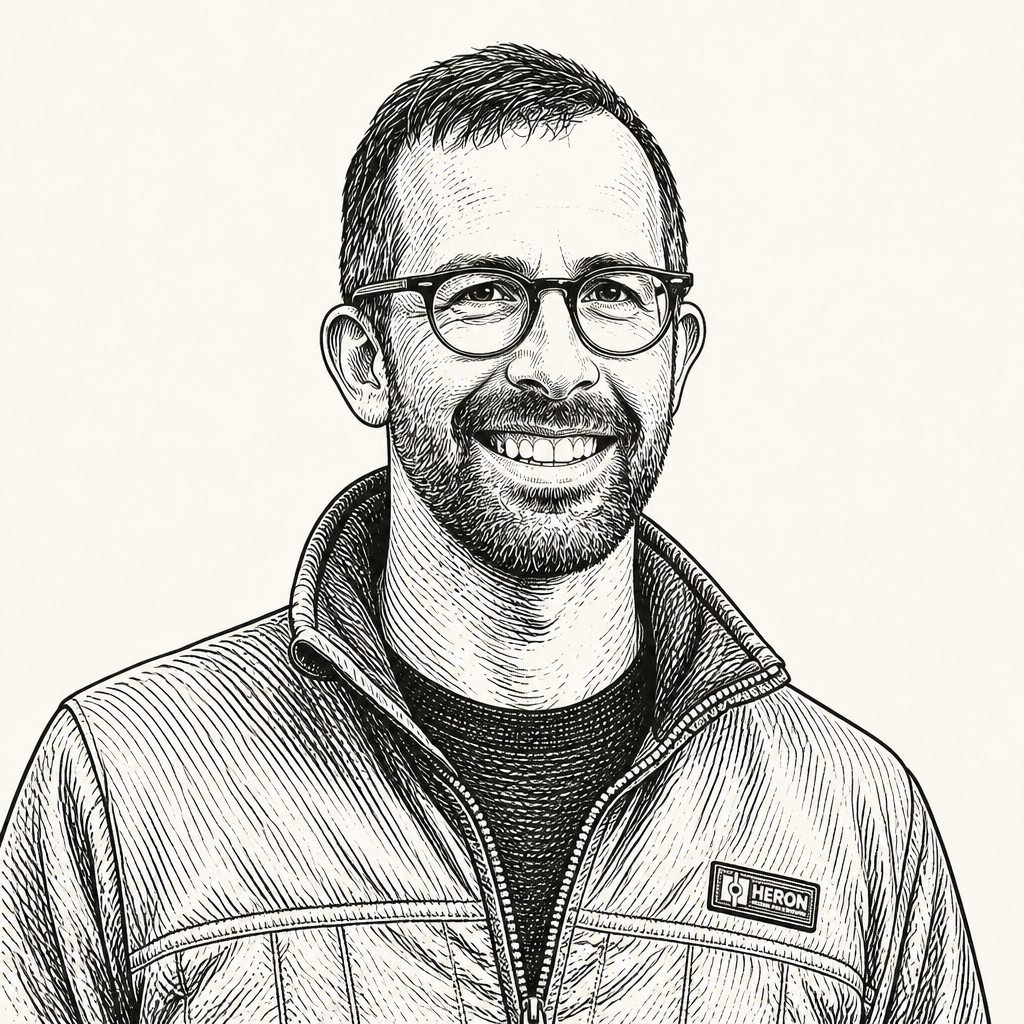
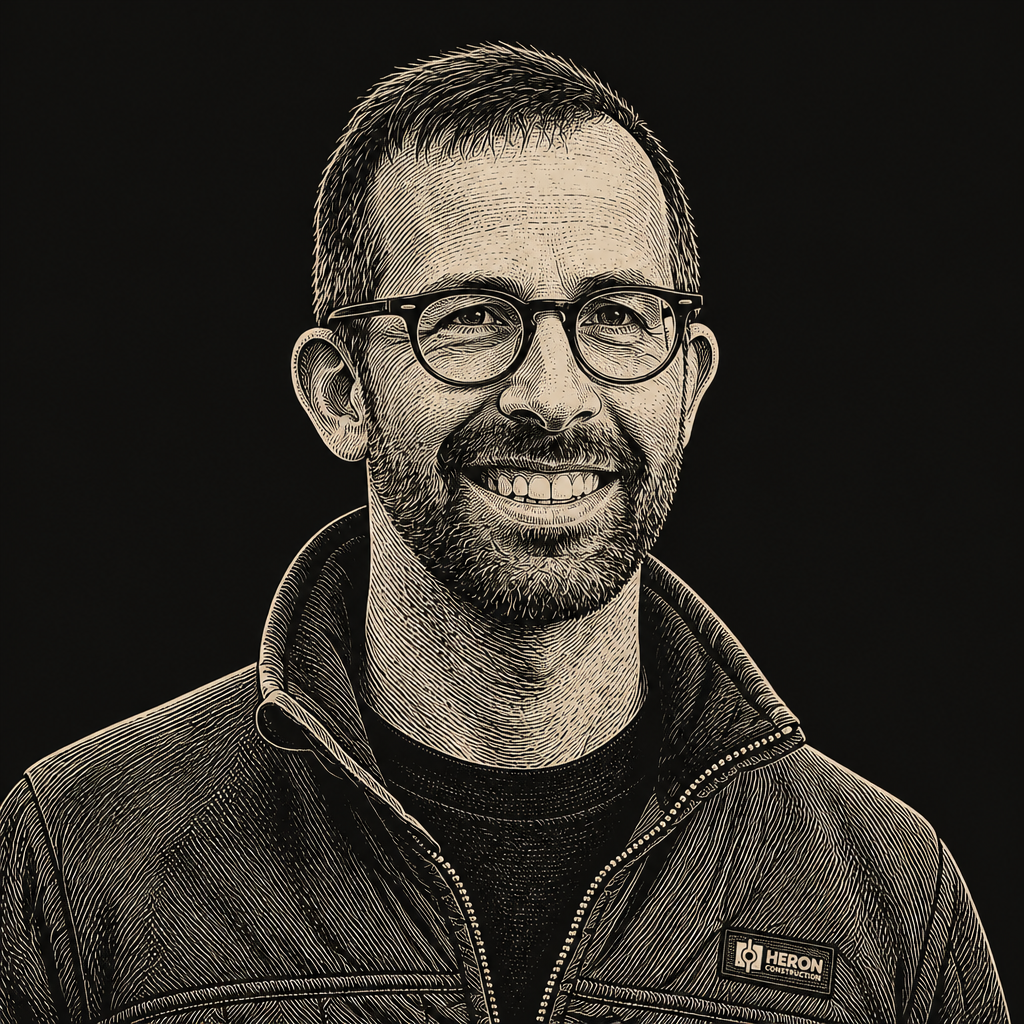
The two companies represented here sit on different parts of that physical stack. Turner Caldwell is co-founder and CEO of Mariana Minerals, which is building and operating mining and refining projects with software and machine-learning systems embedded into the operation. Drew Baglino is founder and CEO of Heron Power, which is building power electronics for the electricity sector, including solid state transformers for data centers, large-scale solar and battery projects, and other major energy installations.


Price-Wright does not dismiss concerns that AI could strain an already faltering grid. She calls them fair. But she treats that strain as a reason to rebuild the industrial stack rather than a reason to slow progress. The work, in her formulation, runs from critical minerals to energy generation, transmission, interconnection, and the speed at which new infrastructure can be built.
Caldwell gives the minerals version of the constraint. The United States, he says, is “50 years behind on critical minerals supply,” specifically behind China, while also lagging globally by decades. The problem is not only that projects are hard to permit or finance, though he agrees those matter. The deeper problem is execution after a license to operate has already been secured.
The US is 50 years behind on critical minerals supply. We are too slow at designing, building and ramping up new minerals capacity, even after we have licensed to operate.
Even if the United States lowers the burdens around permitting and access to capital, Caldwell says, it still has to learn to move faster than China once projects enter design, construction, commissioning, and ramp. A minerals project can take five years to build after it starts, then another three to five years to operate at rate. Mariana Minerals is aimed at compressing that period.
Baglino describes a parallel problem in grid equipment. He says there has been major innovation at the edge of the grid — electric vehicles, charging networks, and grid storage — while the equipment underneath the grid has changed very little. For both founders, the AI buildout is inseparable from industrial capability: Caldwell is attacking the know-how and ramp-speed bottleneck after minerals projects are licensed; Baglino is attacking obsolete power-conversion hardware and the fragmented infrastructure planning that makes the grid harder to modernize.
Mariana is trying to automate mining and refining from inside the operation
Turner Caldwell describes Mariana Minerals as a “software-first minerals mining and refining company,” but he is careful to distinguish that from being a software vendor. About a quarter of the company, he says, consists of software engineers and machine-learning engineers. They are building three internal operating systems intended to speed project delivery and increase autonomy across minerals operations.
The first is Capital Project OS, which Caldwell likens to a product lifecycle management tool. Its scope runs from process development and mine development through engineering, construction, and procurement. The company is using agentic workflow automation across that stack. The second is Plant OS, which uses reinforcement learning to control refineries. The third is Mine OS, which uses reinforcement learning for short-interval autonomous control of mining operations.
But Mariana does not sell these tools as SaaS. Caldwell says the company develops, engineers, builds, and operates minerals projects itself. It already operates a copper mine in Southeast Utah producing high-grade, high-purity copper materials, and it is building a lithium refinery in Texas. The stated goal is to build ten projects in ten years.
That vertical integration matters to Caldwell’s diagnosis. He argues that the United States cannot focus only on extraction and leave processing as a separate handoff. Mariana focuses on the full chain from mining through refining because that handoff creates market inefficiencies. The vulnerability is not only where minerals are taken out of the ground; it is also where they are processed, refined, and made usable.
The automation bet is a response to a labor and know-how shortage. A refinery handling highly variable feedstock — because “the earth is heterogeneous” — has to constantly tune temperatures, flow rates, chemical addition rates, and residence times across a complex refining circuit. In places with deep existing expertise, skilled operators may know how to bring a refinery onto spec and keep it there as the input changes. Caldwell says the United States does not have that labor pool at scale.
The same logic applies to mining. At a mine site, he says, thousands of decisions are made every day. If the available workforce cannot reliably make “the right thousand decisions,” the consequences compound: lower productivity, lower equipment availability, and lower utilization.
Mariana’s software strategy is therefore not just about replacing manual work with algorithms. Caldwell says the rate of software and technology penetration into mines and plants is set by operating teams. In many current operations, the working technology stack is “pen and paper and maybe 150 spreadsheets” scattered around the site. To change that, he argues, software engineers need to sit close to the operating teams, understand the actual problems, and help control the culture into which the tools are introduced.
That is why Caldwell rejects a detached software-layer approach. He does not describe Mariana’s engineers as outside consultants or conventional forward-deployed engineers. He emphasizes shared incentives between the software and operating teams. The point is to design tools for the people who must use them while also reshaping the operating system of the asset itself.
Heron wants to replace mechanical grid equipment with silicon and software
Drew Baglino says Heron Power is building power electronics to accelerate the electricity sector. His starting point is an analogy to computing: over the last four decades, power transistors have improved in parallel with Moore’s Law improvements in compute transistors. Those advances already show up in phone charging, telecommunications, and data centers. But, he argues, they have not been brought to the grid itself.
Heron’s focus is solid state transformers. Baglino describes them as a way to use “silicon and software” to replace “steel, oil, and copper” in power conversion. The target applications include data centers, large-scale solar and battery projects, and other major energy installations.
The case is both technical and geopolitical. Baglino says the power semiconductor capability enabling solid state transformers came out of decades of partnership among the federal government, academia, and industry, including work by the Department of Energy and the Navy on advanced semiconductors. Since the technology was developed in the United States, he argues, the benefits should be commercialized there as well.
He also points to silicon carbide, a key power semiconductor. The world’s leading producer, he says, is based in the United States. His argument is that the United States should use that position to apply the technology domestically first and manufacture at home. If it does not, he says, the benefits accrue to other countries.
The world's leading producer of silicon carbide, which is a key power semiconductor, is based here in the US. And so we should be leveraging the applications of that technology, here first, manufacturing here at home.
Baglino’s critique of the current grid equipment base is direct. He says the grid’s underlying systems are still largely mechanical, were developed more than 100 years ago, and do not provide the level of control or monitoring now needed. The result, he says, is an overbuilt but fragile system. He also views the concentration of equipment suppliers abroad as a security problem for critical U.S. infrastructure.
His interest in the grid came after years of working on systems connected to it. At Tesla, he says, he had a “front row seat” to electric vehicles becoming more affordable and common, the buildout of supercharging infrastructure, and the scaling of grid storage. He was responsible for Tesla’s Megapack and for scaling the company’s energy business. What stood out was the contrast: innovation proliferated on the customer and asset side of the wire, while the grid equipment behind it remained largely unchanged.
Even though there's so much innovation happening at the edge of the grid, on the other side of the wire, there's really been no change.
Labor cost is not the main reason factories move
Drew Baglino pushes back on a common explanation for why manufacturing is difficult in the United States. In his experience, labor cost is not the decisive issue in modern automated factories. If a new factory is built in China or in the United States, he says, the labor differential may be less than 10% of cost of goods sold, and possibly less than 5%.
The larger factor, in his analysis, is supply-chain proximity. China’s advantage is not merely cheap labor but the deliberate co-location of industrial suppliers. Baglino gives the example of car manufacturing: a car has roughly 7,000 parts, and in Chinese industrial areas, he says, everything needed to build it may be within less than a three-hour drive. That shortens logistics time and reduces logistics cost.
For Baglino, replicating that co-location in the United States would be a major unlock. It would sit alongside automation, not against jobs. The factories he describes are highly automated, but still require large numbers of high-paying, important roles. Price-Wright adds that factory jobs in this model are not the old assembly-line image associated with earlier generations of manufacturing. They are technical jobs that may require training and carry corresponding skill and pay. Baglino agrees.
Baglino’s experience building in the United States is not fatalistic. He points to Tesla’s Megafactory in Lathrop, California, which he says his team built in 11 months. It began as a JC Penney warehouse; 11 months later, the first product came off the line. The lesson he draws is that speed depends heavily on alignment with local jurisdictions.
The same process can be used, Baglino says, to say no at every step or yes at every step while still producing a code-compliant project. For him, the question is whether public and private actors can agree that reindustrializing the United States, building critical infrastructure, and supporting domestic supply chains are worth accelerating. When that alignment exists, he says, “it can be magical.”
Caldwell’s workforce challenge is adjacent but distinct. Mining has experienced what he describes as 35 years of meaningful attrition in the labor pool. But he also sees transferable talent in adjacent sectors. Oil and gas has strong talent relevant to mining. Software talent can also transfer in unexpected ways: Caldwell says some of the optimization algorithms Mariana is writing for plants resemble those used in dog-walking apps, Uber ride optimization, loan underwriting, and ad optimization.
The task, for Caldwell, is to build a talent magnet around an industry whose public image is often negative. He notes that in movies, the villains are often resource extraction people. Price-Wright jokes that the challenge is to “make mining sexy again.” Caldwell accepts the point. The broader argument is that the United States has relevant talent, but industrial companies have to make the mission legible enough to attract it.
The Tesla inheritance is speed, risk, and mission
Erin Price-Wright asks what the Tesla model gives founders that traditional industrial companies do not. Caldwell and Baglino give overlapping but distinct answers: technological optimism, appetite for risk, persistence through hard projects, existential urgency, and a mission strong enough to recruit exceptional people.
Turner Caldwell says Tesla’s core advantage was its belief that old and archaic systems could be innovated on. That belief supports fast decision-making and a willingness to take risk without being paralyzed by the possibility of being wrong. He contrasts that with mining companies that may try an autonomy effort for a year, fail, shelve it, or isolate it in a small team that never drives the core operation.
Tesla, in Caldwell’s telling, would keep pushing if the outcome was important enough. The lesson he wants to bring to Mariana is not that autonomy is easy; it is that the institution has to be built to fight through the obstacles if the outcome justifies the effort.
If the outcome is worth it, Tesla will fight through the challenges of getting to that outcome.
Drew Baglino adds the pressure of execution. Many times in Tesla’s history, he says, the company’s future success — even whether the paycheck would clear — depended on whether the team executed well. He calls that a focusing reality and says he dislikes the phrase “do or die,” but describes the feeling as equivalent.
Baglino also emphasizes mission. Tesla had a clear vision of purpose, which functioned as a beacon for talent. People wanted to work on it, and once inside a high-growth environment, they could see the impact of their work on company outcomes and on their own career trajectory. That helped with retention as well as recruitment. He contrasts that with a multi-product industrial conglomerate selling the same thing it sold decades ago, or a mining company with 150 years of heritage.
Neither founder presents the Tesla model as easy to copy. Baglino says it is hard to replicate outside a startup and hard to maintain inside one. But both are trying to translate parts of it into less glamorous sectors: minerals processing and grid equipment.
That translation is practical as well as cultural. Heron cannot simply call a “phone tree” of power-electronics manufacturing engineers or production associates, Baglino says. When he helped build Tesla’s 4680 battery manufacturing facility in Texas, a 50 gigawatt-hour battery facility, there were not many battery operations in the United States. His team hired from analog industries instead: high-speed bottling plants, syringe manufacturing facilities producing billions of syringes, and other operations with relevant process discipline.
The policy ask is durability, not one-off enthusiasm
Turner Caldwell and Drew Baglino both want policy that makes private industrial investment easier to commit. Neither frames the need as government replacing private capital. The emphasis is on durable signals, coordinated buildout, and institutions that reduce uncertainty around projects that take years to develop, build, and ramp.
Caldwell separates the headline policy issues from the execution problem Mariana is trying to solve. At the top level, he says, the United States can accelerate permitting and make project-level finance more available. Those moves matter, but they do not by themselves fix the slow design, build, and ramp cycles that follow a license to operate.
His broader ask is to treat minerals the way the United States treated oil and gas under an energy mandate over the last 50 years. He does not enumerate every tool, but he says the most important point is to create the incentive structure that mobilizes private capital behind minerals projects. Investors need confidence that there will be a long-term market and that “the rug isn’t going to get pulled out” in an industry that, in his account, has not been meaningfully built out in the United States for roughly 30 years.
Baglino’s first ask is similar: durable industrial policy that companies, suppliers, and financiers can plan around. He says he is strongly in favor of U.S. manufacturing, but his suppliers and financiers may not be as certain. Policy that persists long enough to shape planning would reduce that uncertainty.
His second ask is geographic coordination. He wants a concerted effort between the federal government and states to identify areas for energy and manufacturing buildout, allowing the United States to create the co-located supply chains he described earlier. That would require local jurisdictions that work with builders to get to yes rather than searching for reasons to say no throughout the process.
His third ask is a grid-planning and funding model analogous to the federal highway trust fund. Baglino says no such equivalent has existed for the electricity sector, which is part of why the country has a patchwork system. He argues for a master plan for linear infrastructure that could connect manufacturing and energy buildout zones, improve resilience, reduce costs, and move the country forward.
Across both sets of asks, the bottlenecks are not reducible to one problem. Permitting matters. Capital formation matters. Local alignment matters. Workforce development matters. Supply-chain geography matters. Grid planning matters. The founders’ shared concern is that minerals, factories, and grid infrastructure all require planning horizons that are longer than the policy and financing certainty builders often have around them.