Anti Fund Raises $100 Million on a Bet That Attention Is Scarce
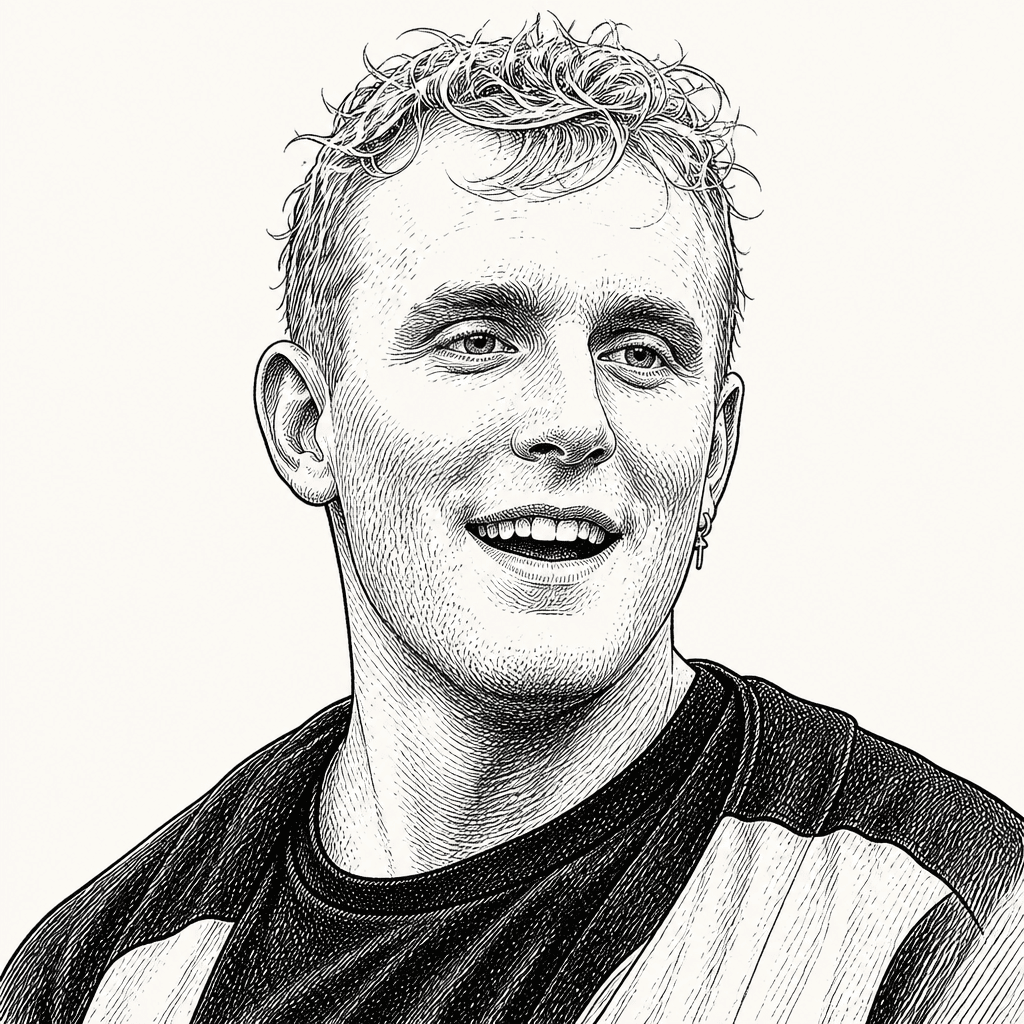

Jake Paul and Geoffrey Woo used an a16z podcast appearance to announce Anti Fund’s oversubscribed $100 million growth fund and make the case that venture advantage is shifting beyond capital. Woo argued that as money and AI-enabled intelligence become more available, attention, cultural reach and founder resilience become scarcer inputs; Paul framed his own path from YouTube to boxing to investing as evidence that distribution and monetization can compound across domains. Their pitch is that Anti Fund can pair technical judgment with cultural leverage when backing companies such as SpaceX, OpenAI, Anthropic, Anduril, Cognition, Etched and Modal.
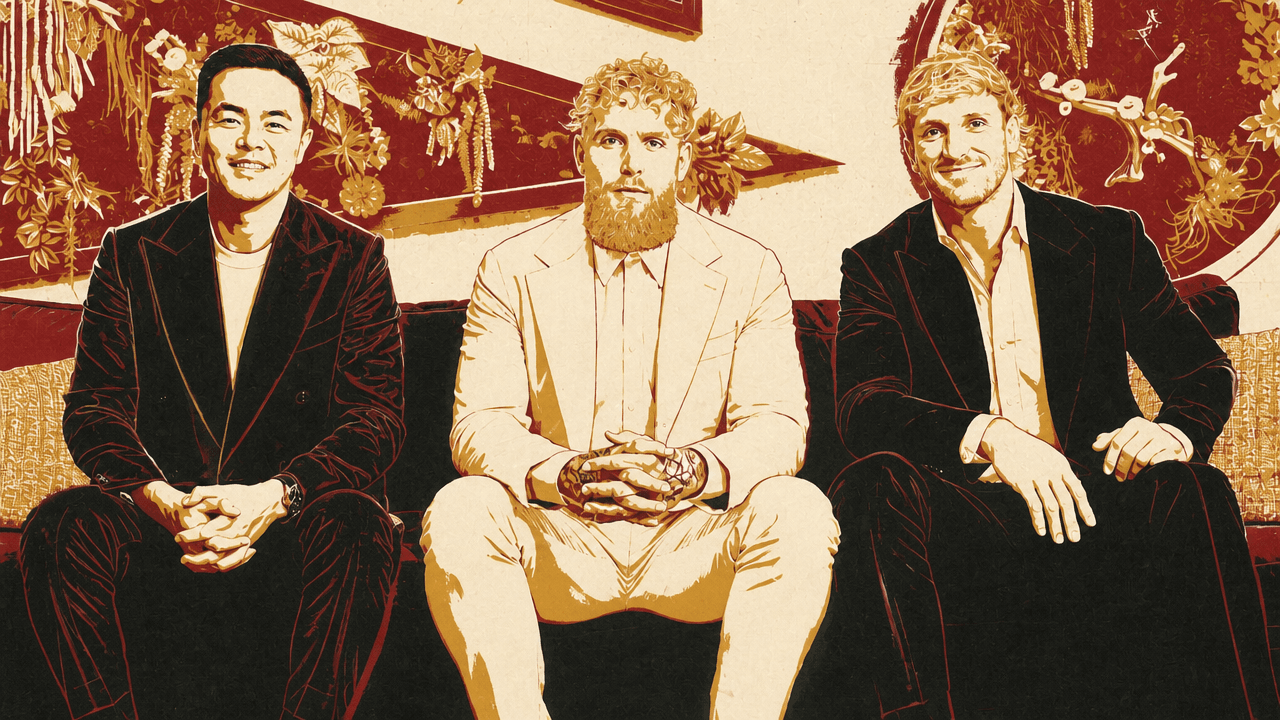
Anti Fund’s growth fund rests on a claim about scarcity
Jake Paul and ? geoffrey-woo announced an oversubscribed $100 million Anti Fund growth fund, tying the firm to a set of high-profile technology companies and to a broader thesis: in a world with more capital and increasingly available intelligence, cultural attention may become a scarcer asset.
Paul listed Anduril, Etched, Cognition, SpaceX, OpenAI, Anthropic, Saronic, and Modal among the fund’s “tier one” names. The announcement was accompanied by a graphic reading “$100,000,000 ANTI FUND,” along with on-screen references to Anduril, Cognition, and Modal; a Bloomberg Tech frame about Modal included the visible text: “MODAL LABS POST-MONEY VALUATION REACHED $1.1B.”
Woo described Anti Fund’s origin as having been treated skeptically by parts of venture capital because of Paul’s public identity as an entertainer and athlete. One example appeared as text message bubbles reading: “GW!!! you're making a mistake Jake is not good you're RUINING your career.” Woo recalled Jason Calacanis making a similar warning when Anti Fund was announced, then framed the objection as evidence that venture investors had underestimated Paul’s capability rather than as a reason to retreat.
Marc Andreessen and Chris Dixon, Woo said, were among Anti Fund’s first LPs. Their early support gave the partners confidence because, in Woo’s words, they had “seeded almost every single emerging manager.” Paul said one of their first pitch calls was with Andreessen and Dixon; he was nervous and had not yet perfected the pitch, but by the end of the call they agreed to invest.
Woo’s case for Paul as a partner was not that Paul had become famous and therefore could be useful. It was that Paul had created one of the defining attention machines of his generation, and that the underlying career showed repeated context switching across domains that usually demand full-time identity: celebrity, athlete, negotiator, operator, content creator, and investor. Woo argued that Silicon Valley founders context-switch widely, but that Paul’s range — from paparazzi and red carpets to fight training to business metrics to TikTok production — was unusually broad.
Paul’s case for Woo was complementary. He described Woo as one of the smartest people he knows, with a background in computer science and Stanford, deep networks, strong work ethic, and judgment sharpened by having passed on Paul’s first company when Paul was 18. That company failed, Paul said, which made Woo “right.” Paul framed venture as a “people business,” where IQ and EQ both matter.
Woo’s strongest formulation of Anti Fund’s advantage was blunt: capital is not enough, because capital is becoming more available. The scarce lever is attention and mindshare. If Anti Fund can combine capital allocation with Paul’s ability to convene people and shape taste, Woo said, the firm can operate with two levers at once: money and culture.
The material ended with investment disclaimers shown on screen: it is for educational and informational purposes, not investment advice or an offer of investment advisory services; a16z said it is an investor in SpaceX and Cursor through managed funds and may have investments in companies discussed; and the views expressed were those of the individuals quoted, not necessarily a16z or its affiliates.
Paul’s career is presented as an operating system for doubling down
Jake Paul explained his career less as reinvention than as iteration. He said he has always thought of himself as “entrepreneur first,” looking at everything through a business lens. His pattern, as he described it, was to double, triple, or quadruple down when something worked, and to “sweep the things under the rug” when they did not.
That framework is how Paul explained the move from YouTube into boxing. He did not begin boxing knowing he would go all in. The first event changed his view: it generated roughly one million pay-per-view buys, sold 30,000 tickets, drew tens of millions of views for press conferences, and became, in his telling, “the most viewed amateur event ever.” After that, he decided boxing was not a stunt but a main lane.
The insight was not simply that boxing could monetize attention. Paul said he loved doing it, and the numbers showed audience demand. From there, the conclusion was categorical: “I’m going to become world champion.” He described that as a pivot point where content remained important, but boxing became the core. He later connected that decision to becoming one of the highest-paid athletes on the Forbes list.
Paul also rejected the idea that his move into technology was a late opportunistic pivot. He said Silicon Valley had been one of his first interests. At 17, Corey Levy and Alex Debelov brought him to the Valley, where he saw startups, offices, screens, teams, and people “building the future.” That exposure made him want to build companies, understand venture, learn the lingo, and grow his network. At 23, he wanted to “take a bigger bite at the apple,” met Woo, and the partnership expanded from there.
His account of durability in entertainment centered on professionalism and non-transactional relationships. Paul said he always wanted to be “the most professional entertainer”: showing up on time, doing favors without immediately charging for them, building a network, and being able to ask for help because he had also helped others. In his view, entertainment is often short-term, transactional, and unprofessional; that created an opening for someone willing to treat it as an operating discipline.
I think a lot of people in the space can have a lot of followers, but not the cash, and cash is king.
The phrase “cash is king” mattered because Paul used it to distinguish audience size from actual monetization. He said many creators have followers but do not know how to pull cash out of the audience. That, he argued, is one reason he and a few others have lasted at the top of social media for more than a decade.
The same calculus informs what he will not do. Asked whether he should pursue acting or feature films, Paul said opportunities have come up, but he evaluates them by time expenditure, expected return, who is involved, likely performance, the script, and downside risk. A film can flop and generate criticism. For him, opportunities now generally need to be in the $10 million, $20 million, or $30 million range to justify serious time.
He said the judgment is both strategic and instinctual. There are teams, conversations, and processes around content and opportunities. Sometimes he films something and decides not to post it. But after years of reps, he said, many good and bad opportunities become obvious.
Resilience is treated as an investment criterion, not just a personal trait
? geoffrey-woo repeatedly returned to resilience as one of the reasons Jake Paul made sense as an investing partner. In startups and investing, Woo said, the basic substrate is pain tolerance. Paul had already been through Hollywood, influencer culture, controversy, litigation, haters, and boxing. Woo argued that if someone can survive being attacked by the internet while also literally getting punched in the face for a living, that reveals a kind of courage and pain tolerance that is rare.
Paul traced his own resilience to several sources: an intense father, early hard work, and being hated from the beginning of his public life. He said classmates in high school turned against him when he started making videos, creating anonymous accounts and criticizing him; even his principal and teachers said things about him. There was no early period, in his telling, when making videos was socially easy.
His answer to criticism was to ground himself in self-knowledge. If someone can look in the mirror and honestly say they are doing good things, have a good heart, and mean well, Paul said, then criticism matters less. He framed quitting in response to critics as a form of cowardice he could never accept.
Paul also endorsed therapy and self-work, with caveats. He said therapy can be helpful for learning about oneself, unpacking childhood trauma, and understanding why adult anxieties or behaviors emerge. But he warned that therapy can become a loop of victimization if someone is constantly returning to negative meetings and stories. He emphasized choosing the right therapist and not becoming trapped in perpetual sadness.
The same theme extended to cancellation and controversy. Paul said faith and God helped him through the hardest moments. “God gives its toughest battles to his most important soldiers,” he said, adding that each difficult episode forced him to learn and prepared him to “fly higher” afterward. His practical point was that a person cannot victimize himself if he wants to come out stronger.
Woo translated that into a founder lens. Whether one calls it faith in a higher power or conviction in oneself, he said, the important thing is to choose a mission worth fighting for. If someone hates their job and is attacked for it, there is no reservoir of conviction. But if a founder believes they are building beneficial AGI, fusion energy, or defense technology that gives Americans the best weapons systems, Woo argued, the mission itself can help them absorb criticism, litigation, and public pressure.
For Woo, Paul’s experience is useful to founders not as celebrity color but as lived experience with visibility. Woo said founders in high-profile AI companies and other controversial sectors may face social media hate, litigation, or attacks. Paul has lived through versions of that at high levels and can share how he dealt with it. Anti Fund’s underwriting, as Woo and Paul described it, is therefore partly psychological: can the founder keep operating when the company becomes visible, controversial, or legally pressured?
In the AI era, Woo says technical depth and charisma both compound
? geoffrey-woo framed his own career through systems: the rules governing a person, a company, a society, or a nation-state. He described himself as an engineer, scientist, or academic at heart, interested in the nature of reality and the underlying systems one can optimize. His work in biohacking and Ketone-IQ came from wanting to engineer better brain and human performance. Venture and growth investing, in his view, are higher-scale versions of the same question: how do you pull the most efficient levers?
The logic led to Anti Fund’s focus on capital and attention. Woo said managing $1, $100, $1 million, or $1 billion can be “the same level of hard” in the sense that strong investors are often small groups of high-conviction people making large bets. If capital is the lever of human civilization, and technology is one of the foundational levers of reality, then attention becomes the missing scarce input.
Woo’s phrase for the future was that there are two jobs: “AI maxing” and “looksmaxxing.” He said the terms are culturally current, but the simpler version is to max IQ and EQ. If intelligence becomes metered out through compute — Woo described himself and Paul as “pretty AGI-pilled” — then one path is to become extremely good at wielding intelligence: use tools like Cursor, stay on the computer, and understand the underlying math and computer science behind large language models. The other path is to become better at relationships, charisma, vibe, and physical presentation.
He did not treat technical learning as obsolete. Asked what he would do if he were 22 in 2026, Woo said he would go deeper into math and computer science, not abandon them. If someone actually understands how large language models work, he argued, they can use and prompt them better. He pointed to leaders in the industry as “math champions” and referenced Scott Wu as an example of someone hardcore about math and technical skill.
Asked whether a young person should start a company or join OpenAI or Anthropic, Woo’s answer was social rather than institutional: “gang up with the smartest, most ambitious people possible.” That could mean starting a company, which he and Paul might back, or joining a high-growth company such as OpenAI or Cognition to learn before jumping into entrepreneurship. The key criterion was to team up with people who push one another toward their best version.
Jake Paul gave a different hypothetical answer. He said he is not technical, so coming out of college he would probably try to be in venture capital, build relationships at Stanford, and seed his friends’ “genius ideas.” Woo joked that Paul had been coding on his MacBook and that his GitHub was “popping,” but the substantive contrast remained: Woo’s advice for 2026 is deep technical competence plus high-caliber peers; Paul’s is network, judgment, and capital allocation.
For Anti Fund, the two answers map onto the firm’s proposed edge. Woo emphasizes technical judgment: knowing enough about AI, software, and compute-driven intelligence to understand what is real. Paul emphasizes distribution judgment: knowing who can attract attention, build trust across audiences, and turn cultural relevance into business outcomes. Their argument is that growth investing increasingly needs both.
The creator market is harder to enter and more punishing to survive
Jake Paul does not believe the same media playbook that worked for him would work the same way for an 18- or 22-year-old today. He said it is much harder now to break through, amass a following, become a known brand, and rise to the top. In his view, one had to be present near the beginning of the platform era. The durable social media brands that have stayed at the highest level, he said, are himself, MrBeast, and his brother Logan Paul.
His original breakthrough came from daily effort and format innovation. He and his brother posted 15-minute videos every day that took the whole day to film. Paul described his early work as a daily reality show built around characters, constant events, and entertainment density. When music worked, he made more songs, an album, and a Christmas album. He moved through comedy, scary videos, music, and eventually athletic entertainment through boxing. His conclusion was that modern entertainers “have to do it all.”
Asked to compare his operation with MrBeast’s, Paul said both were analytical, but Jimmy Donaldson was much more numbers-driven. Paul described his own approach as more creative, entertainment-focused, and instinctual, while MrBeast “maxed out the numbers on YouTube” and hacked the algorithm at every margin.
? geoffrey-woo offered a sharper distinction. He described Paul as a startup that has hit escape velocity. In a future of AI-generated characters and infinite content noise, Woo argued, real people whom audiences grew up watching, loving, supporting, or hating will compound faster. He contrasted Paul and Logan with MrBeast by saying Donaldson’s format may be so quantitative and analytical that Jimmy does not necessarily need to be in the video; another game show host could potentially fill the role, even if less smoothly. Paul, by contrast, can “just live his life and get a bunch of views.”
If Jake can just talk and get a bunch of views or just live his life and get a bunch of views, and someone has to light $100 million on fire to get a bunch of views. Who do I want to be partners with?
Paul also tried to explain why some creators become huge and disappear. He cited Magcon, an early internet group he described as having been like the Justin Biebers of the internet world, with Shawn Mendes as the breakout who became a major star. Paul’s theory was that many creators do not have the resilience, motivation, willingness to move to new platforms, or love of the work required to last.
Durability, in Paul’s model, comes from diversification. Some audiences know him through ranch YouTube videos; others through boxing; others through politics, business, or venture. An a16z audience may hear about his investing work without watching his TikToks. That multi-world audience base, plus monetization discipline, is what he sees as the foundation for lasting power.
Controversy creates reach only for people who can survive it
Jake Paul rejected the universal version of “all press is good press.” For certain people, he said, it may be true. For him, he believes it has often been true because he can survive it and is “anti-fragile,” as Erik Torenberg put it. But Paul said the phrase does not hold for everyone.

His example was one of his first mainstream hate moments: jumping on a news van and mocking a reporter’s shoes. He said that moment made people see him as a “douchebag kid,” but it also became an early mainstream press breakthrough. What looked like bad press helped introduce him to a much wider audience.
? geoffrey-woo gave the broader rule as risk management rather than attention-seeking: everything has risk, but do not take fatal risk. Do not die. Do not go to jail, though he acknowledged some people have come back from jail. As long as someone takes calculated risks and keeps compounding, he said, they can end up somewhere good. Most people, in his view, are too afraid to do anything that warrants press at all. “Most people can’t even be canceled because they didn’t exist,” he said. His broad advice was to live more and do more because irrelevance is often the starting point.
The discussion of streamer culture complicated that advice. Torenberg asked about “Clavicular,” a streamer described as mixing club interactions, looksmaxxing content, abrasive interviews, gender commentary, and controversial behavior. Paul said the appeal is that people want to see something they have never seen before. Clavicular’s content is new, fresh, different, and crazy, and Paul said a lot of what he says is true, even if the delivery is abrasive. Paul also emphasized that everything about him is exposed; he is not afraid to be fully authentic, and bad press grows his brand quickly.
But Paul did not endorse the trajectory. He said streaming culture is “probably not the best for society,” especially for kids watching. He described it as the final iteration of what he had done on YouTube and said he felt bad for contributing to where it went. In his earlier era, he set a bar for craziness; streamers now have to perform for multiple hours every day, and to keep attention they do “out of pocket” things that may not be a good influence.
Paul expects the format to get only slightly crazier. Platforms are already de-platforming certain behavior and disallowing some streams, which may mean the culture is near its peak. Woo’s warning applied here: eventually someone crosses the line into death or jail, and that becomes the endgame.
The boundary they drew was not “attention at any cost.” Paul and Woo described attention as useful when it compounds, survives volatility, and can be converted into durable relationships or business outcomes. Woo’s explicit hard line was physical and legal: do not die and do not go to jail.
Paul’s political ambition is tied to education and financial literacy
Jake Paul said politics has long been part of his life, partly because his father was political and partly because he sees public speech as a responsibility of having a large audience. As an American, he said, he values the right to voice opinions and believes it is important to exercise it. He has gradually talked about politics more openly and said he finds it interesting to be in rooms with political figures and potentially help candidates win elections, whether for governor, president, or senator.
? geoffrey-woo said he respected Paul for taking political risk because many public figures avoid politics as bad for business. He invoked the idea that “everyone buys shoes,” then argued that life, family, culture, neighborhood, and community can matter more than adding more zeros to a bank account. In Woo’s view, Paul is willing to reduce optionality or sacrifice monetary opportunity because of conviction. That, Woo said, is leadership.
Asked whether he could see himself running for office someday, Paul said he could see being involved. He said Woo first raised the idea six years earlier, and said President Trump had endorsed him on stage to run for president and encouraged him backstage. Paul said he would only want to do it if he were the best person to help the country. He also said that if people he believed were bad for the country gained traction, he would get involved to help prevent America from being pulled into what he called a “socialist communist thing,” naming Mamdani in New York as an example and saying it would put America in a very bad place.
Looking ahead 10 to 15 years, Paul identified politics as the most obvious new arena for him. He connected it to a question of what to do after earning money and building platforms: how does he help the world? He said he believes he has courage, the right mindset, and takes that are close to truth. If he can help shape the future for his kids and the country, he expects to be in that arena.
Education was the first policy issue he named. Paul argued that the education system has not been meaningfully reformed since the 1920s or 1930s, while the world has changed dramatically. He cited Alpha School as a newer education startup that had impressed him. Education reform, he said, is like planting a fruit tree: the effects show up 30 or 40 years later in a smarter, better-educated country.
Paul tied education to finance. He said a major problem for young men and women is how and where they can make money. Schools should prepare people for that reality, including teaching taxes, rather than spending time on the Pythagorean theorem. Woo pushed back slightly, saying people should know the Pythagorean theorem and quadratic equation, but agreed that understanding taxes, compounding, and investing is important.
Woo also brought up what he called Invest America accounts or Trump accounts, saying Paul is supporting the team around them. Woo described the idea as letting young Americans participate in the fastest-growing private companies and become shareholders in American innovation. Seeing a portfolio as a child, he argued, could teach how money and investing work.
The college discussion separated education from signaling. Woo said Peter Thiel’s “don’t go to college” posture is, in one sense, hypocritical because Thiel collected the badges of Stanford undergrad and Stanford law. But Woo said the underlying critique of college can still be correct.
His advice was that badges matter if someone has no other badges. Paul did not need an institutional education credential because he became world-class as a creator, athlete, media personality, and entertainer. Most people are not Paul. They need external validators: winning a science fair, winning a math competition, going to Harvard, or otherwise proving they are good at something.
Woo’s deeper point was that everyone should try to become best in the world at something: violin, business, boxing, podcasting, art, doodling, or another domain. Education badges can give validation and confidence to pursue the next, more real thing. He expects educational content to change, but not the badging system.
Paul added an unexpected personal twist: after visiting Stanford, he said he was seriously considering going there, partly because he has NFL aspirations after boxing. He wants to play slot receiver. His initial idea had been to go straight to the Cleveland Browns or Dallas Cowboys, but he acknowledged teams would probably want to see him play first. Walking onto Stanford’s football team, he said, might give him experience before trying the NFL. Paul insisted he was serious and said the idea had occurred that day after seeing Stanford.
Founder taste, for Anti Fund, comes from reps and reference networks
? geoffrey-woo described founder taste as a product of exposure. Jake Paul had met “weird crazy hustler scammy people” from entering Hollywood at 16 and being thrown into public business. Woo had come through Silicon Valley, Stanford, and Y Combinator. Both had been pitched, done bad deals, made mistakes, and accumulated reps.
There may be talent in reading people, Woo said, but much of it is pattern recognition. Paul had encountered litigation, business deals, success, and failure at an age when many people had not. Woo said Paul “lives in dog years,” with the amount of activity in a few months resembling years of normal experience.
The two attributes Woo looks for are whether founders have a reason to believe they can be world-class at what they pursue, and whether they are resilient enough to “eat a ton of shit” to get there. That combines some measure of IQ with personality read.
Paul added that track record and reference checks matter. Anti Fund leans on trusted people in its network for category-specific judgment. For a defense technology company, Paul said, they contacted Palmer Luckey’s team and asked what they thought of the group. That kind of reference network has worked well for them.
The partners did not present cultural reach as a substitute for diligence. They described it as a way to gain access, read people quickly, convene useful networks, and help founders handle the pressure that comes with scale. The diligence they named was practical: repeated exposure to people, judgment about resilience, category references, and trusted networks.
Paul also said he is considering founding or incubating more companies. Betr, which he mentioned as an example, has reached a point where the team is built out and he spends limited time on it. That creates an “open slot” to potentially start something new. But he is cautious about the current AI landscape: one could launch a company and then see OpenAI or Claude replicate it the next week.
The ambition, as Paul put it, is to play a bigger game than simply selling products. He avoided naming specific companies, but said the goal is to become more sophisticated, build software or other higher-value companies, and “shift humanity” while doing it.